State to reopen Holmes Harbor for short shellfish season
Published 5:42 pm Friday, December 19, 2014
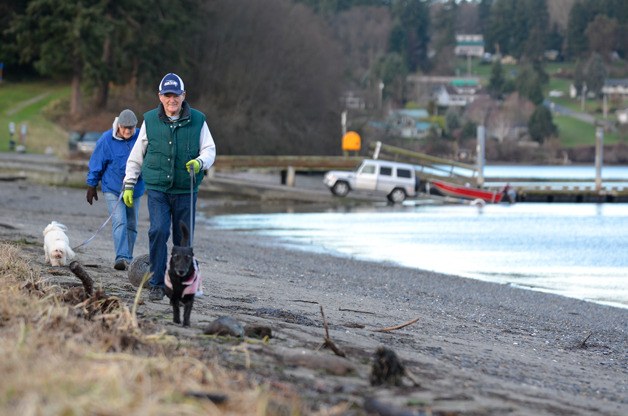
Clammers will hit Holmes Harbor for the first time in nine years this spring, but their digging delight will be short lived.
State fishery officials have announced that the area will reopen for just six weeks, from April 1 to May 15, pending formal approval by the Washington Fish and WildLife Commission. The narrow window is largely the result off an unexpected and unwelcome development, the expanded presence and domination of varnish clams.
According to Camille Speck, a state Department of Fish and Wildlife biologist based out of Port Townsend, the non-native species moved in while the fishery was closed and has since outcompeted native clams, particularly Manilla and butter clams.
“It was a little bit of a rude shock,” said Speck, in a telephone interview with The Record this week.
Whidbey Island has few good public beaches to dig clams, and Holmes Harbor was one of the best, she said. Having lain untouched for nearly a decade, she was expecting to find a stable and healthy fishery.
Instead, survey digs in 2008 and again this year showed the once prevalent Manilla and butter clams have declined from four individuals per square foot to under one and a half. By comparison, during the same period varnish clam numbers jumped from about seven and a half per square foot to nearly 11.5 per square foot. 
For hungry clammers who have eagerly anticipated the reopening of the once popular South Whidbey hotspot, which used to be open year-round, news of the six-week season was disappointing.
“That’s a shame,” said Eugene Thrasher, Whidbey’s widely recognized clamming guru.
A Beach Watcher with Washington State University Extension, Island County, Thrasher has taught clam digging classes on South and Central Whidbey for years. Holmes Harbor was great because it was one of the few beaches open to the public but also because it was packed with the tastiest species, he said.
“This particular beach was loaded with steamers … You could show up and in 20 minutes have your limit,” he said.
Holmes Harbor was closed to shellfish harvesting and swimming in 2006 when a required water quality test from an application to commercially harvest geoducks revealed the presence of fecal coliform bacteria. The closures led to the formation of the Holmes Harbor Shellfish Protection District in March, 2007. Required under state law, it was created by county commissioners due to the presence of fecal coliform bacteria in water samples.
County workers and the community have worked ever since to clean up the watershed, working to identify problem septic systems and launching initiatives such as the Scoop the Poop campaign to pick up dog waste at Freeland Park. No smoking gun was ever discovered, but water quality from fresh water outlets has improved significantly, according to state Department of Health officials.
In a recent letter to local regulators, the agency said the county’s long efforts paid off but that additional monitoring of the shoreline has revealed the presence of Enterococcus bacteria, a genus of lactic acid bacteria, during peak summer months. It was especially present in wrack, the often smelly carpet of seaweed/organic material that collects on the beach at Freeland Park.
The results were enough to warrant a “conditional” reopening of the beach for nine months of the year. From June 1 to Aug. 31, the times when the water quality samples showed the highest concentration, the area must remain closed.
Keith Higman, director of Island County Public Health, said the reopening, though limited, is welcome news and a testament to the county’s long efforts. The decision to reopen the fishery and set harvest dates, however, is up to Fish and Wildlife, not the Department of Health, and the two agencies have left the county with legal and scientific questions.
For one, it’s unclear what a limited “conditional” reopening by the department means in terms of the existing protection district and whether the commissioners have the green light to dissolve it. 
“We’ve posed that question to DOH and we haven’t gotten an answer yet,” Higman said.
There are only a handful of protection districts in Washington and there isn’t a lot of precedent for removing them. Higman said the agency may research the question with it’s legal department about just when it can give the county the OK.
Also unclear is where the Enterococcus bacteria are coming from, Higman said. According to www.medscape.com, Enterococcus is part of the normal intestinal flora of humans and animals, which means the contributor could be nothing more than wildlife.
“If it’s seabird poop, does that constitute a health risk?,” Higman said.
Finally, concerning the fishery, experts are baffled by the seeming takeover of varnish clams. Appearing in the 1980s, they are native to Asia and are believed to have arrived as “bow-squatter transplants,” Speck said. While they are all over Puget Sound, they haven’t been known to outcompete regional species.
Speck wants to know why.
“This presents a pretty exciting opportunity,” she said.
Biologists hope to discover what’s happening with study and testing. A big part of that will be removing the offending varnish clams in small areas and reseeding it with struggling species, such as Manilla and butter clams. They will be small, however, and crops will take from two to four years to cultivate.
“I’m talking [about] a one-fourth acre or less of the seven acres of productive habitat,” she said.
Depending on the results, future transplants may occur. She acknowledged that the limited fishery will likely be a reality for many years to come. There is some discussion with local tribes to harvest varnish clams for crab bait, but it’s unclear whether that will materialize or expedite the return of local species.
Thrasher noted that varnish clams are OK to eat, though they aren’t as tasty as steamers or Washington little necks, he said. Also, they are known to carry paralytic shellfish poisoning (or red tide) for longer periods of time.
Speck confirmed they carry greater risk and that clammers should check harvest information on Fish and Wildlife’s website before digging. She also noted that harvested varnish clams, invasive species or not, will be applied to a clammer’s total catch.
Despite the development and setback to returning to year-round harvest, Speck is looking at the big picture optimistically.
“It’s not without hope,” she said. “The water quality story is a huge success.”
“We can improve the fishery with time,” she added.
As for Thrasher, he said he’s supportive of the state and county’s efforts and hopes future study will bring answers. But, he can’t help but wonder if Holmes Harbor’s clamming glory days are a thing of the past.
“I don’t think it’s a losing battle, but I won’t hold my breath,” Thrasher said.