Opening the curtains on 60 years at the Whidbey Playhouse
Published 1:30 am Tuesday, March 3, 2026


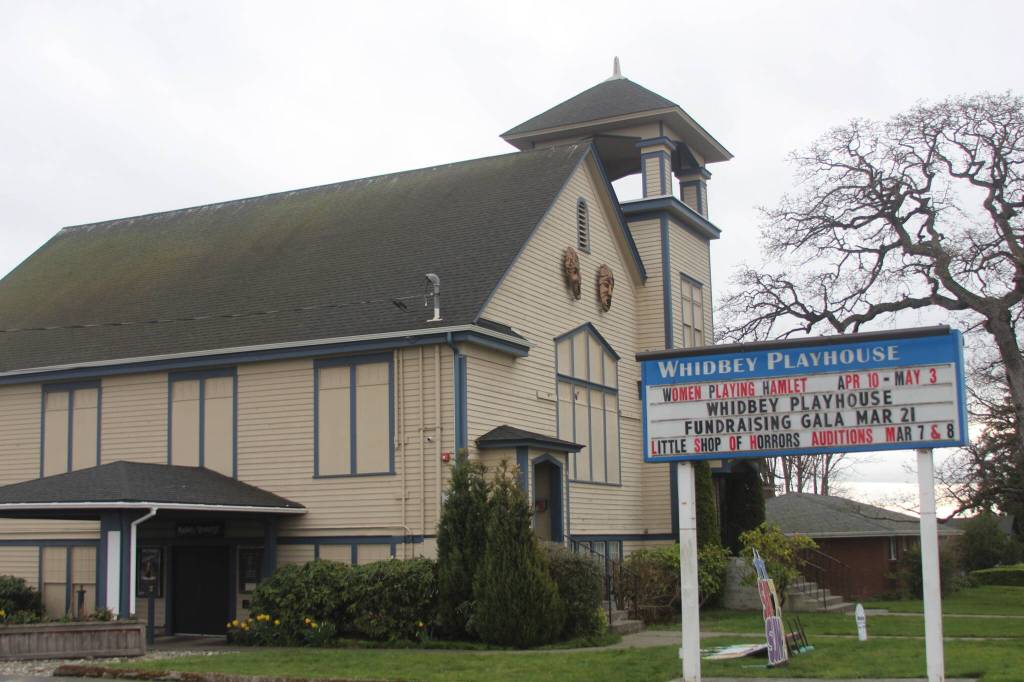



As it celebrates its 60th anniversary, the Whidbey Playhouse in Oak Harbor has become a prosperous theater that belies its humble beginnings.
Susie Thompson, who has been attending performances and acting since the 1960s, recalled that the playhouse’s first productions were staged in an old high school cafeteria that has since been torn down. In those early days, Thompson said, audiences gathered to watch melodramas such as “Deadwood Dick.”
When the cafeteria no longer sufficed, the troupe relocated to a church that was next to the Oak Harbor Christian School. This location was tragically burned down in the ‘70s, causing quite a scandal, according to Sue Riney, a former executive director and longtime performer, director and producer. During that chapter, Thompson said, productions such as “Little Women and “My Three Angels” filled the church with live theater. The troupe also floated between basements of banks and credit unions.
Finally, the actors found their way to its current home at 730 SE Midway Blvd, Thompson said, settling into a building that was once a church and is now approximately 100 years old. Jim Riney, a long time director, actor and board member, said the move into a permanent structure represented a defining moment in the theater’s development and long-term stability.
That stability, however, was not easy to achieve. Jim Riney said the playhouse owned its property, including a back parsonage, while carrying a $250,000 debt at 18% interest. He conceded that the bank was reluctant to finance a group of actors; Trustee Nanci Fey put a lien on her house so the playhouse could secure a loan. The troupe would do whatever they could to make an extra buck, Jim Riney explained, going as far as pairing the shows with Italian meals.
“We would do melodramas, cause melodramas are cheap, and we’d feed a spaghetti dinner,” Jim Riney remembered.
The debt was eventually fully paid off, marking a turning point in the organization’s history. He credited the late Wallie Funk — former owner, editor and co-publisher of the News-Times — as playing a critical role in accelerating payment of the building, a contribution Jim Riney described as essential to the theater’s longevity in that space. Jim Riney said other Board of Trustees members, including Bud Wallgren, an affiliated dealer for Les Schwab, and Bob Chamberlain, owner of the Burger King in Oak Harbor, led fundraising efforts during that period as well.
“Having our own building was like, ‘oh way cool,’ ” Jim Riney said.
Because of those collective sacrifices, Jim Riney said, the Whidbey Playhouse stands today as a rare community theater without a mortgage.
The inside of the theater reflects a shift toward comfort and inclusivity. Jim Riney said the original auditorium seated 220 people in 18-inch-wide chairs. As ADA accessibility upgrades were introduced into the theater, including a ramp and a stage extension, seating capacity was reduced. The playhouse now offers 19, 20 and 22 inch-wide chairs, with a more intimate seating arrangement remaining. Thankfully, the number of toilets, too, have increased.
“We were doing big musicals and so we would do long intermission because there were only so many toilets,” Jim Riney said.
Ongoing improvements continue to refresh the aging structure. The outside of the building has been repainted. After organizations donated a gallon of paint each, the members would go outside on rented lifts and scrape the building themselves in an attempt to be economical. This once resulted in them getting stuck, and Jim Riney having to shimmy down the machinery, he noted.
The lobby as well has changed. What used to be tile is now covered in carpet, Jim Riney explained, remembering how directors would do rehearsals and then clean the floors because there was no janitor at the time.
Two years ago, the kitchen underwent a full remodel, with all new carpeting downstairs. Eric George said other recent enhancements include updates to concessions, the introduction of new ticketing software and expanded souvenir offerings. The lobby was updated with the addition of a bar, according to board member Theresa Frazer, and plans are in place for a future floor replacement upstairs that includes asbestos sealing. Exterior painting also remains on the list of needed projects, according to Frazer.
Growth has extended beyond the main stage. Jim Riney said the Whidbey Playhouse Annex, now filled with decades’ worth of props, sets and densely packed costume racks, was built on donated land. Later, the Star Studio rehearsal hall was constructed next to the playhouse, giving actors a dedicated rehearsal space rather than relying on unheated annex space.
As the building evolved, so did its programming. Thompson said the playhouse originally avoided swearing in its productions, and she noted that its production of “A Few Good Men” sparked a debate over language. Rusty Hendrix, a longtime director and actor, recalled with a grin when a couple left the theater after the word “penis” was spoken onstage. In contrast, the more recent productions, such as “Rent,” sold out despite mature themes.
Over the years, Thompson added, approximately five to 10 productions have included lingerie or near-nudity, though full nudity has never been showcased.
Production techniques have changed as well over the 60 years. Jim Riney said the theater once featured live musicians and incorporated a 12-foot revolve, or turntable, that could change the set. Today, George said, updated sound systems and modern projection technology have replaced some of those earlier methods.
Despite these updates, the playhouse remains powered primarily by volunteers. Bob Hendrix, a longtime actor, director and set builder, said only two employees are paid, with the bulk of labor supplied by community members.
Kevin Meyer, who fills roles ranging from actor and director to set builder, painter and custodian, contributes extensive hours to keeping productions afloat. Since beginning his involvement in 2011, Meyer said he has observed a decline in available technical talent, increasing the burden on those with backstage expertise and deepening the reliance on a smaller pool of skilled volunteers. Still, the playhouse offers a lineup of shows ranging from mysteries to comedies and dramas, like a “five-course meal” for a season, he said.
Despite all of its ups and downs, today the playhouse is a vital force of art and culture in the community: hosting more than five shows a year, classes for kids and adults and playing the role of a second home for those who are part of it. The playhouse does more than entertain, it gives life to the community, Frazer said.
Sue Riney echoed this sentiment.
“I’ve spent more than four decades onstage and backstage, but my favorite ‘memory’ isn’t a specific show or scene — it’s the feeling of being a theater community,” she said. “My favorite memory is simply the enduring warmth of a Playhouse team supporting one another, the joy of creating magic together and the knowledge that we have a place where sometimes we are just having fun, sometimes we’re making something deep and meaningful, and every once in a while, we hit the jackpot and do both.”
For its diamond anniversary year, the Whidbey Playhouse will host a Diamond Jubilee Gala and Auction on March 21 at The Center in Oak Harbor to support ongoing operations and projects.
“We’re hoping to raise a lot of money to fund some of those projects,” Frazer said. “Cause the building’s gonna fall down around us if we don’t repair it.”
Six decades after its first curtain call in a high school cafeteria, the theater continues to adapt, endure and gather its community members beneath the stage lights.
Tickets for the fundraiser gala are available at whidbeyplayhouse.com.