Festival presents early chamber music on period instruments
Published 1:30 am Tuesday, March 10, 2026

The Salish Sea Early Music Festival presents special musical guests for a performance featuring three centuries of variations on popular music.
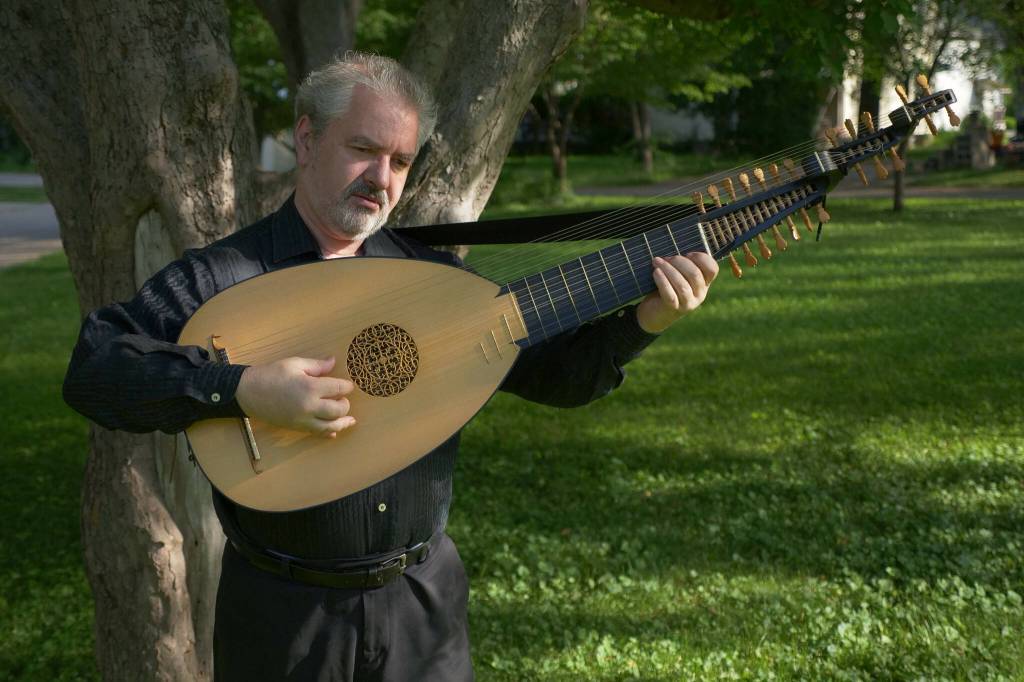
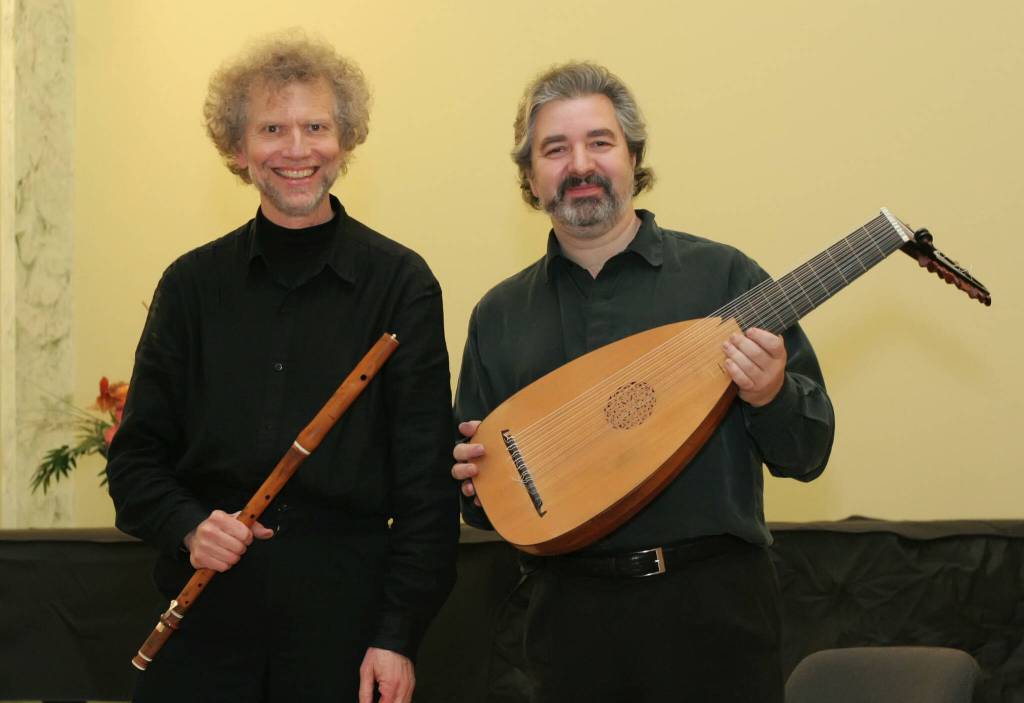
“Folk, Baroque and Beyond: Airs from Three Centuries” brings guitarist/lutenist Oleg Timofeyev and flutist Jeffrey Cohan together to perform 17th-century psalms, 18th-century Irish and Scottish folk melodies and 19th-century popular opera tunes, demonstrating three distinct approaches to the embellishment of popular melodies, performed on lute, a wire-strung English guitar made in 1763, a 7-string guitarmade in 1820, an 8-keyed flute also made in 1820, and renaissance and baroque flutes.
This concert, presented in collaboration with the Unitarian UniversalistCongregation, takes place at 7:30 p.m., on Sunday evening, March 22 at the Unitarian church on Highway 525 in Freeland. Admission is by a suggested donation (a free will offering) of $20 to $30. Those 18 and under are free. All are welcome regardless of donation. For additional information please see www.salishseafestival.org/whidbey.
This year’s “Folk, Baroque & Beyond” provides novel new examples of popular music as interpreted by virtuoso instrumentalists from three centuries.
Part I. 1620: During the Renaissance, Psalm tunes which appeared in the Genevan Psalter in the mid 16th century were widely sung and were used as the basis for elaborate variations by virtuosos like lutenist Nicolas Vallet (1620) and flutist Jakob van Eyck (1644), whose variations will be juxtaposed simultaneously as if they were to have played or improvised together in a manner that sheds much new light on early 17th-century performance practice.
Part II. 1740: The Irish and Scottish folk tradition was as strong on the early 1700s as it is today, and virtuosos of the day from these countries and abroad interpreted them in wildly colorful sets of variations. James Oswald’s “Airs for the Seasons” consists of a collection for each season of small multi-movement sonatas, each dedicated to a particular flower of the season and radiating the charming character of the folk melodies of Oswald’s native Scotland. The wire strung English guitar, as unknown as it is today, was popular as one of the most prominent instruments of home life in England, and Oswald’s airs beautifully suit Oleg’s instrument made in 1767 alongside the one-keyed baroque flute of that day, as do settings in the baroque style of Scottish popular melodies collected by Italian composer Francesco Barsanti, who lived in Scotland. Settings of the popular tunes written specifically for this English guitar by Scotsman Robert Bremner are also to be included.
Part III. 1820: Variations on popular tunes from opera and folk traditions were the staple of instrumental virtuosos of the early 19th century, such as guitarist Ferdinando Carulli and flutist Jean-Louis Tulou who teamed up to produce elaborate virtuoso variations on the most popular opera airs of their day. These are to be performed on a 7-string guitar made in 1820 in Russia and an eight-keyed flute made in London in the same year.
About the artists
Oleg Timofeyev and Jeffrey Cohan have performed together throughout the United States and in six cities all around Ukraine, giving public performances and masterclasses at music conservatories.
Timofeyev is an American guitarist, lutenist and musicologist, best known for his pioneering work in the discovery, promotion, interpretation, and authentic performance of the repertoire for the 19th- and 20th-century Eastern European seven-string guitar. He began his study of the classical guitar in the early 1980s under the tutelage of Kamill Frauchi in Moscow. In 1989 his musical interests brought him to the U.S., where he studied with Patrick O’Brien, James Tyler, and Hopkinson Smith. He holds an M.A. in Early Music Performance from the University of Southern California (1993), and a Ph.D. in Performance Practice from Duke University.
Timofeyev has performed and taught widely in Europe and the United States. A recipient of numerous scholarly awards, including IREX and Fulbright fellowships, he has taught and lectured at Maimonides State Academy (Moscow), Duke University, the University of Kansas, Northwestern University, Princeton University, the University of Iowa, Grinnell College, and the Smithsonian.One of the most prolific Russian guitarists living outside of Russia, he has to date released 12 CD recordings on international labels.
Cohan, who according to the New York Times can “play several superstar flutists one might name under the table,” has performed throughout Europe, the United States, Australia, New Zealand, and for the USIA Arts America Program in the South Pacific, South America, Turkey and Portugal. First Prize winner of the Olga Koussevitzky Young Artist Competition in New York and recipient of grants from the Martha Baird Rockefeller Fund for Music and the French Government, he has received international acclaim both as a modern flutist and as one of the foremost specialists on transverse flutes from the renaissance through the early 19th century. He is the only musician to have been awarded both the highest prize in the Concours Musica Antiqua in Bruges, Belgium, which he won together with lutenist Stephen Stubbs, and the Erwin Bodky Award in Boston – two of the most prestigious prizes for performers on period instruments. He is artistic director of the Salish Sea Early Music Festival and the Capitol Hill Chamber Music Festival in Washington, DC.
The Salish Sea Early Music Festival has since 2011 provided world class period instrument performances of chamber music, both familiar and rarely or never before heard in modern times, with musicians from Europe and all around the Puget Sound, the United States and Canada who are among the finest in their field around the globe. The Salish Sea Early Music Festival and is a nonprofit organization and was granted affiliate status by Early Music America, which develops, strengthen, and celebrates early music and historically informed performance in North America.