
Kirk Huntly Francis: August, 27, 1947 – February, 8, 2026
Published April 6, 2026
Kirk was the son of Vincent Anthony Francis, a first-generation American of Italian descent, and Frances Huntly Rice. He was born in Oakland, CA, and grew up in an area with fresh water running streams and undeveloped hills to climb. It set a stage for a lifetime love of the natural world. He was poised to become the youngest guide up Mt. Rainier when a motorcycle accident waylaid his climb. Years later, he would spearhead the saving of Putney Woods on Whidbey Island, WA, from clear cutting.
When the family moved to Southern California, Kirk embraced and excelled at surfing. He was the kid you saw at the surf shop, sanding boards. As a high school graduation gift, Kirk’s family visited Hawai’i for the first time, kindling an affection for the “warm hug” of Hawai’i that enduringly enticed him until his retirement.
In lieu of college, Kirk took an 18-month overland journey to India and Nepal, where he was briefly in the export business. Upon his return to the U.S., he took on odd jobs. With an astounding ability to learn almost anything by himself, he made a sound blimp for the front-screen projector for Tora, Tora, Tora!, his first job in the film industry. This was the springboard for him to become a sound engineer, first in rock and roll, which he despised, and then in film, where he became, arguably, the best ever.
Over his 46-year career, during which he worked on more than 100 films, he was awarded the 2008 Academy Award for Best Sound Mixing for The Bourne Ultimatum, two BAFTA awards for The Bourne Ultimatum and LA Confidential, an Academy Award nomination in 1998 for LA Confidential, and three Cinema Audio Society Award nominations for his work on LA Confidential, The Bourne Supremacy, and The Bourne Ultimatum.
In 1998 he published i’ll never cook lunch in that town again: recipes and comment from the sit down and shut up cafe. Considered a triumph of content over form, it contains stories of his years on the set as well as “good recipes tested by Italians”.
Kirk was proud of his Italian heritage, and throughout his lifetime continued the ritual of the evening meal that as a child was considered the essence of home life. He believed in real food, which he prepared with great deliberation, and with whole and fresh ingredients (gathered at his twice-weekly trips to local farmers markets). Over the ancient ceremony of the most important meal of the day, the family argued, yelled, and laughed. Kirk insisted on three things: suffer fools poorly, drink good water, and never buy lousy Parmigiano!
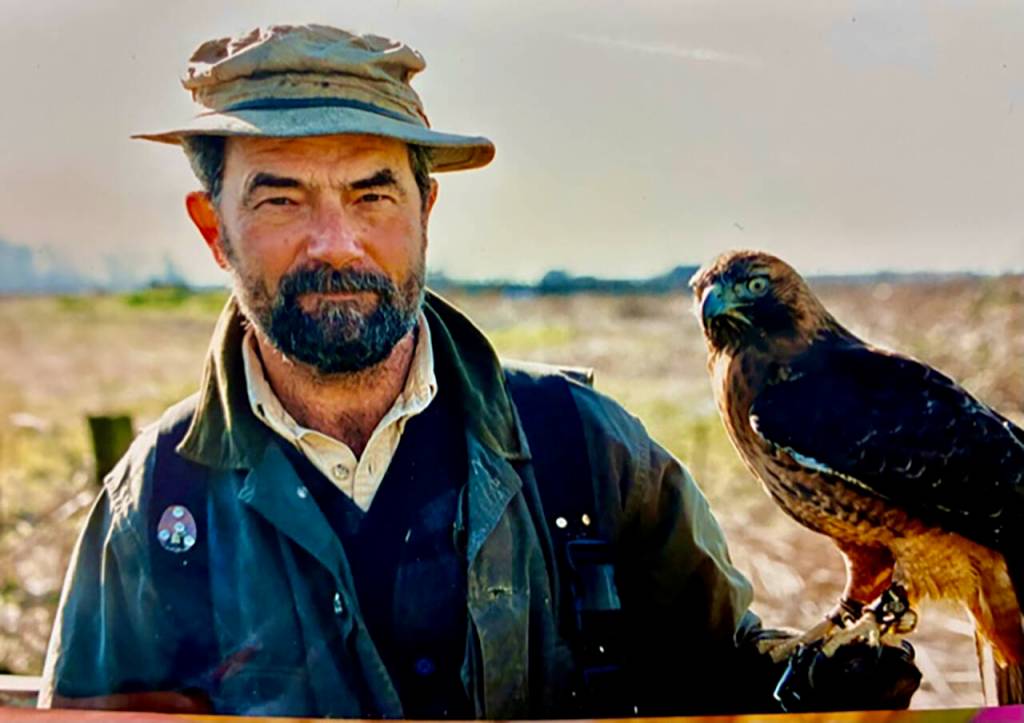
An autodidact, through a lifetime of voracious reading and personal experience, Kirk was an accomplished cook, gardener, falconer, musicologist, environmental activist, and musician (who began playing Hawaiian steel guitar in preparation for retirement). He was a Renaissance man who hammered flat copper sheets into artistic vessels and lamps, stood copious hours in thigh-high water fly fishing, and tended bonsai, during which time he engaged in silent contemplation.
His library in music and books was vast. If you were very lucky, he would send four or five CDs of music you had never heard and would never forget. But he was most passionate and proud of his pièce de résistance, his final act: a unique and visually stunning botanical estate, which he created from a four-acre field of guinea grass on the Big Island of Hawai`i, where he retired in 2014. He lived completely off-grid “culturally as well as technologically.”
Child-free by choice, he was a beloved surrogate father/uncle (hanai in Hawaiian) to Chris Welcker, Levi Burkle, Nicole Falso, and Mark Orozco, among many others who became lifelong friends.
Kirk Francis was a force of nature. He LIVED life. He leaves behind his beloved wife Leslie Larch, dog Mahina, and Betty the cat. He was preceded in death by his brother Robert Vincent Francis.