Whidbey handyman remembered by his family as his murderer is sentenced
Published 1:30 am Friday, April 10, 2026
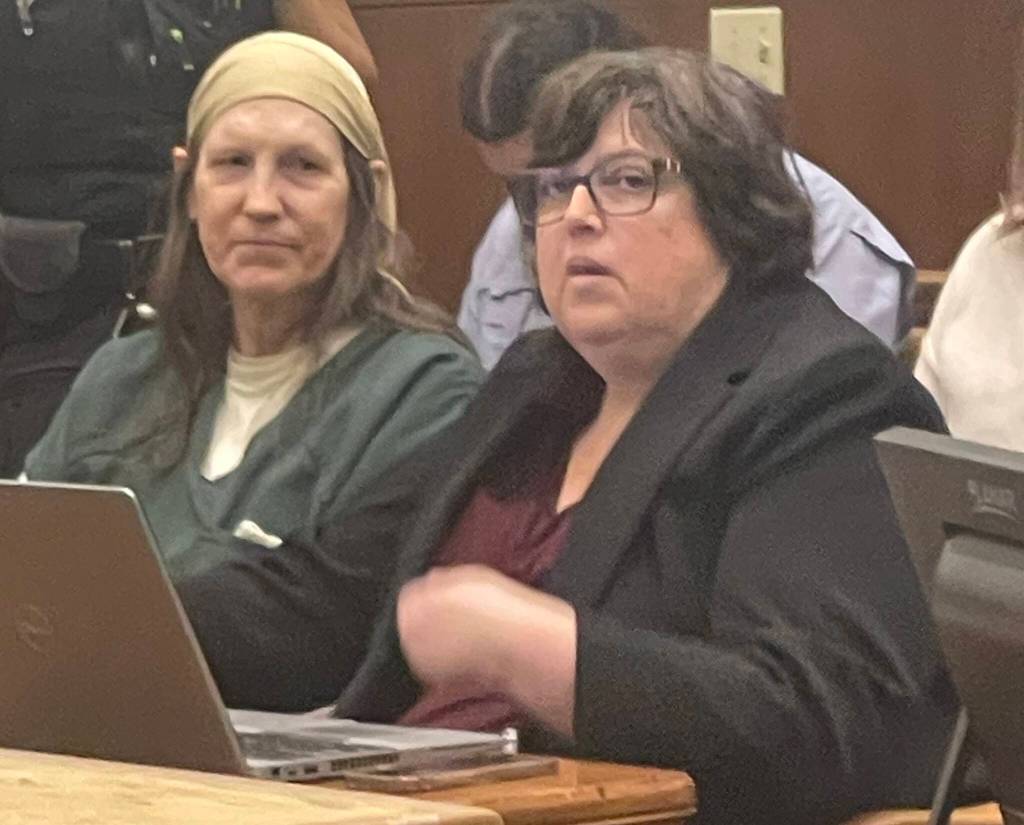
On the night of April 6, 2021, Thomas Flood was asleep inside his Econoline van on the side of a Whidbey Island road when a stranger opened the door and fired a gun.
Flood was a well-known handyman on South Whidbey who specialized in carpentry. He moved to the island 30 years earlier from Tacoma, his hometown. At the time, the soft-spoken man was newly sober and divorced and looking for a fresh start, which he found.
His family members say they don’t know why he chose Whidbey, but he made a life for himself on his own terms. He didn’t care about money or possessions, but left his house in Tacoma to his ex-wife and stepchild. He chose to live out of his van in a minimalist lifestyle. He became a Buddhist and continued attending Alcoholics Anonymous.
During a recent interview just after Flood’s murderer was sentenced to prison, his family members emphasized that his life had value.
“He was kind of a loner. He was quiet, but he liked people,” his niece Sheila Lavin said. “He wanted clarity, and he found it on Whidbey.”
Flood’s sister, Kathleen May, said Flood was a gifted mechanic and carpenter who was always willing to help people. He was trusted by people in the community, sometimes housesitting at Whidbey “mansions.”
His nephew, Thomas “TJ” May, explained that “Uncle Tommy” was a lot younger than his mother — Flood’s sister — so he was more like a teenage friend growing up. He taught him about cars and music.
“He had a huge impact on my life growing up,” he said.
In recent years, Flood had been reconnecting with his family and visiting more often.
On Whidbey, 67-year-old Flood was in the habit of parking his van near the Coupeville ferry terminal overnight.
Flood didn’t know Lynda Mercy, a Bellingham woman with deteriorating mental health and a gun. She had visited the Olympic Peninsula without a car in April of 2021 and took a ferry to the Coupeville ferry terminal. It was cold, raining and dark and she needed shelter and a ride back home. She first got inside a ferry worker’s vehicle to get warm but was chased away.
Then she saw the Econoline parked on the side of the road.
Only Mercy knows exactly what happened next. At her sentencing hearing this week on her murder conviction, Whatcom County Chief Criminal Prosecuting Attorney Erik Sigmar surmised that she may not have realized anyone was inside the van when she entered, but Flood was in his sleeping bag. Perhaps she was startled. Perhaps they had words. For whatever reason, which Flood’s family feels is unforgivable, Mercy fired two shots into Flood’s torso.
It didn’t end there for Flood. Sigmar explained that a medical examiner determined that the wounds were likely not fatal if he had gotten medical help quickly. But he didn’t. Mercy took the keys and started driving as the handyman continued to bleed in the back of the van. She headed north, likely passing within yards of WhidbeyHealth Medical Center. She drove through Oak Harbor, Burlington and Bellingham.
She drove all the way to Semiahmoo Spit. It’s impossible to know exactly when Flood died, but Mercy dumped his body, still inside a sleeping bag, along with bloody clothing and other debris. She then left his blood-stained van at a Fremont church parking lot, trying to conceal it among similar vehicles.
Sigmar said detectives with the Whatcom County Sheriff’s Office worked tirelessly to piece together what happened, obtaining surveillance video from a variety of sources. An investigator kept returning to the Coupeville ferry terminal area until he found a crushed .40-caliber bullet casing, which turned out to be a key piece of evidence. Ballistics would match it to a gun registered to Mercy.
It took nearly five years for the case to go to trial, which Flood’s family members blamed on the machinations of Mercy’s defense team. Mercy pleaded not guilty and claimed her innocence, but the jury found her guilty last month of murder in the second degree with a firearms enhancement.
At the sentencing hearing on Tuesday, Flood’s family members provided emotional statements to Whatcom County Superior Court Judge Robert Olson, asking him to hand Mercy the maximum sentence.
“He was honest and good and Mercy murdered him in cold blood,” Kathleen May wrote in an impact statement, which TJ May read in court. “He leaves a void in many lives, especially mine.”
Sigmar laid out five reasons he felt Mercy deserved the maximum sentence. The crime was essentially random, he said, which heightens the sense of danger for the community. Mercy tried to conceal her crime. She killed Flood in his home when he was at his most vulnerable. Flood did not die immediately, but likely suffered and was stricken by terror over a significant period of time.
Mercy, the prosecutor argued, showed a complete lack of remorse.
Whatcom County Public Defender Shoshana Paige, on the other hand, requested that the judge sentence her to the low end of the standard sentencing range.
“Remember the court is sentencing a person here, not just a crime,” she said, adding that the judge should “consider the whole life of the person” before him.
While pointing out that Mercy didn’t pursue an insanity defense, she said her client’s serious mental health problems and her history of abuse should be considered as mitigating factors. Mercy had a growing circle of friends in Bellingham, Paige said, who appreciate her eccentric personality. Yet the isolation of COVID caused her mental health to deteriorate while the community safety net failed her.
Courtney Taylor, a mental health specialist, described Mercy’s troubled background and the events leading up to the crime in a report for the defense. Mercy, who goes by “Clare,” was assigned as a male at birth and experienced physical, sexual and emotional abuse as a child. She entered the Marines and went through two years of training before being discharged following several desertions.
In the year before the murder, Mercy’s mental health suffered, leading to a DUI and calls to police from concerned neighbors. In what may have been a precipitating event, Mercy reported to police that a neighbor knocked on her door and masturbated in front of her. She called the police, but officers noted her manic behavior and flagged her for “behavioral health issues,” the report states. The defense team would later discover a number of law enforcement reports that documented the neighbor’s inappropriate behavior towards women.
Mercy felt unsafe, suffered from PTSD and became “hypervigilant,” her attorney said. She ended up traveling to the Olympic Peninsula in search of a safe home. But having no transportation or lodging, she headed back home — and encountered Flood.
In court Tuesday, Judge Olson outlined how the tragedy unfolded on the side of a Whidbey Island road and said he appreciated the family’s comments about Flood.
“It was quite clear that he was well liked,” he said of Flood. “His life had value.”
Olson also said he had sympathy for Mercy, who faced abuse, discrimination and mental health problems. He said sentencing her was one of the most difficult decisions he even had to make in court.
But in the end, he said, Mercy’s decision to let Flood bleed out in the back of the van while driving past so many places where help was available convinced him that she deserved the maximum sentence.
“This behavior exhibits an enormous callousness,” he said.
Olson followed the prosecutor’s recommendation and sentenced Mercy to prison for 280 months, which is 23 years and four months.