Whale washed ashore on Whidbey is 19th this year, marks ‘decimation’ of population
Published 1:30 am Friday, May 15, 2026
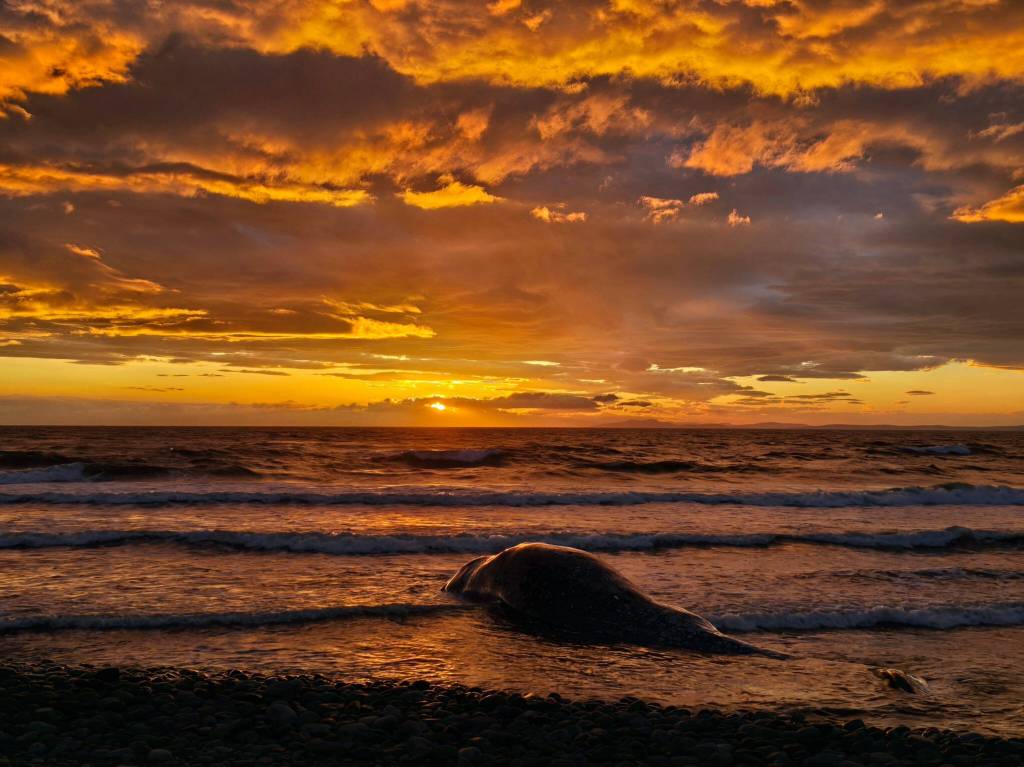
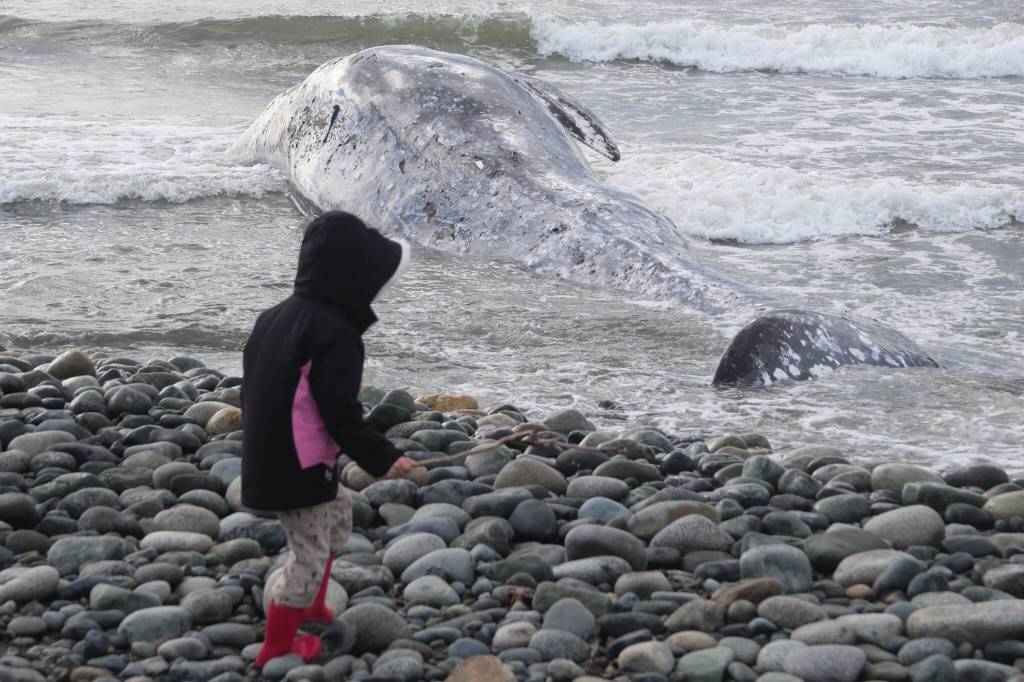
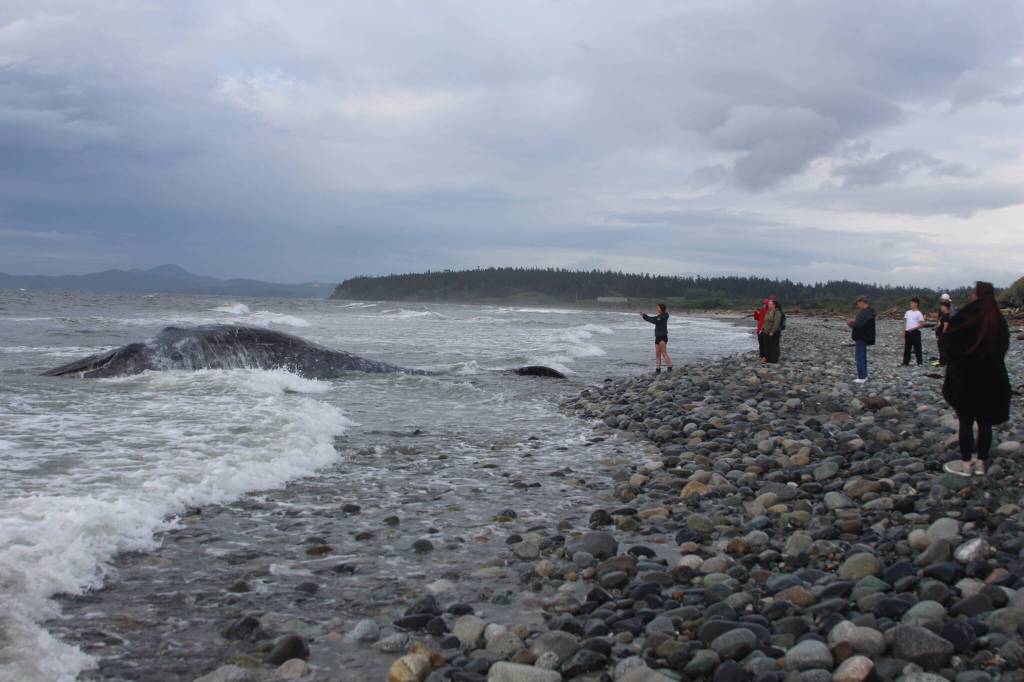
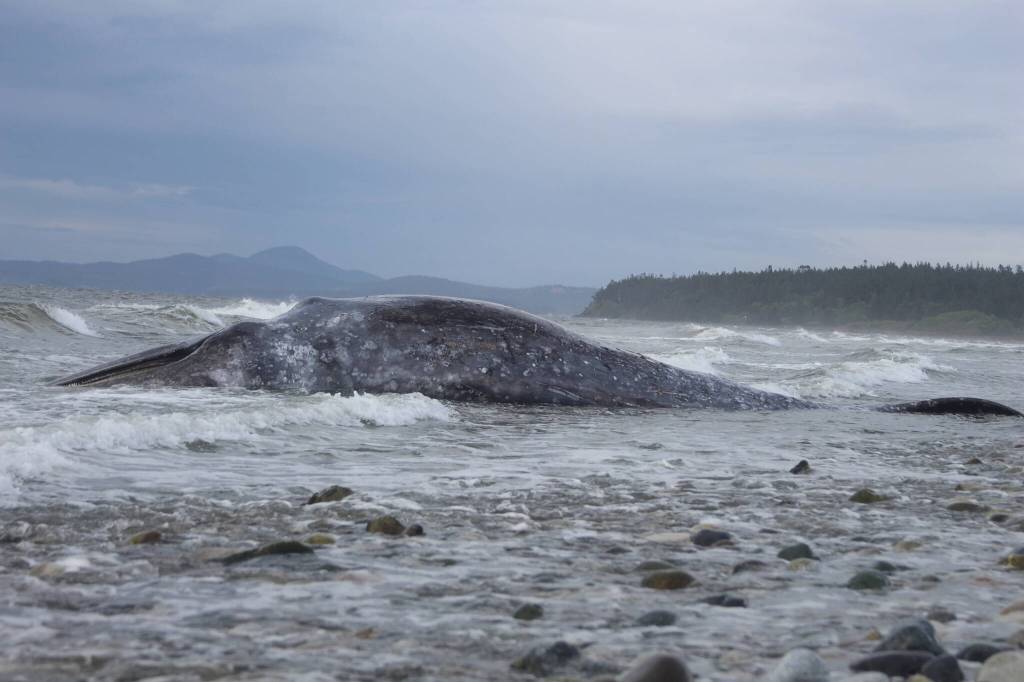

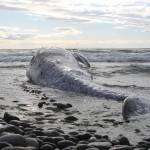
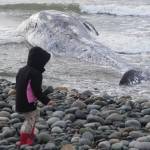
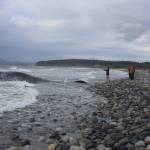
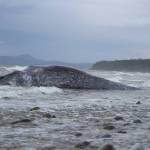
Bobbing in the Salish Sea, its tail flapping up and down, the gray whale’s limp body seemed to come back to life like a puppet pulled by its master’s strings. Standing before the massive creature in Oak Harbor, one could almost feel the wisps of its soul leaving its corpse. Its head tilted up by a swell, one eye rising briefly above the water as if wanting to take one last look at the world.
Behind it, out in the distance, a spout sprayed from the sea intermittently.
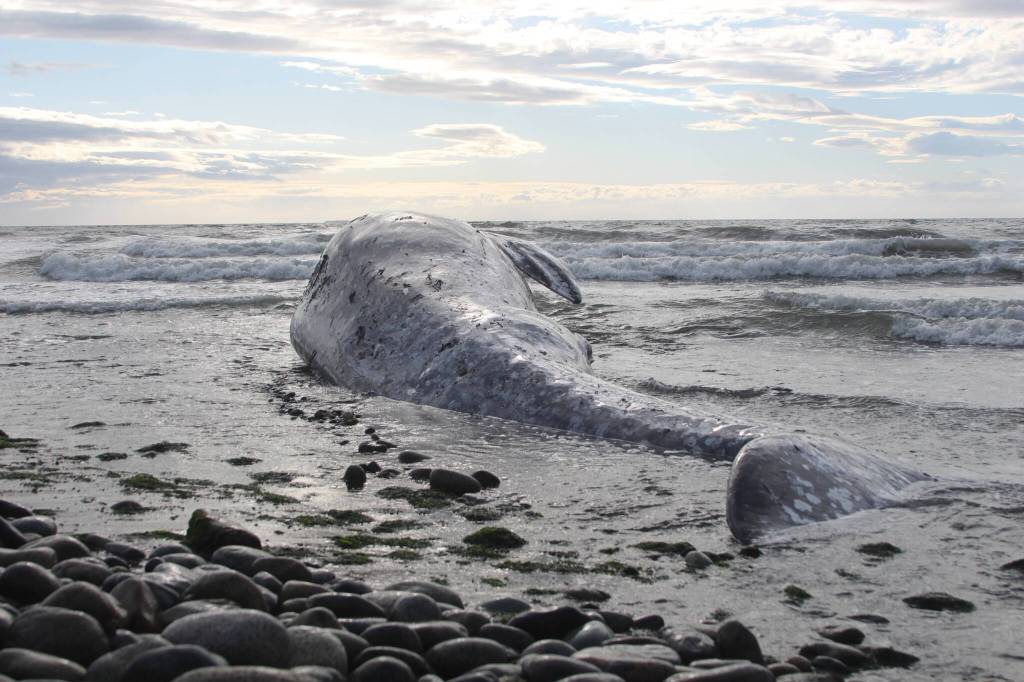
On May 13, a deceased 39-foot gray whale washed ashore at West Beach County Park in Oak Harbor around midday. The male is the 19th dead gray whale to wash ashore in the state this year, already surpassing last year’s tragic toll, John Calambokidis, a research biologist for Cascadia Research Collective wrote in an email to the News-Times. Howard Garrett, President of the Orca Network, called it a “decimation” of the population.
Puget Sound Marine Mammal Stranding Network volunteer Tiffany Waldner took pictures of its tail fluke and the dorsal ridge in an attempt to match it with existing pictures and identify the whale. Its identity is still being determined, though it is not one of the Sounders, a group of gray whales that commonly visit the northern Puget Sound region during migration.
In violation of the Marine Mammal Protection Act, which prohibits people from touching or tampering with live or dead marine mammals, two people threw rocks at the whale early in the day on Wednesday. A member of Whidbey Whale Watchers, Harriet Vick, said she screamed at them to stop and was horrified by the display.
The whale had no visible sign of external wounds, but it did appear emaciated, the Orca Network Stranding Response Coordinator Garry Heinrich said. Its blubber was dark gray with white mottling and the occasional scar, but it lacked the pale, washed-out sheen of the gray whale that stranded near Camp Casey in July of last year. This is likely because it is less decayed and has had less sun exposure, allowing scientists to perform a necropsy on Friday to determine its cause of death. The results are still being studied.
Calambokidis expects this year’s tally to continue to grow through June.
The gray whale population has more than halved over the last ten years, according to NOAA staff approximations, Calambokidis said.
“These recent mortality numbers are even more troubling in that context,” he said.
Still holding on to hope, Calambokidis noted that the two strandings documented since the start of May could suggest a slowing of the pace of deaths.
The Arctic has changed drastically over recent decades, Calambokidis said, which is affecting the broader ecosystem and dwindling the gray whale’s main food source, seabed creatures. Because of this, the gray whale strandings this year have mostly shown signs of malnourishment, he said. The earlier strandings were likely because whales did not eat enough in the Arctic before they started their winter fast as they migrated to Mexico and back. The whales that stranded in the spring were on their way back north to their primary feeding grounds, Calambokidis said.
The culprit for the starved gray whales, Heinrich said, is climate change. His solution is to get involved in policy change and be more aware of how one’s actions affect animals and the environment. This recent whale death is a “canary in the coal mine,” a sign to wake up, he warned.
“I mean, this has been such a frustrating thing,” Heinrich said. “When the gray whales were almost hunted to extinction it was pretty easy to focus on the problem and stop the whaling. But this is such a global issue.”
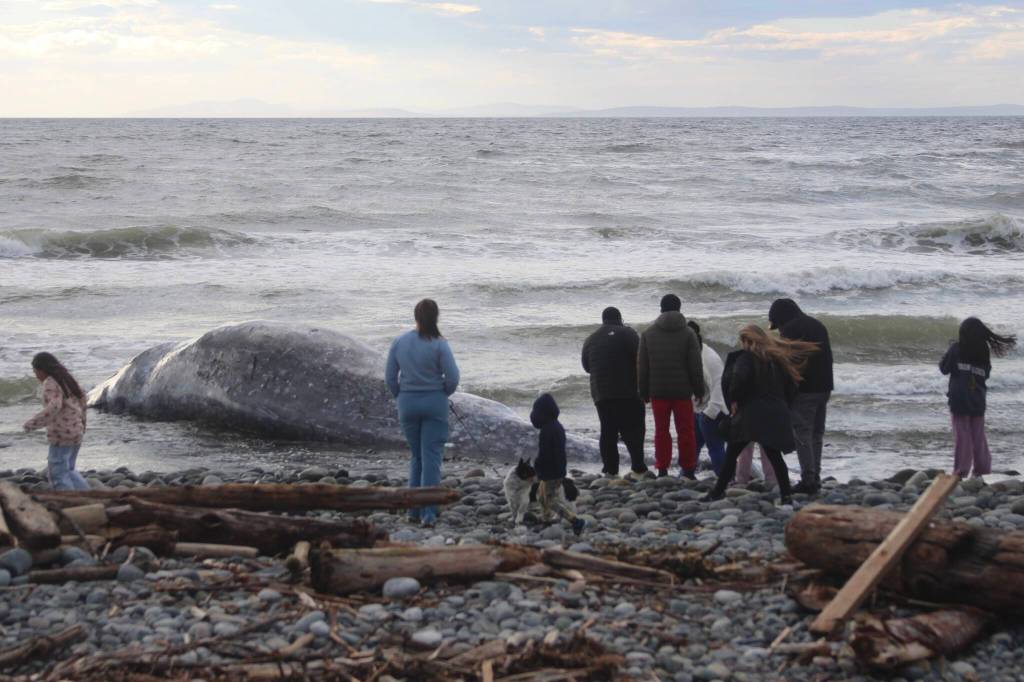
Spectators came to pay their respects, satisfy their curiosity and witness the phenomenon for themselves on Wednesday and Thursday.
Among the onlookers on Wednesday, Orca Network volunteer Debra Toro dropped to her knees and prayed for the whale. This is something she does often for animals who are deceased or harmed, but to her, whales have a special magic to them. She recalled a phrase in Lakota tribal language, mitákuye oyás’iŋ, or all my relations. Just like humans, Toro said, she believes the deceased whale’s soul reunites with the “creator of all source.”
“Nature is screaming,” Toro said. “Kind of like Tahlequah did. ‘Are you listening? You weren’t listening.’”
Amy and Eugene Schollen, who lived just a couple of miles from the beach, brought their young son to catch a look at the massive creature. The couple said in the 14 years they’ve lived there they haven’t witnessed anything like it.
“Only time he’d ever see one. This close anyway,” Amy said, referring to her son witnessing the washed up gray whale. “It’s part of life, it’s important to teach.”
The boy, however, was more interested in showing a News-Times reporter some pretty rocks.
Lara Starr and her partner, who also lived nearby, were watching the whale with their two kids. Ten years ago, they would see whales out and about from West Beach, but over the last few years they stopped seeing them as much, Starr said.
“It’s heartbreaking how many have died and that this mass die off is ramping back up” she said. The family visits the beach frequently, teaching their kids that their job is to be stewards of the earth.
Park personnel are considering finding someone to lead a project in preserving whale bones and turning them into an educational display, though it is still an early-stage idea, Calambokidis said.
Report marine mammal strandings to the West Coast Marine Mammal Stranding Network by calling 1-866-767-6114. See the timeline of gray whale deaths in Washington at Cascadia Research’s website.