State ferry system touts terminal electrification, strong workforce
Published 1:30 am Friday, May 29, 2026
Washington State Ferries reported a strengthened workforce and updates on its electrification program — affecting one Whidbey terminal — during a community meeting on Tuesday.
Reducing greenhouse gas emissions 70% by 2040, as the agency aims to do, requires the electrification of 16 terminals, the construction of 16 hybrid-electric vessels and the conversion of three existing vessels into hybrid ones. Clinton is one of four terminals in which electrification is currently underway, and things are moving along as planned.
Design for the Clinton terminal electrification is about 30% complete and should be finished next summer according to David Sowers, the electrification program’s director. Construction is anticipated to begin in the fall of 2027. Sowers added that the first new vessels constructed will service the Mukilteo-Clinton route.
“Once the vessel can plug into the terminals, it really makes the whole system work efficiently and reduces our greenhouse gas immensely,” Sowers explained.
Ideally, terminal electrification is completed and operational in Clinton by 2029, per a previous Record story.
Sowers explained that Washington State Ferries is responsible for the highest amount of greenhouse gas emissions of any state agency, thus necessitating the electrification program.
He stressed the importance of beginning electrification efforts and propelling the ferry system “into the next century” sooner rather than later, given 11 of the 21 vessels in its fleet will be “at or near the end of their life” in 2040. Building a ferry — which includes phases of procurement, design, construction and commissioning — is a process which can take around six years to complete.
Arrival of the first new vessel is anticipated in 2030, Sowers said, but could occur earlier.
Painting and resurfacing of the Coupeville terminal’s vehicle transfer span is in progress as well, according to Terminal Engineering Director Nicole McIntosh. Next year, Coupeville will be one of four terminals undergoing vehicle transfer span repairs, necessitating closures on March 23-24, 2027.
Repairs are mechanical and electrical in nature, McIntosh explained.
“The upgrade is necessary,” she said. “As our systems are older, it improves the safety of those systems for both our crews and our passengers. And it helps, really, to standardize the operations for our crews that may go to different terminals, so they know how to work each facility.”
Improvements to the ferry system are personnel-related, too. Efforts to strengthen the agency’s workforce has led to fewer cancelled sailings.
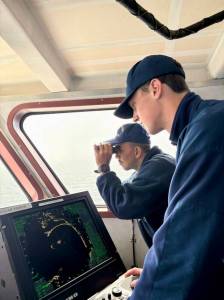
More than 250 employees have been hired since 2022, when the agency found itself in a “very dire situation” staffing-wise, according to Steve Nevey, head of Washington State Ferries. More than 80 licensed crew members have been added in that time as well.
A report conducted in 2022 found that 53% of the agency’s captains and 34% of its chief engineers were at risk of retirement. Those percentages have dropped to 40% and 23%, respectively. Nevey said he considers 20% to be a healthy number, but called the development encouraging nonetheless.
Sailings are still cancelled periodically, but Nevey reported that there are fewer cancellations overall now. And, the ability to “backfill” crew means that vessels spend less time sidelined due to insufficient staffing, he explained.
“I feel like we’re really getting our arms around our workforce issues and really taking control of our own destiny when it comes to our maritime workforce,” Nevey said.