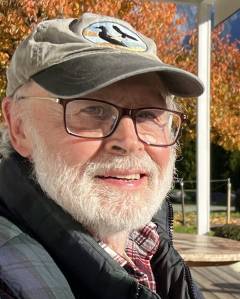
Our Whidbey Island Neighbors: Bruce Williams-Burden, a many-faceted man
Published 1:30 am Wednesday, June 10, 2026
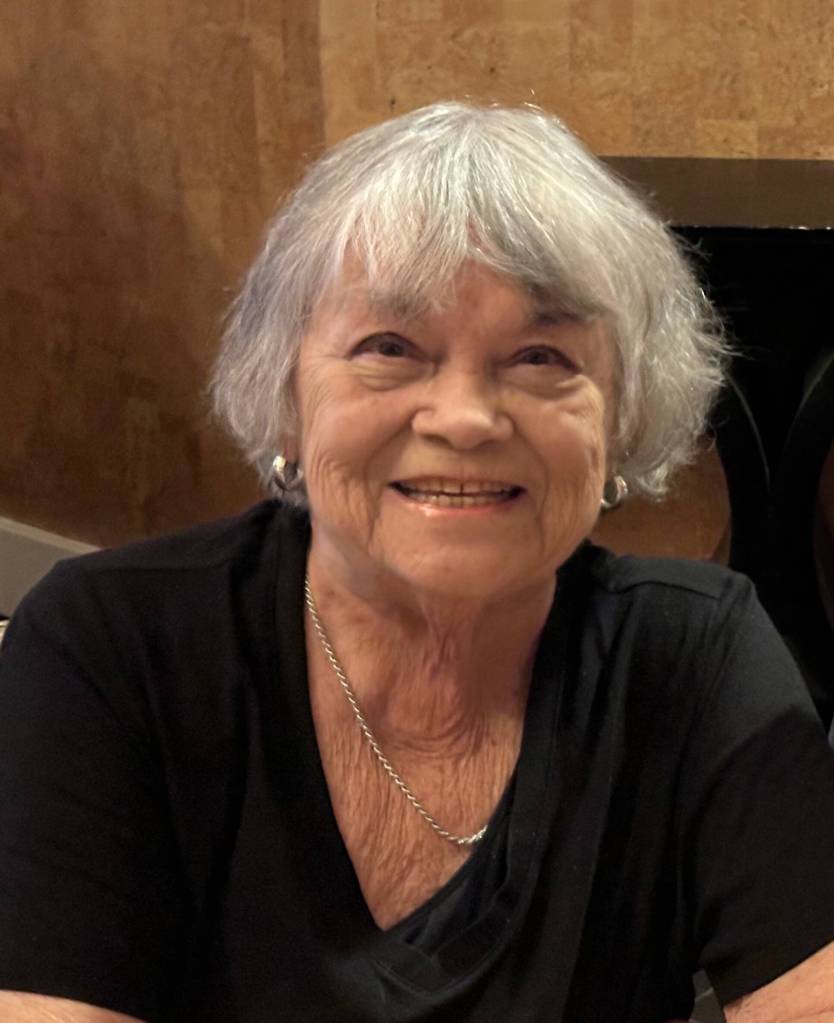
To say that Bruce Williams-Burden is a many-faceted man is an understatement. I mean how many people do you know that can say they are a Navy medevac corpsman, neurological physician assistant, nature and documentary photographer, author, public speaker and business owner? I am proud to say I do!
Bruce and his wife Lorna, a retired pediatric nurse, moved to Whidbey Island in 2014 after leading very full lives of service to others. Bruce was born in Lima, Ohio, and as his father was a career military man, young Bruce became a world traveler at an early age. During his first eighteen years as a “military brat,” he lived in Puerto Rico; Long Beach, California; Ketchikan, Alaska; Staten Island and Long Island, New York; Bermuda; and Portland, Maine.
In 1966 at the age of 18, Bruce joined the Navy. He was sent to Great Lakes for boot camp and Hospital Corps School, after which he received his final medical training at Camp Pendleton before being assigned to the Marine Corps as a Navy corpsman. Bruce said he was proud of being in the Navy, but he noticed that the Marines seemed to have a special esprit de corps. During this period of his life, Bruce would be introduced to flying in helicopters, which would continue throughout his tour of duty. He volunteered for search-and-rescue missions during this time which included helping evacuate people stranded in the Santa Barbara floods. For this he was awarded a Boeing Rescue Citation.
It was also during this period of his life that Bruce would see his first of many people who were deceased. It would not be his last. In 1966, he was in charge of an emergency room where one of his biggest responsibilities was giving pre-deployment inoculations, but one night they received a call about a young Marine’s baby needing help. They arrived too late and found that the baby had died of SIDS. Bruce remembers the incident as if it were yesterday. It has left an indelible mark throughout his life.
After experiencing this, Bruce was able to visit Westport, Washington and spend a little time with his family. His father had originally been in the Navy during World War II, but later joined the Coast Guard. In that capacity, his father rose to be the executive officer in charge of the radio station and lighthouse in Westport.
About this time, Bruce decided to devote his life to what he called “intuitive altruism.” So, it was no wonder that the young man thought about enlisting to take part in the emerging Vietnam crisis. But he decided to leave it to destiny and the flip of a coin to make his decision. Vietnam won. In 1968 at the age of 20, he opted to go into the war zone. Three days after he turned 21, he would land in Da Nang, Vietnam.
Bruce served in Vietnam a total of 302 days. The first half of his tour there he worked as a corpsman supporting the pilots and personnel who flew and worked on jets, the other half of his tour he flew medevac or medical missions on helicopters when he would fly directly into battle to retrieve the wounded, sick or dead servicemen. As a result of his experiences, Bruce was awarded the Navy Commendation Medal for heroism for his service in Da Nang, as well as five Air Medals and the Vietnamese Cross of Gallantry.
Once back home in 1970 and out of service, Bruce worked with Skid Row alcoholics while he attended Northeastern University in Boston, where he earned a degree as a physician assistant in 1974. Following his graduation, he continued to help others at a Job Corps Center in North Carolina, on the Trans-Alaska pipeline and for the Indian Health Service. The last 22 years of his 40-year career, he has worked in private practice and in clinical research at the University of Washington, as chief physician assistant in neurosurgery for the Puget Sound Health Care System, as well as for the Department of Veterans Affairs in Seattle.
Somehow Bruce would find the time to write two books dedicating the first, “Luminous Base,” which was published in 2010, to memorialize the 57 corpsmen who gave their lives in the line of duty between 1962 and 2007. These men and women served and died in Vietnam, Cambodia, Iraq, and Afghanistan and the United States (including one who died while flying out of Whidbey Air Station), with the majority dying in Vietnam. The name of the book refers to the radio call signal for medevacs out of Marble Mountain Airfield/Luminous Base in Da Nang, South Vietnam, where Bruce served the second half of his tour.
Touchingly, Bruce includes a chapter in his first book on the wounding of his uncle, Bert Salzman, who was 17 when he joined the Marines. Two years later he was fighting in the Chosin area when his platoon encountered more than a thousand Chinese and North Koreans. On top of this, the winter weather was below freezing and stormy. During the ensuing battle, Bert suffered severe head trauma and was airlifted by helicopter to safety.
Years later, in 1976, Bruce’s Uncle Bert would win an Oscar as the writer and director of a short film, “Angel and Big Joe.” Bert retired in 1982. Soon after that he and his wife would relocate to the Loire Valley of France, where he became a painter and teacher.
During Bruce’s busy life he found time to begin his own business, Critical Images Photography. His company provided documentary evidence and photography for the Department of Homeland Security, as well as for the military, various fire and police departments, laboratories, the FBI, the White House and the National Tribal Emergency Management Council.
Bruce’s second book, “Intrepid Souls” was published in 2011 and is about “the story of the medical personnel and the Marines of the 1st Provisional Marine Brigade and the 1st Marine Division at Pusan, Inchon, Wonsan, and the Chosin Reservoir during the Korean War.” The book is dedicated to his Uncle Bert and was written in memory of the 44 Navy hospital corpsmen and one Navy physician who died in the line of duty between August 2, 1950 and December 8, 1950.
When Bruce and his wife finally retired to Whidbey Island in 2014, he immediately joined Whidbey Allied Artists. It was at his first art show that we first met as entrants. Readers may remember seeing Bruce’s first picture and introduction to Whidbey in this paper. Ironically, the article included a comment made about Bruce’s photography by a painter named Helen Bates. (I had forgotten that until I started researching the internet for this column.) In 2015 Bruce became a vice president and show chair for WAA. He still retains those positions.
Today at 78, Bruce has not slowed down much. He continues working to honor his fellow Navy corpsmen by assisting in the passage of Congressional Bill HR 5939. But while the bill has been introduced, it has not yet been passed. He is, also, working on his third book. And, now at home on Whidbey Island, he still finds time to take part in art shows, as well as spend a little more time enjoying his two dogs and the rest of his life.
It is an honor to know this very dedicated and brave man. To Bruce, as well as to all those men and women who have served and to those who still serve as Navy corpsmen, we thank you for your service and dedication and especially for your “intuitive altruism. ” Semper Fi!
Helen Bates, an Oak Harbor resident, is a writer of poetry, historical and general interest articles, a three-act play and restaurant reviews.