Freeland student flees violence in Mexico with other UW students
Published 8:00 am Saturday, December 9, 2006
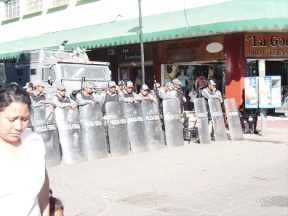
A University of Washington student from Freeland was caught in the middle of violent protests in Oaxaca, Mexico last month.
Kelsey Broderick and 17 other Spanish language students and two teachers were forced to evacuate Oaxaca because of unrest between a striking teachers’ union and federal troops.
The protesters burned buildings, broke windows, threw Molotov cocktails filled with nails and sprayed graffiti on many of the city’s buildings.
The students had been living in Oaxaca with host families and studying at a language institute since the beginning of fall quarter in September. The program was scheduled to end Dec. 8, but the students were bused out of town, then flown home from Mexico City on Nov. 30.
Although there were violent protests, Broderick said she always felt safe. The areas of unrest occurred away from where most of the students lived and studied.
“I was living about a 30-minute walk from the center of town where much of the violence was occurring,†she said.
Broderick said the political tension began in May when teachers went on strike for higher pay and were joined by the Popular Assembly of the Peoples of Oaxaca, or APPO.
“The protest movement became political when the APPO called for the resignation of Gov. Ulises Ruiz, who they said was corrupt,†she said.
“The APPO set up barricades around town that wreaked havoc with traffic and people getting to and from work. Schools had been closed since May and many businesses were closed as well,†Broderick said.
“Protesters were living in a tent city in the town square,†she said.
The violence escalated when two fast food restaurants were burned down on Nov. 20. Five days later protests turned into a night of violence when protesters set fire to government offices and 40 people were injured.
When an American journalist was killed in late October, the troops moved in.
“The police set up a perimeter around the town and moved the protesters out of their tent city,†she said.
“But the protesters moved only about five blocks away near a cathedral.â€
“The police were trying to maintain order. They used tear gas and water hoses. Some students were tear gassed because they were in restaurants near where there were protests,†she said.
The recent national election was also cause for concern.
“The new president of Mexico, Felipe Calderon, was to be sworn into office Friday, Dec. 1 and even more turmoil was expected. The UW wanted us out of there,†she said.
Broderick said her mother knew more about the protests from online Websites than she did.
Nine people, including the U.S. journalist, have been killed in the violence there in recent months.
The political tension has dramatically altered the Oaxacan landscape from a tourist paradise to a graffiti-covered mess filled with constant protests and a police force presence.
“Everything was closed, even museums. And all the buildings were covered in ugly graffiti,†she said.
“We didn’t get to do as much sightseeing as we had hoped. We attended school during the day then sat around our host homes at night,†Broderick said.
The university has sent students to Oaxaca for about 12 years. The program runs only in the fall. The language classes include grammar classes, conversational groups and cultural activities including cooking, dancing and craft workshops.
Online news sources say police arrested the symbolic leader this week of the six-month protest movement hours after he said at a news conference in Mexico City that he’d gone to the capital to negotiate a peaceful solution.
Broderick said she is happy to be home, but not deterred from studying abroad.
“I hope to study in Spain,†she said.
Broderick, a 2005 graduate, said two teachers at South Whidbey High School has made her want study abroad.
“Thanks to Spanish teacher Jenny Gochanour I want to study Spanish and because of the trip to Europe with Mr. (Tom) Kramer, I want to see the entire world.â€