What about cyclists? – Langley TIP plan lacks bike balance, critics say
Published 2:49 pm Tuesday, September 13, 2016
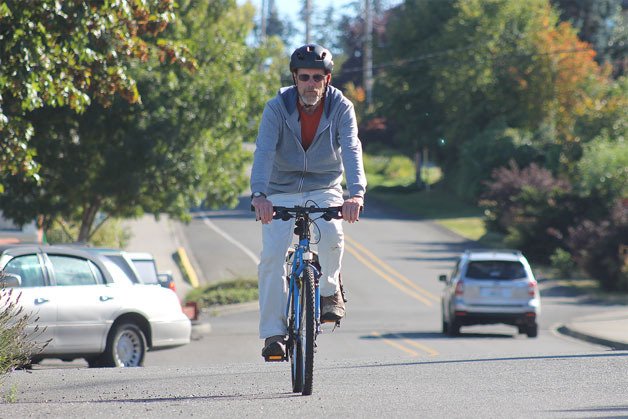
Langley bicyclists were spinning their wheels in frustration over the city’s six-year transportation improvement plan last week.
During a city council meeting and a public hearing on the planning document, people voiced their ire over the plan’s lack of cyclist focus. They said the document will do nothing to help riders navigate and travel through the city, and that it’s another example of little progress being made for people who prefer to peddle rather than drive.
“For years, we’ve said we’re going to have more biking and more walking and on and on and on,” said Fran Abel, a former city councilwoman. “There’s never been an action plan with the comp plan, so if this happens, hats off. And remember — we want bicycles.”
In addition to less priority on cyclists, residents were displeased by the plan’s lack of detail, which shows a general outline of projects to be completed as opposed to in-depth explanations for each item. They also said news briefs in The Record misled them in thinking there was more substance to that plan, and that its terminology was confusing.
“I don’t know what milling means, I don’t know what overlay means,” Langley resident Kim Drury said. “There’s a lot of big dollars on it but no context. Two weeks in a row I see the South Whidbey Record encouraging people to attend for public comment. Well, I thought, ‘Oh we’re going to talk about bicycles because that’s transportation.’ There’s nothing in this document or on the website that says anything about bicycles.”

Mayor Tim Callison responded by saying, “I don’t write those articles,” which sparked good natured chuckling throughout the room.
The plan document shows a list of projects – mostly road repairs and sidewalk improvements – their cost, whether or not the projects have grant funding, and projects that could be completed years down the road. The city is required to approve a transportation improvement plan each year after a public hearing. The plan can be modified depending on work that is completed or changes to the city’s comprehensive plan, Callison said.
In a phone interview Tuesday, Callison said that cycling, walking and other modes of transportation are discussed more in-depth in the transportation element of the city’s comprehensive plan. The transportation element documents can be viewed online at www.designlangley.org.
The first project to be completed will be the repaving of the intersection between Cascade Avenue and Sixth Street. The intersection is a primary entrance to the city and is in poor condition, Berryman said. A grant will cover most of the project’s $310,000 cost. The city’s general fund will fund $42,000 of the project.
“It does include the major improvements that we’d like to have done over the next six years,” said Public Works Director Stan Berryman. “This again is a plan and not a projected document.”
Drury said she’d also like to know what the goals of the transportation plan are: an increase of cyclists, more people riding the transit, sidewalk improvement on Sixth Street and whether or not traffic can be reduced around Langley.
“I want to see that and that’s why I came tonight,” Drury said. “That’s obviously not what this is.”
Another resident, Ed Anderson, was most concerned with the lack of priority for pedestrians and cyclists. He expressed frustration that there has hardly been any change to the city’s cyclist routes over the years, and that there was a lack of specificity in the plan. He also said there was a lack of connection between the city’s comprehensive plan and the transportation plan.
“It’s a nice overall goal statement, but then you have to tie it to specifics,” Anderson said. “I have no way of going through the city’s documentation and finding specifics. I admit, it would be nice if I came down here to attend all the meetings, but I get bored with that.”
Callison said there was ample opportunity for residents to comment on the transportation plan as it was being constructed and discussed by the Langley Planning Advisory Board and city council. He said oftentimes there was no one in the audience for those discussion meetings despite it being heavily advertised in The Record and on the city’s website.
“I’m sorry that you may have missed the discussion that was on-going through the PAB and then through the city council because they have been reviewing that plan and looking for public input,” Callison said.
He also said that it is typical for cities to create an improvement plan and then shelve it to the next year. Callison said he and the city council hope to end that trend.
“It’s the intention of this city council and this mayor to take the comprehensive plan when done and break it apart into actionable elements and create execution plans,” Callison said.