Salinity Seafood promotes native oyster, connects Whidbey’s beachfront farmers
Published 1:30 am Friday, May 1, 2026


By PATRICIA GUTHRIE
Emily Wilder is all about oysters.
How they grow, how their ecosystem needs protecting, how to shuck them and of course, how to eat them— raw, grilled, fried, roasted, stewed, canned, pickled, steamed, smoked, broiled, boiled.
Wilder’s business, Salinity Seafood & More at Bayview Cash Store, ties together her undergraduate and graduate studies, marketing skills and years spent working in the muck and minutiae of the aquaculture industry.
Wilder, who calls herself the SeaEO of Salinity, is particularly passionate about Washington’s only native oyster, the Olympia oyster, dubbed “tiny but mighty.”
“The flavor is beautiful,” she said,” but a lot of people don’t choose to grow them on their beaches because they grow about four times as slow as any other to the species.”
The ubiquitous Pacific oyster, a native of Japan, is the big, meaty species that most restaurants and bars serve. Presenting a bowl of Olympias, known as “Olys,” to paying customers would not so impressive, at least in looks.
Wilder is also loud and proud about the region’s goofiest shellfish, the geoduck. (To find her store, just look for a banner of the giant phallic clam.)
“Salinity was created with the Olympia oyster and the geoduck clam as the king and queen. Which is the queen, which is the king? Could be either,” she states on her website. “Both creatures could be male or female and you wouldn’t know from looking at them.”
Wilder shares her quirky, colorful shop with the Island Shakespeare Festival gift store, The Bard’s Boutique. When customers wander in, Wilder promotes the upcoming summer performances of “Macbeth” and “Robin Hood of Sherwood Forest” just as fervently as her favorite shellfish.
Salinity is packed with a unique assortment of regional food products, handcrafted wares and gift items. Online, she also sells and ships oysters grown at the two commercial hatcheries to Whidbey Island, the Swinomish Tribe’s farm in Simile Bay by Fidalgo Island and Skagit Shellfish in Skagit Bay on the north end of Camano Island.
Boosting Washington’s native oyster
The shop, Wilder admits, is a way to spread the word about her beloved bivalve, ostrea lurida, Olympia oyster.
Wild Olympia oysters were once abundant up and down the West Coast, providing a staple food source for native populations. After being nearly wiped out during the California Gold Rush, and then from habitat destruction, the only viable population to survive was found near Olympia.
“I knew I wanted to teach people about oysters, but that not everyone wanted to learn about oysters,” she said. “So, I started adding other items from small businesses in the Pacific Northwest to the shop. Now we’ve got a couple hundred items from producers and artists in the Northwest and a lot of folks from Whidbey Island.”
Oyster shell earrings, alder-smoked nori roasted snacks, honey sparkling mocktail, canned mussels in yellow curry, hazelnut coffee toffee, bullwhip and kelp hot sauce, cans of cod livers are just a sampling. Whidbey Island curated treats include coffee, dried organic blueberries, honey, lotions, doggie treats and a children’s felt “quiet book” featuring island animals.
And, of course, a ceramic mug with a geoduck handle.
Wilder emphasizes fair trade, sustainable growing and “turning the tide” on issues of inequality and environmental devastation.
She gets the word out with a mix of social media messaging, an ever-expanding list of Salinity events and salty humor.
Jokes appear regularly on her storefront chalkboard. “Why do oysters stick to rocks? To avoid the pier pressure.”
Wilder offers tasting workshops, educational gatherings and she’s formed the Whidbey Oyster Network to connect the island’s scattered recreational beachfront growers.
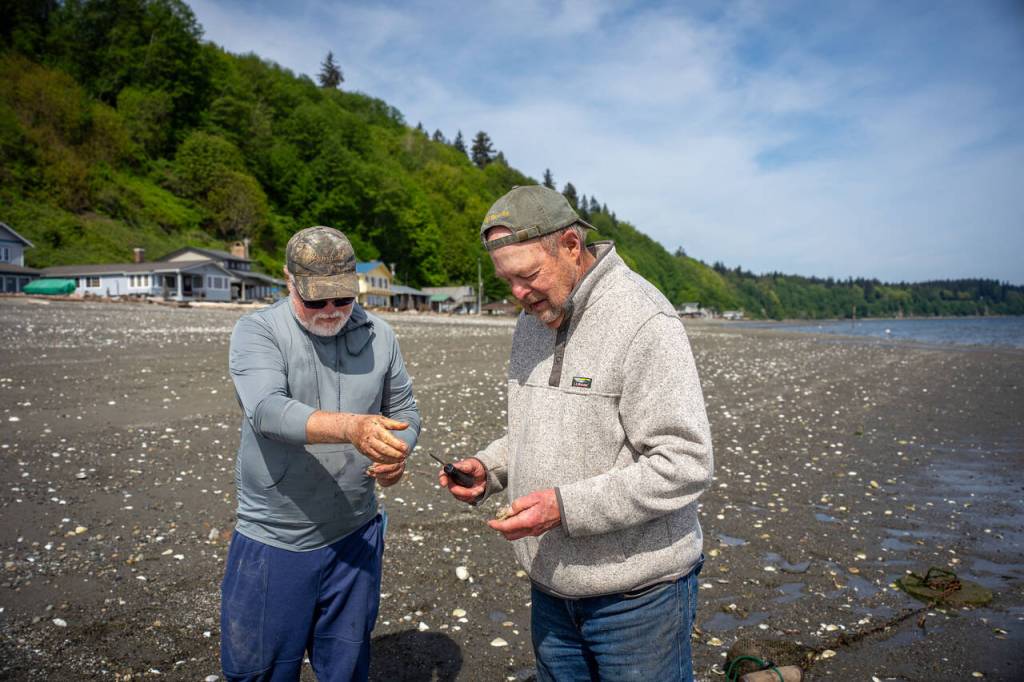
“She’s so enthusiastic and very informative,” said Sean Van Gieson who harvests oysters in front of his house on Brighton Beach near the Clinton ferry dock. “She’s motivating us to get together and exchange information on growing.”
Bill Dewey of Taylor Shellfish Farms commended Wilder on her efforts to “make Whidbey Island the shellfishy island it deserves to be.” Many residents on Whidbey and Camano Island have caught the “shellfish bug,” Dewey said, and buy their starter seeds from the company.
“People get excited about their shellfish gardens,” he added. “It is great that she is creating a network for Whidbey Islanders to learn and share their experiences.”
‘The first 100 oysters are the worst’
During her workshops, Wilder speaks with the zeal of a missionary and the profundity of a professor. To say she’s focused would be an understatement. When a participant mentioned meeting her previously at her Bayview Corner store, Wilder responded, “I’m not that great at names or people…I really just care about oysters.”
Wilder grew up on Whidbey Island. But she didn’t taste her first oyster until she was studying sustainable farming and agriculture at Evergreen State College (mascot – geoduck.)
“It changed my life,” she said.
She soon found herself in charge of the new college oyster education farm rimmed by a huge forest. Low tide harvesting usually happened in the dark.
“So I spent my undergrad at Evergreen meeting 30 students, walking them through 1,000 acres of forest at midnight in the rain and then handing them knives, and crossing my fingers.”
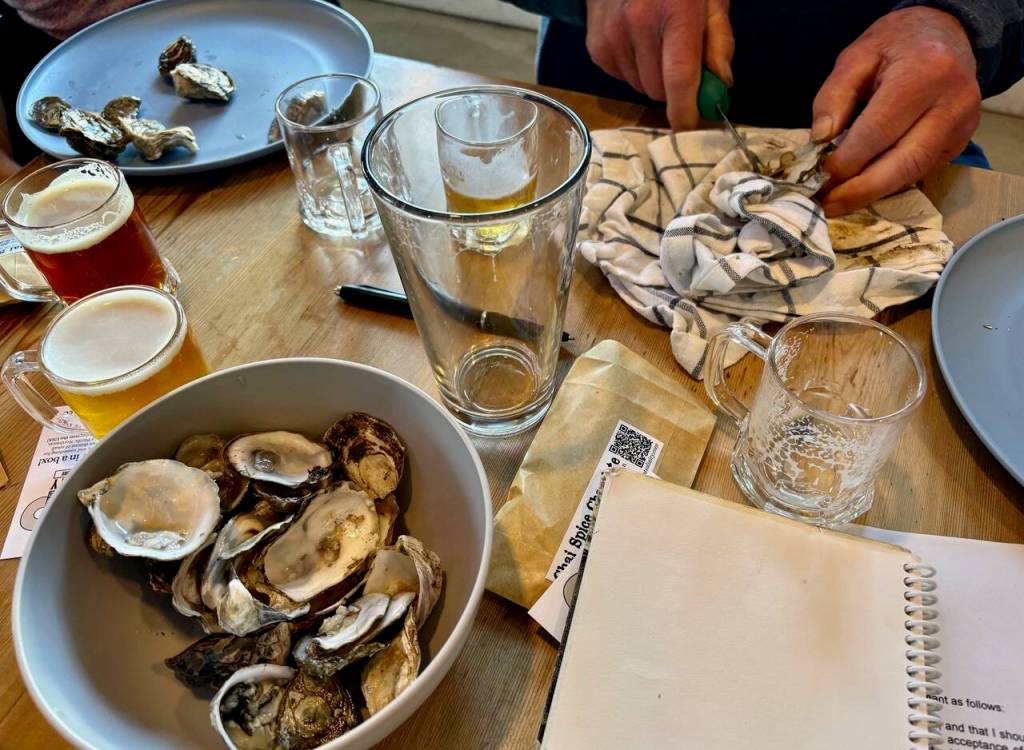
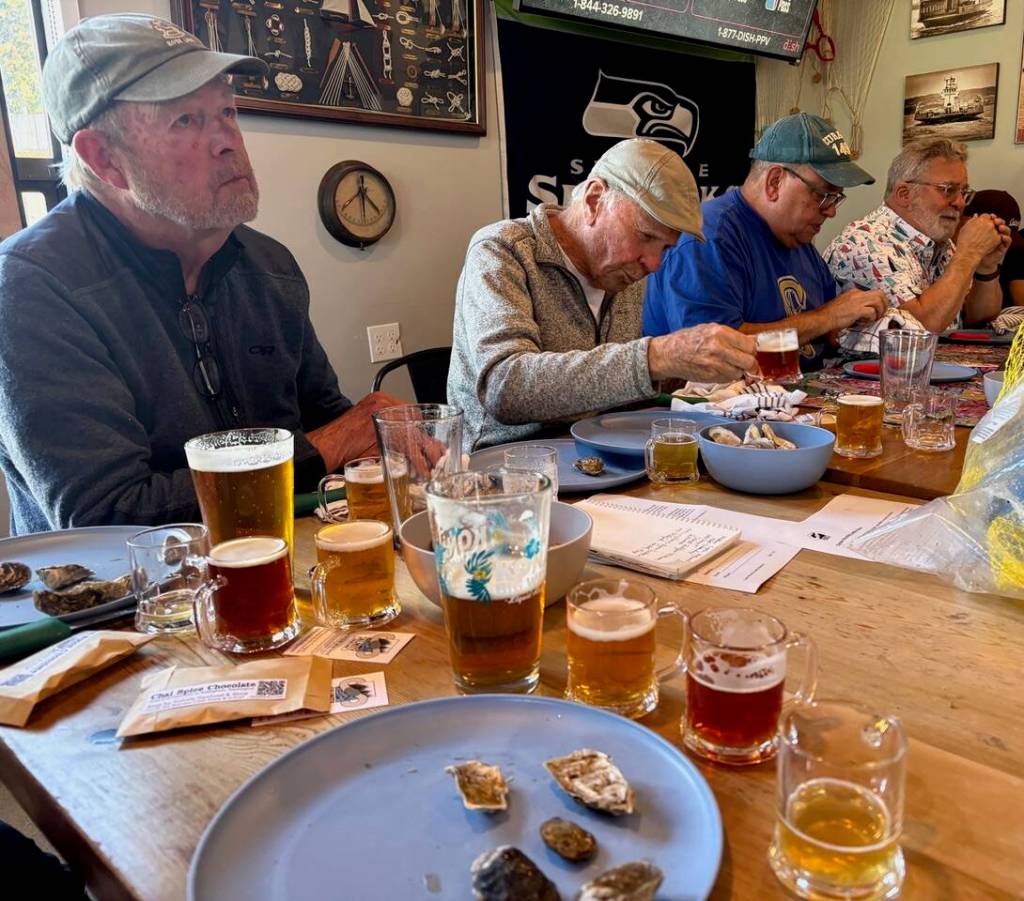
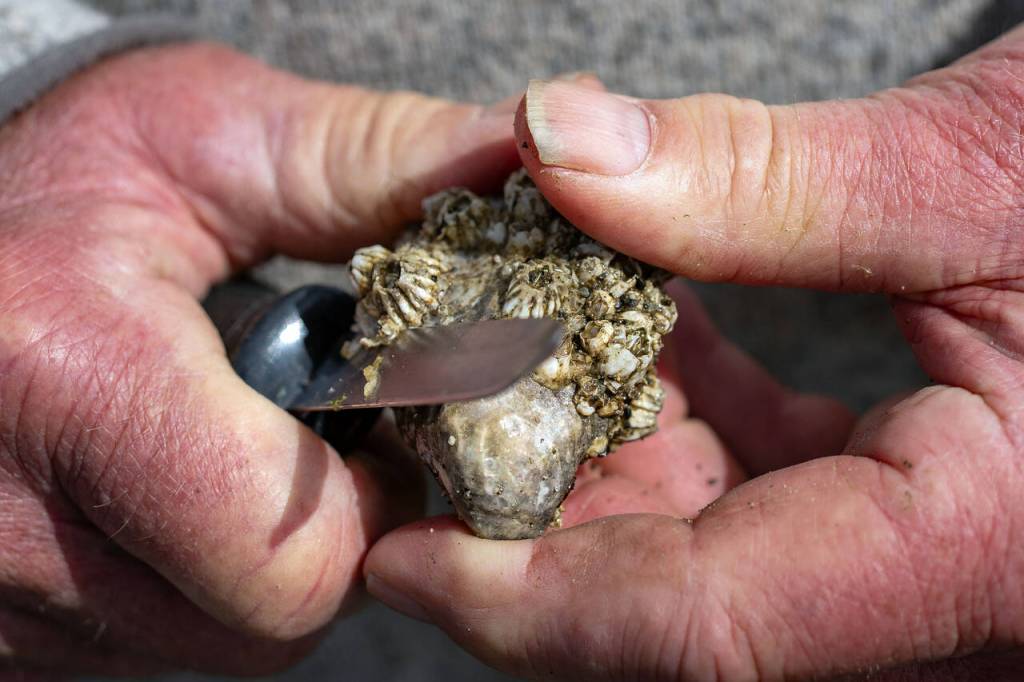
Holding up a specialty shucking knife at a recent oyster/beer tasting event held at Tasty Crab in Clinton, Wilder admitted it’s not an easy skill to master.
“One year after I shucked my first oyster at Evergreen, I was at the harvest festival in the competition,” she recalled. “And I could not get the first oyster open before the entire competition was over.
“The first 100 oysters are the worst,” she added. “And then after that, it gets a lot easier.”
Wilder throws in many fascinating facts during her presentations: oysters have no brains; oysters can change genders six times in their lifetimes; one oyster can filter 50 gallons of water.
To get the true smack of ocean flavor, raw is the way to go. Wilder extols the nutritional benefits of eating oysters raw because it retains the wallop of minerals, nutrients and happy-dance dopamine the bivalves deliver.
And don’t slurp them. Savor, like a fine wine.
“When you open the shell, it should still have liquid inside it, and it should be a good amount of liquid.” Wilder told the eight participants after demonstrating the art (and agony) of shucking.
“And then you smell it. Okay, it smells like nice ocean, not like low tide. And then take a little sip. That gets your mouth used to the salt level of that oyster, because it can vary from oyster to oyster depending on where it’s grown.
“And when you eat the oyster, you want to chew it. That’s very important so you can really taste it.”
After sampling three varieties, John Felicetti of Freeland, declared the Olympia the tastiest.
“I never had one before but they are so good, definitely the best,” he said. “But they are so small, you only get a pea’s worth of flavor.”
For more information, go to eatsalinity.com.