WICA celebrates 30 years of the art of community support
Published 1:30 am Friday, May 22, 2026








By PATRICIA GUTHRIE
Special to The Record
Some 40 years ago, the story goes, a bunch of Langley actors sat around the Dog House Tavern drinking beer, grousing about lousy places to perform, like the middle school, and an old movie theater called The Clyde.
A few more meetings fueled by a few more Dog House beverages, and a grassroots dream took hold— we need a performing arts center.
After years of figuring out the what-if’s, where and how-to’s of planning and paying for such a place, Whidbey Island Center for the Arts opened May 16, 1996. A new era for community arts began, and a new definition for the word WICA entered the local lexicon.
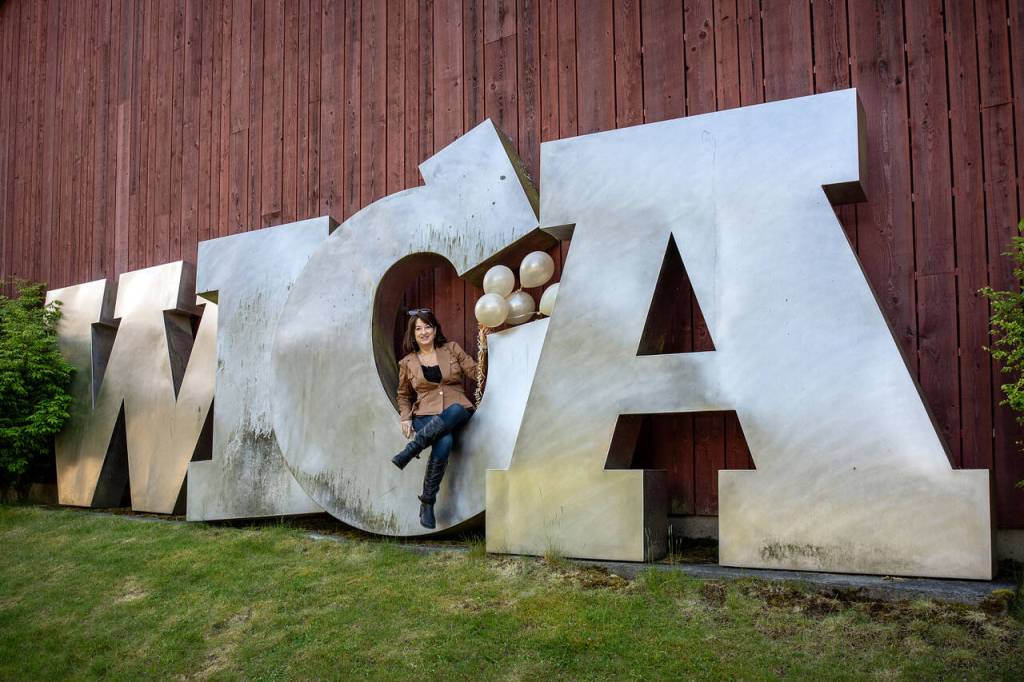
In celebration of its 30th anniversary, cupcakes, balloons and special performances comprise WICA’s set list this month. There’s many reasons to celebrate — a new look, solid finances and an upcoming sold-out show by Christian McBride, an 11-time Grammy winner and internationally-acclaimed jazz bassist.
Deana Duncan, WICA executive artistic director, credits “a dream among artists” for galvanizing a community around a common mission. “This worthwhile endeavor has enriched our lives far more than we can ever imagine,” she said. “The organization is Whidbey to its core, built by and for the community that surrounds it.”
Before a performance celebrating local talent last week, Duncan pointed out details of the center’s recent renovation. New stage, new seats, new curtains, new carpet, new acoustic paneling and a spruced-up lobby with funky steampunk art, part of the Lasher Gallery’s rotating selections of community artists. Duncan praised donors for meeting the $403,000 fundraising goal to pay for the facility upgrade.
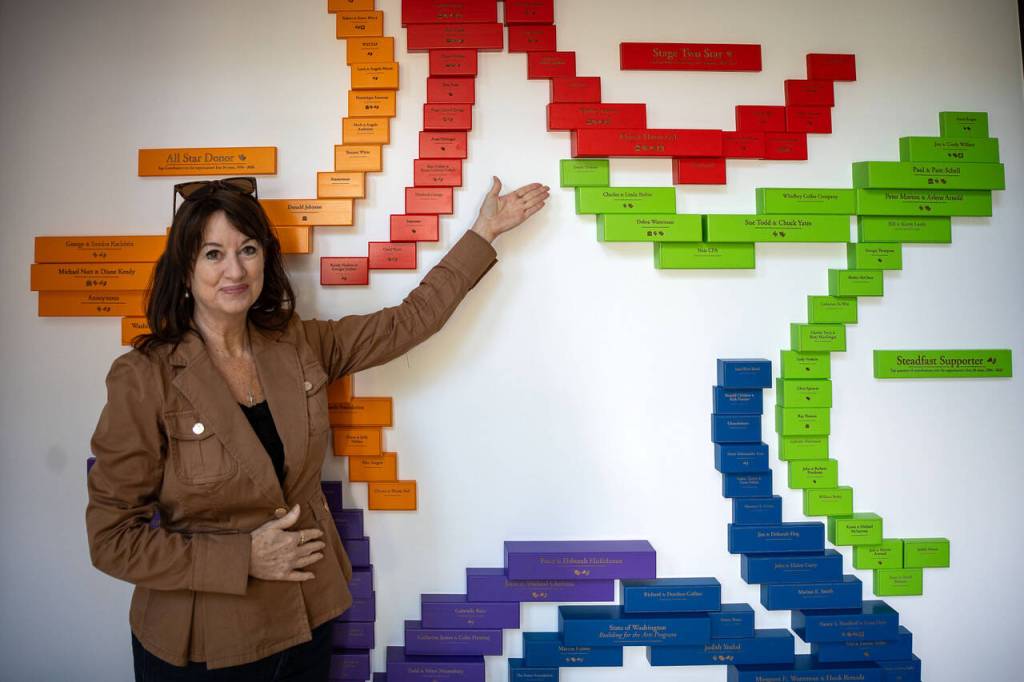
“We’re thrilled with how the renovation has gone,” she told the crowd that filled almost all the 246 stylish new seats, many with the names of people who pledged toward the “Take a seat in our future,” campaign. “It’s just amazing.”
Throughout the years, WICA’s core commitment to bring the community together through music, theater, visual arts, humanities and dance has expanded into a dizzying array of entertainment, events, lectures, classes, summer programs, film festival and an international music festival.
Each year, it provides 120 days of arts, educational and cultural programming for 15,000 patrons. Over three decades, those numbers add up to 4,000-plus performances, 350,000 patrons and a $15 million investment in local arts.
The numbers may be large but not the staff. There are three full-time employees — Duncan, Managing Director Billy Tierney, and Technical Director Tyler Raymond. The remaining staff is made up of 14 additional arts professionals, supported by around 200 volunteers.
WICA also supports graduating high school seniors in the arts, awarding $12,000 to seven pupils this year at Whidbey’s three school districts through the Bridge Family Scholarship. It has also reinstated its Summer Conservatory theatre camp for children ages 10-14 in partnership with The Whidbey Institute. In addition, many of its premiere performers head to local classrooms with the Arts in Education program.
Difficult first act
In addition to the founding consortium of artists, business people and local families, the art hub idea gained traction from Whidbey Island Arts Council, Langley City Council and the South Whidbey School District that ceded a tract of its property as a building site for the arts center.
“People commit to something and with that, the energy of creativity is put loose in the atmosphere,” said Doug Kelly, one of WICA’s founding board members. “You don’t know what’s going to happen. But you know you just work hard.”
After forming a board of directors and receiving non-profit status from the state of Washington, the first of many fundraising campaigns began. Initial funding covered only the basics — a box office, lobby and stage. The venue opened while the board figured out how to run it.
With a strong background in theater production, Vito Zingarelli took over executive duties in 1997. “It was a struggle opening an art center on an island,” he admitted. “And it was a struggle to get the word out that the center was the Whidbey Island Center for the Arts, not the Langley center. But once people walked in and saw it, it was hard for them not to recognize what a jewel they had.”
Zingarelli focused on building community relations, reaching out to Whidbey’s many organizations. Today, some two dozen organizations, such as Hedgebrook, Whidbey Island Dance Theatre and South Whidbey Schools Foundation partner with the arts center.
When the board agreed to start producing plays, WICA’s accession to an award-winning regional arts center began, said Stacie Burgua, who started as a volunteer administrator in 1997. Named the fourth executive director during WICA’s first four years, Burgua remembers going to work on Jan. 1, 2000 for “one tired board.”
She credits Zingarelli for bringing the creative spark of live theatre to WICA. It now produces about five plays every year from well-known dramas to Broadway hits, musicals, comedies, holiday shows and one-act premieres. To date, 122 plays have come to life on the Micheal Nutt Mainstage.
“Under Vito’s leadership, and a community full of professional and aspiring actors, the acting community finally had a home to perform in,” Burgua said. “And the rest of the community had a beautiful venue that offered a season of performances to enjoy.”
In 2007, more than 280 individuals, 20 businesses and eight foundations contributed to WICA’s second major capital campaign that doubled the size of the multi-arts center, adding administrative offices, Zech Hall and the patio, scene shop, costume loft and the green room.
“It’s something to be proud of,” Burgua said. “We wouldn’t be here if the community didn’t come together twice to raise funds.”
Django who?
Burgua, who retired in 2018, also started a music festival of music she knew nothing about.
“I was sitting in this little hole of an office and I get a phone call,” Burgua recalled. “The person on the other end tells me, ‘I’d like WICA to start a DjangoFest.’”
Burgua didn’t know who was calling. And she hadn’t a clue about Django Reinhardt or his music.
Nick Lehr, the voice on the other end, suggested that WICA book two bands, Pearl Django from Tacoma, and the Robin Nolan Trio from Amsterdam, for two nights in a row and two workshops.
“Like, that’s going to sell,” Burgua remembers thinking. “Thankfully, Nick was persistent and DjangoFest NW premiered in the fall of 2000.”
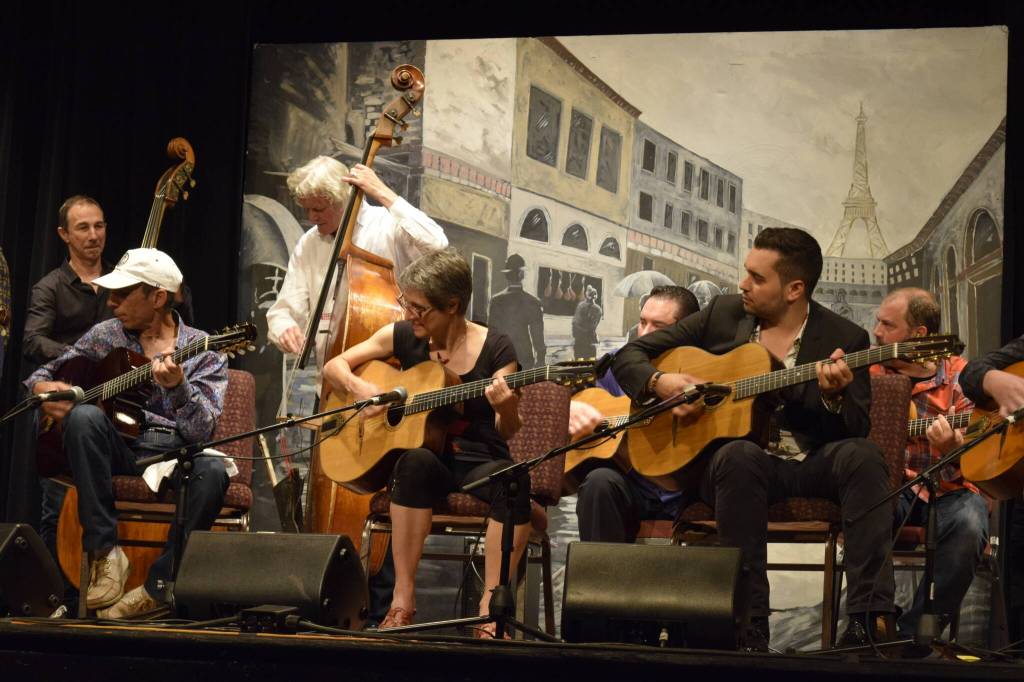
Djangofest has turned into WICA’s biggest event, booking musicians from around the world and costing $100,000 to $140,000 to produce over five days. It also brings in thousands of visitors and $350,000 to the local economy.
“I’ve seen DjangoFest evolve from a two-night concert series to one of the most respected and well-known festivals in the world,” said guitarist Troy Chapman, who has played in many bands over the years and is currently a WICA board member. “I got my start in the Pacific Northwest performing at WICA, both the DjangoFest Northwest, and the local artist series,” he added. “It was invaluable.”
Art to the Heart
Inclusion, diversity, pushing the boundaries are not just buzz words around WICA’s administrative offices. Past theater productions have explored controversial topics and historical times and figures — abortion, suicide, women’s rights, hate crimes, U.S. Supreme Court Justices, Richard Nixon and the French Revolution.
WICA’s stated vision: “To bring art to the heart of our community by inspiring, expanding and deepening our shared humanity and sense of belonging.”
Duncan, who has worked in numerous roles starting as a WICA volunteer in 1999, said programming decisions are a group effort.
“While I do guide this artistic vision and programming, the entire team of staff and board work to balance ambitious, boundary-pushing artistic excellence with accessibility and relevance,” she said.
Founding board member Debra Waterman says the creation of WICA is more than a dream come true.
“The fact that this theatre even exists is a miracle,” she said. “It took a lot of people and a lot of work.”
Some of those early arts go-getters would probably like to stop at the Dog House and tip a glass to the past and future of the Whidbey Island Center for the Arts.
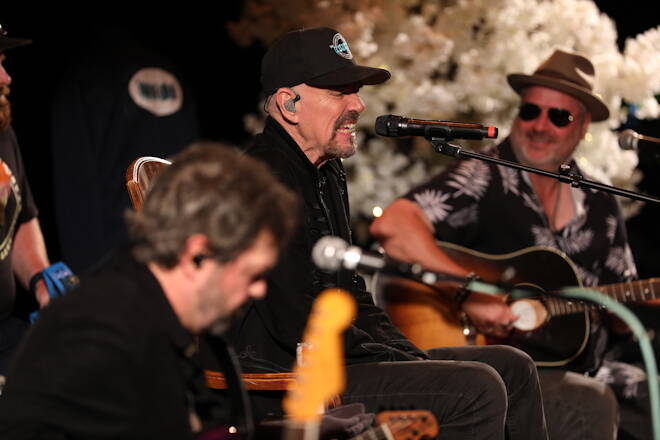
But that stomping grounds has been closed (and under occasional renovation) for who knows long? The Rural Characters, who came together as singing cowboys in a 1997 WICA play, sang about that dilemma last week during a 30th anniversary show.
“When will the Dog House be done?” Randy Hudson crooned. “It’s been under construction since Obama first won. Oh, when will the Dog House be done?”
By WICA’s 60th anniversary? Stay tuned.
For more information: www.WICAonline.org