Langley considers asking voters to increase property taxes
Published 1:30 am Tuesday, June 9, 2026
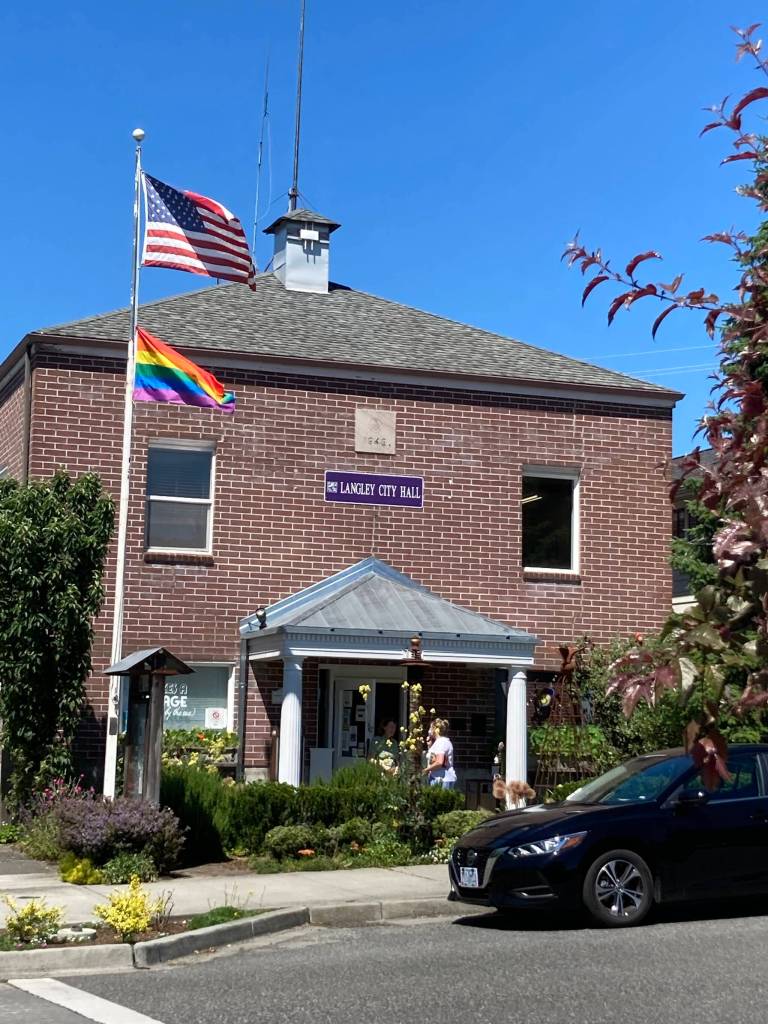
Langley officials are mulling asking voters for a levy lid lift — which, if approved, would be the first in more than two decades — to address the city’s troubling financial situation.
Numerous unfunded needs are affecting the efficiency and effectiveness of city operations, and the city is expected to fall about $200,000 short of its minimum general fund operating balance by the year’s end. Council members are considering increases of 0.38, 0.42 or 0.84 per $1,000 of assessed value, which would result in an average annual tax bump for Langley homeowners of about $292, $324 or $645, respectively.
Under that math, the average assessed value of a property in the city is $770,000. The current property tax rate is slightly less than $1.01 per $1,000.
No decisions were made during Monday night’s special meeting on what rate increase the city should ask for. Continued discussion on the topic is expected during a meeting on July 6.
But Mayor Kennedy Horstman framed a levy lid lift as a necessary next step in Langley’s years-long efforts to reach financial stability, and the question of what to spend the money on as one of triage.
“A low lift is — you’re asking for less money but you’re asking for money for things that we really, really, really need to prioritize,” she explained.
A shortfall of the minimum general fund operating balance puts Langley in a vulnerable position. Councilmember Chris Carlson clarified that the deficit impacts the city’s savings account, which could put the city’s ability to pay its bills at risk if an unexpected cost emerged.
“And so, we’re kind of slowly building that savings back up, but if we have a disastrous scenario hit us, we’re short,” he explained.
Besides that, Horstman and city staff identified 11 unfunded city needs which should be addressed, including $60,000 in Public Records Act litigation, regular facility maintenance and emergency preparedness costs. The city’s inability to afford compensation increases for staff — either step-based or merit-based — is also affecting employee retention.
Council members honed in on two unfunded needs, specifically: paying for a dedicated city administrator and a municipal software update.
Hiring a full-time city administrator would increase city staff’s bandwidth to handle problems, and ease the burden on the mayor’s shoulders, council members and staff said. Horstman explained she has taken on city administrator responsibilities despite lacking a suitable background and emphasized how important the “institutional knowledge” is that experienced city administrators bring to the role.
Horstman likened the workload to fighting off hordes of zombies; city staff are constantly moving from “crisis to crisis,” unable to fully resolve issues before the next one arises. She offered the discovery of a difference in utility costs between neighborhoods as an example.
“We stumble upon things that never should have been that way, and then everything has to stop because we have to fix it,” she explained. “Sometimes, we can only partially fix it, and then we’re stumbling on it again.”
More than two years into her term, Horstman figured that issue might eventually cease but this has not been the case. To her point, Carlson explained that one person likely does not have the capacity to handle mayoral and city administrator duties, which is why they are often distributed between more than two people in bigger cities.
Having someone in that role would also provide continuity between administrations and in spite of employee turnover, Carlson added.
Langley’s financial situation is years in the making.
General fund spending exceeded revenue from 2021 to 2023, according to a presentation at the meeting, and during that time, funds received during the COVID-19 pandemic sustained operations. Over the next couple of years, the city aimed to break even and build financial stability by reducing expenses through “structural changes.”
Attempts at increasing revenue were also made, like through the adoption of a public safety sales tax in 2024 which brought in an additional $51,000 annually, according to reporting by The Record.
“We have made progress since 2023, but we also have 22 years to make up for it,” Horstman said.
It is unusual for cities to unincorporate, and Horstman stressed that would not be the outcome of the levy lid lift’s potential failure. But the city’s financial request demands an understanding from the people of Langley that city services are costly, and if they want to continue benefiting from them, increased funds are necessary.
“I would argue South Whidbey needs us to be a city,” Carlson said. “We need housing, we need services that a city can provide in order to have development at the density that’s needed to be able to do it affordably. And so to unincorporate would really be giving up and doing a disservice to the broader South Whidbey community.”