Three vie for District 10 House seat
Published 1:30 am Wednesday, July 22, 2026
Affordability and ferry service are key issues for three candidates facing off in the August primary for the District 10, Position 2 seat.
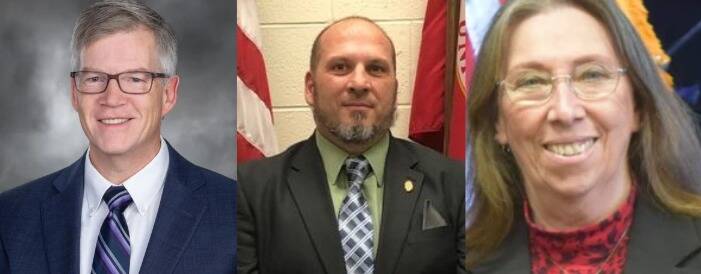
Incumbent Rep. Dave Paul, a Democrat from Oak Harbor, is up against Republicans Tim Hazelo of Oak Harbor and Carrie Kennedy of Coupeville.
Paul is seeking a fifth term. He is Skagit Valley College’s director of community relations and teaches American government. As chair of the Postsecondary Education & Workforce Committee, he said protecting the Washington College Grant, Running Start and College in the High School remains a top priority despite state budget pressures.
Hazelo, a commercial truck driver and former chair of the Island County Republican Party, said he decided to run after watching many Washingtonians, including his children and grandchildren, get priced out of the state. He previously ran for county commissioner and U.S. representative.
Kennedy, who describes herself as a constitutional conservative Republican, said her father and husband both served in the military, an experience that sparked her interest in politics. She has twice run for U.S. representative and also challenged state Rep. Clyde Shavers.
Beyond college affordability, Paul said he would continue focusing on health care, housing affordability and expanding pathways to living-wage jobs. He pointed to legislation lowering the cost of EpiPens and asthma inhalers and said permitting reform could help increase housing construction.
“We should be working as a state to help make sure that young people know what great careers are out there, and not all those careers require a four-year college degree,” he said.
Hazelo blamed the affordability crisis on government policies, citing housing regulations, excessive “red tape” and high gas taxes. He also said the state should evaluate social programs more rigorously and redirect funding from ineffective programs.
“We can’t afford to live in the state of Washington no more,” he said. “We’re one of the highest tax states in the Union, as far as revenue to the government. And yet, we’re one of the most expensive states in the Union, and it’s all because of government.”
Kennedy cited over-taxation as one of the biggest issues being faced by constituents right now. As a result, repealing the “millionaire’s tax,” which imposes a 9.9% tax on annual household income exceeding $1 million, will be one of her top priorities if she is elected, especially with an initiative on the tax set to appear on November’s ballot.
“I think we need to definitely take into account that people have a right via initiatives to voice their opinions,” Kennedy said, “and I don’t think that legislators or politicians should be going against what the will of the people is.”
She also called for full audits of state agencies, greater budget accountability and a reevaluation of housing regulations.
Despite their differences on taxes and spending, all three candidates agreed that improving Washington’s ferry system is a priority.
The state budget currently pays for three new hybrid-electric ferries, which will be brought in to replace Washington’s aging fleet. Paul said one of his top priorities as lead House ferry budget writer will be to secure funding for three more ferries next session.
“We are going to face a ferry cliff if we don’t get these ferries built,” he said. “I will sleep better at night knowing that that’s taken care of.”
However, Kennedy said that the promise of new ferries in the future is not solving the present problem, stressing the need for reliable ferry service sooner rather than later. She suggested the state offer more trade-based educational programs in order to create more mechanics who can help retrofit and repair the ferries Washington currently has.
Hazelo argued the solution to the problem is to allocate more funds towards ferry infrastructure rather than failing social programs.
“This isn’t rocket science,” he said. “This is a matter of common sense in doing what’s right for the people and spending the money properly.”
The primary election is Aug. 4. The two candidates with the most votes will advance to the Nov. 3 general election.