Planting the future, one seed at a time
Published 1:30 am Friday, July 31, 2026


An Organic Farm School graduate is using his knowledge of seeds to bring greater diversity back to the dinner plate.
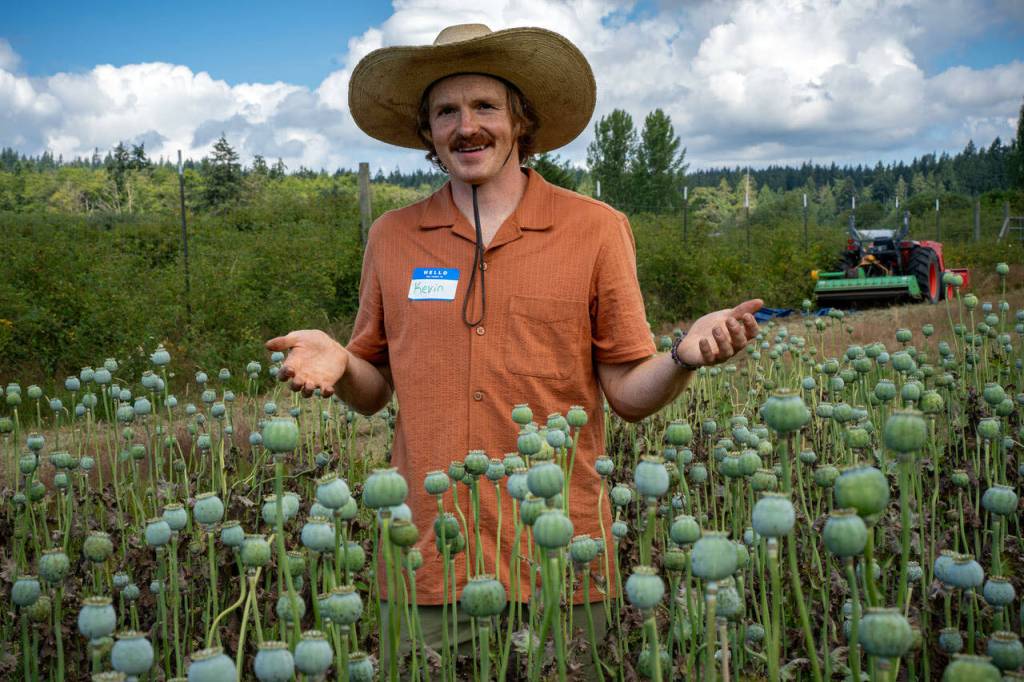
Kevin Holton attended the Organic Farm School as a student in 2023. Now, he continues to work with the school as an organic seed grower.
Holton said he enrolled because of his interest in small-scale farming. As both a student and later a field assistant, he discovered a passion for growing seed crops.
“The seed is kind of the foundation of all the plants that we eat and everything around us,” he said.
The school grows seed crops under contract for various seed companies. Because the school is certified organic, many companies work with the Organic Farm School due to the high demand for organic seeds.
As an education center, the school also teaches its students how to make these business connections and grow their own seed crops.
Outside of contract seed production, Holton is also currently working on two plant breeding projects. One project involves crossing eight different varieties of orach, an edible green similar to spinach that comes in an assortment of vibrant shades, to produce more diverse colors.
For his other project, Holton has planted a diverse genetic population of black-eyed peas, which are typically grown in warm climates, to see whether any will thrive in the Pacific Northwest climate.
Holton explained that a large part of what drives his work is his desire to create a stronger, more diverse food system that gives the power to farmers rather than large agricultural organizations.
“A lot of what interests me is trying to bring back and bring in more diversity in what we’re eating, as far as trying to revitalize older, maybe more uncommon foods or trying to breed new lines of open-pollinated seed,” he said.
Holton said many farmers rely on hybrid seeds, which are produced through controlled cross-pollination. Seeds saved from hybrid plants don’t reliably produce offspring with the same traits. Open-pollinated plants, by contrast, do, making it easier for growers to save and improve seed over generations.
Because of the emphasis put on hybrid seeds, Holton said there is a lack of genetic diversity within crops such as broccoli, cabbages and Brussels sprouts.
He emphasized that saving open-pollinated seeds allows people to select for traits that help plants adapt to the local environment.
“It really gives a huge advantage to gardeners or local farmers who want plants that are going to be able to ripen well in our climate or deal with the types of pests and disease we have,” he said.
Holton envisions a future in which every town grows its own locally adapted varieties of vegetables, as was more common in the past. He believes that begins with gardeners saving their own seeds.
“The more people that are saving seeds, the more resilient our food system can become,” Holton said.