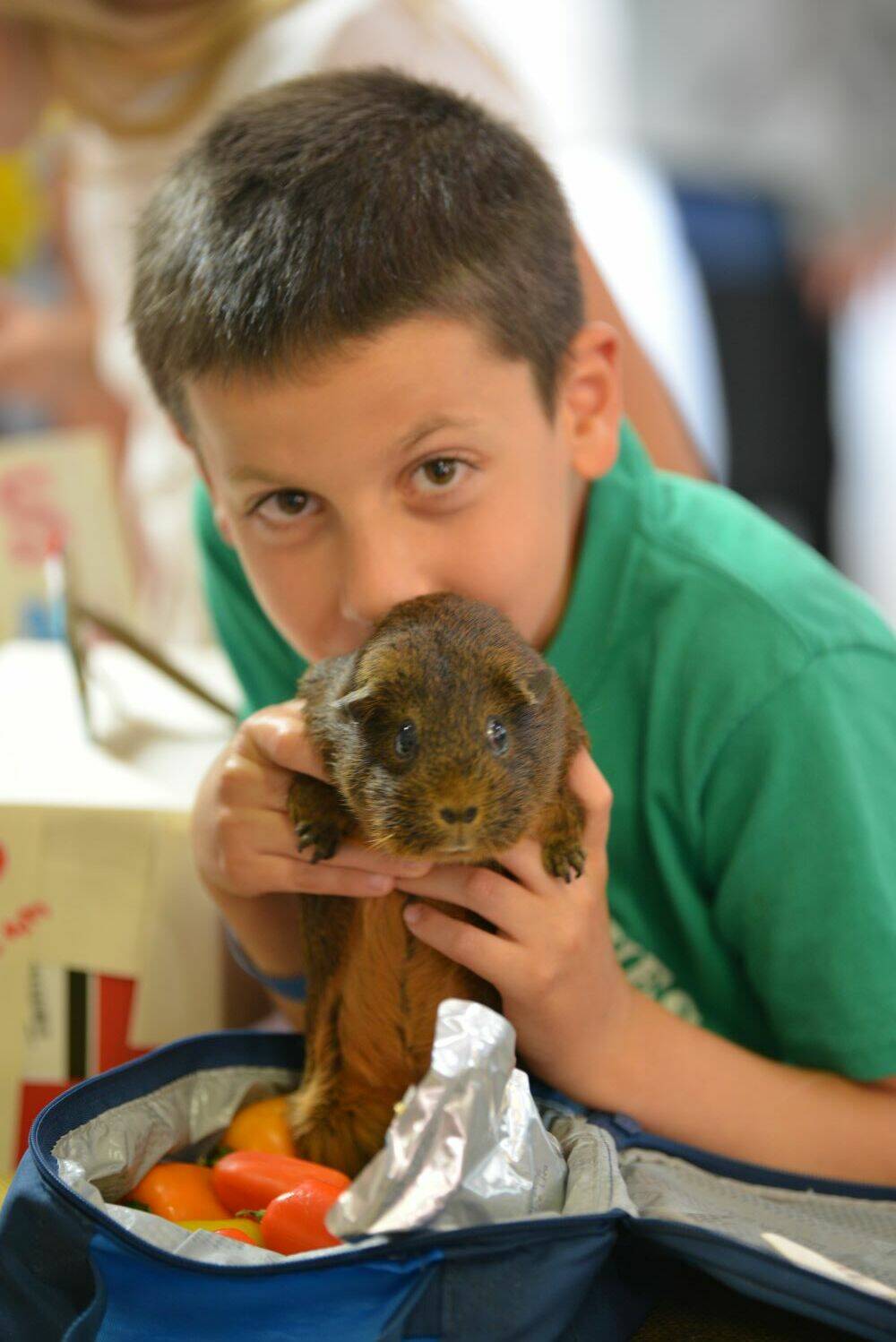
Long known for its association with animals, Island County 4-H is more than just “cows and corns.”
The youth development program is thriving, and despite unprecedented challenges over the past few years, enrollment has increased, Washington State University Extension staff told Island County commissioners this past week. 4-H is a nationwide program that stands for Head, Heart, Hands and Health.
In 2025, Island County 4-H had 161 kids and 48 adult volunteers enrolled.
“This is really an exciting trend that we’re seeing here in the county,” Sarah Bergquist, interim director of Island County WSU Extension, said.
According to the WSU Extension staff’s presentation, the average age of a 4-H’er is currently 12.4 years old, which has been steadily rising since 2019. Volunteers range from 18 to 78 years old, with most falling in the age bracket of 40 to 49. Bergquist noted that most volunteers are not retired, which can be challenging. The county commissioners were supportive of the 4-H program and expressed interest in getting involved themselves.
Dogs and archery remain two of the most popular projects, according to data from 2024-2025, closely followed by riflery and goats.
“What’s fun about 4-H is it will look different in 10 years because it’s driven by youth interest,” 4-H Associate Professor Ashley Hall, a member of the WSU Extension staff, said in an interview.
Though animal projects are a favorite among 4-H’ers versus non-animal projects, that gap is reducing. Some non-animal projects include creative writing, woodworking and computers and technology.
Videography is an up-and-coming project, a joint effort between Hall and WSU Extension and 4-H Coordinator Richard-Augustus Mazzola. For the past two years, a group of teens have created short films centered on mental health and substance use prevention, utilizing Whidbey’s natural beauty as a backdrop for the serious subject matter. As Hall pointed out, this doesn’t stop high school kids from getting creative with their films, which can take on elements of comedy, drama or horror.
The teens meet for a film camp during the summer, culminating in a festival featuring their short films at The Clyde Theatre in Langley. This year’s film festival is planned for Aug. 8.
Through a program called WSU C.A.R.E.S., Hall strives to provide community-based training on mental health and suicide prevention to adults and teens. The film camp grew out of these efforts, Hall said, allowing the youth to engage in a way that gives them agency and power over a challenge they’re facing in their lives.
According to data from the Washington State Department of Health, suicide rates in youth are higher in the state than the national average, and firearms are the most common cause. Hall provides education on safe storage of firearms.
She is also the statewide shooting sports coordinator, a project in Island County 4-H that is seeing a resurgence in recent years. It started during the COVID-19 pandemic, and was an easy activity to safely do outdoors.
“It’s giving livestock projects a run for their money,” Hall said with a laugh. “So it’s doing pretty good.”
4-H has a long history in the country dating back to the early 1900s.
“From the families I’ve talked to here, I’ve met third and fourth generation 4-H’ers,” Mazzola said.
Mazzola himself is an alum of the Snohomish County program, where he participated in horse and vet science projects.
He acknowledged that finding the volunteers to lead projects in Island County can be difficult.
“The cat program is definitely one that’s kind of a bummer,” he said, adding that a longtime volunteer left her role as leader when her kids graduated out of 4-H. It’s no longer active.
The goal is to have more volunteers who are passionate about a certain topic and good with youth. They do not need to have kids who are currently enrolled in the program. Interested parties can reach out to Mazzola directly or the WSU Extension office.
Island County is also piloting a Community Club program, which serves as an incubator for families that are new to 4-H.
“As they explore 4-H, they may end up moving onto local clubs that offer the projects and environment that is most appealing to them,” Mazzola said, adding that it’s also a place where youth can participate in projects that other clubs may not be able to offer. The Community Club meets at 5:30 p.m. on the second Thursday of every month at the WSU Extension office in Coupeville.
Lisa Stone, the superintendent for the rabbit and cavy program, has been actively recruiting more kids to show small animals. When she took over the program around two seasons ago, there were just three kids enrolled.
“Rabbits and guinea pigs are a great project for young kids, kids that are just starting out,” she said. “They’re relatively inexpensive, easy to care for. Great for families that maybe don’t have a lot of space, or a yard to have livestock or a dog.”
Her own son, who’s now in third grade, expressed an interest in taking care of guinea pigs. If she hadn’t stepped up as the new leader when the old one moved to a different state, the program might have gone away.
As a kid, Stone participated in the Island County 4-H horse program and her mother was one of the leaders.
“4-H does a really good job preparing kids to think critically, be independent, have responsibility,” she said.
For more information about Island County 4-H, visit extension.wsu.edu/island/youth.
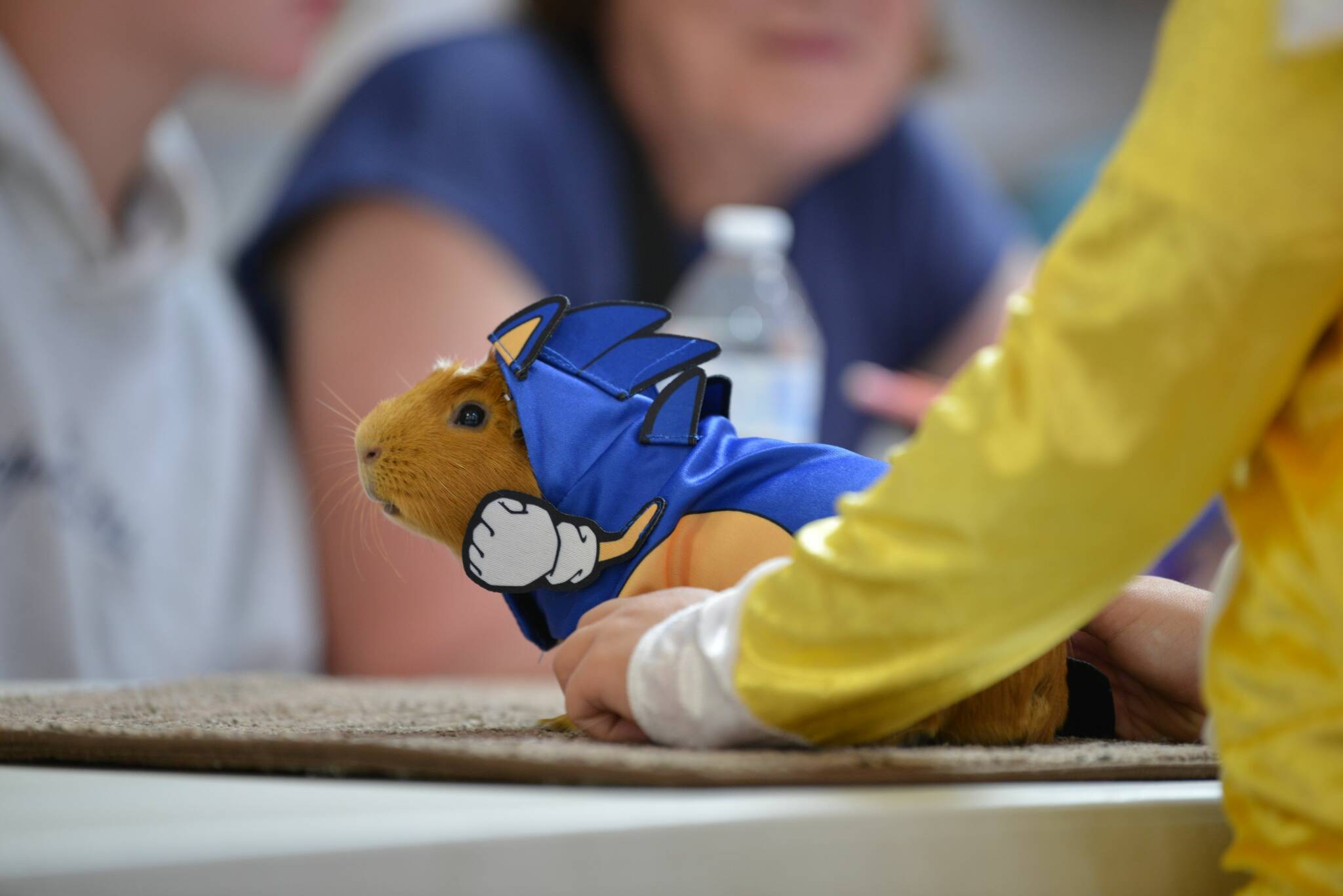
Photos provided by WSU Extension Island County. Arthur the guinea pig, shown by Liam Hehn, in his Sonic the Hedgehog costume.
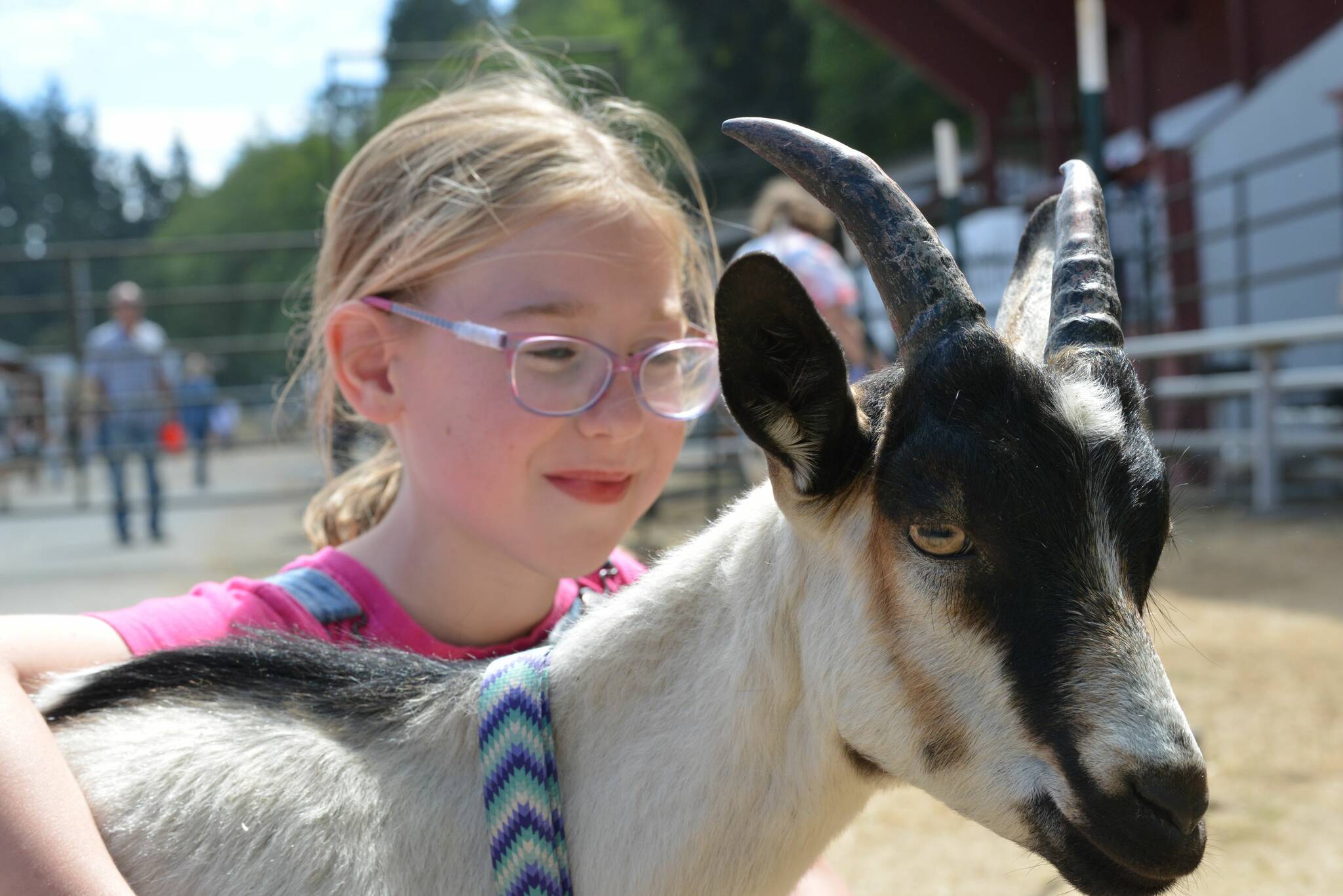
Goats remain a popular project in Island County 4-H.