A tribute to a woman who studied and preserved our local history
Published 1:30 am Tuesday, March 17, 2026
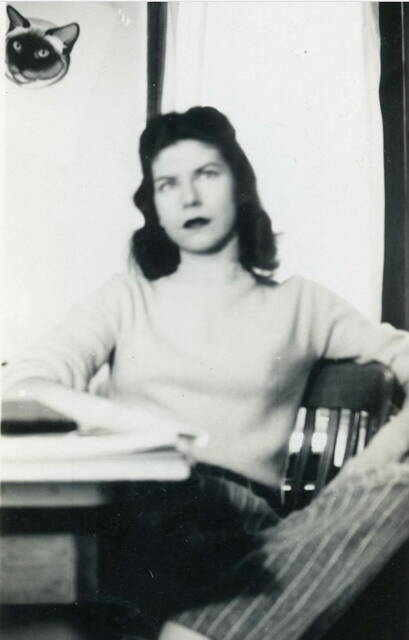
The Island County Historical Museum recently opened an exhibit, including a lovely documentary film, that pays tribute to a woman who really ought to be better known than she is in Central Whidbey, with maybe a statue or a building named for her.
She was Jimmie Jean Cook, and she spent years carefully identifying and preserving the historic elements of the Penn Cove area and laying the groundwork for creation of the Ebey’s Landing National Historical Reserve in 1978. In 1973, she published a well-loved book full of all that history, entitled “A Particular Friend, Penn’s Cove,” that is still available at local bookstores and online.
She was born Marian Frances Cook on April 1, 1921, in a small town in Kansas, the fourth of five children to James and Marian Cook. She picked up the Jimmie Jean nickname as a child, loved it and held onto it the rest of her life. She died at age 69 on May 29, 1991 and is buried in Coupeville’s Sunnyside Cemetery.
She had a fondness for all kinds of art and planned to study it in college. But then World War II came along and in 1943 she enlisted in the Women’s Army Corps and spent two years in France and elsewhere around the world.
After the Army, she studied at the University of Kansas and got a degree in fine arts.
Her parents had moved to Coupeville after the war and she joined them here in 1949. She quickly became involved in a variety of local activities. She worked as a records clerk at the Island County Auditor’s office for almost three decades. She taught Sunday School at Coupeville United Methodist Church. And she joined the Island County Historical Society and became its secretary and then president.
It’s assumed that while working for the county auditor she became fascinated by the sheer number of historical structures still standing in the Penn Cove area. She studied the many claims made under the Donation Land Claims Act of 1850, under which people could take ownership — at no cost — of up to 640 acres, build houses and start farming.
What Jimmie Jean discovered as her research continued was how many structures built by the original settlers were still standing — many barns and even a few houses. A few roadways named after the settlers still existed. At the auditor’s office, she compiled a list of every historic structure she found.
Next she worked with the local historical society to get some national recognition for the very rich history in the Penn Cove area. And, in 1973, the Central Whidbey Historic District was created under federal law to protect more than 400 historic structures on almost 18,000 acres around Penn Cove. Interest in the Historic District led directly to creation of the Ebey’s Landing National Historical Reserve.
In her book and other writings, Jimmie Jean described historic preservation as part of the esthetic value of a community — an obvious reflection of her love of art.
After she retired from the auditor’s office in the 1980s, she continued to research and compile information on the history of this area. The museum’s exhibit displays some of what she discovered and saved. She also indulged in doing some artwork herself. She particularly loved to draw cats.
It’s obvious that all of us who live in and treasure this area are lucky to have all this history identified for us. Thanks to the work of Jimmie Jean Cook we can go to the museum or the library and study a map of the Donation Land Claims boundaries from West Beach to Greenbank and read about the original settlers.
All of us owe a big debt of gratitude to Jimmie Jean Cook, who more than almost anyone else made sure we could know and enjoy our history.
Harry Anderson is a retired journalist who worked for the Los Angeles Times and now lives on Central Whidbey.