Affordability emerges as key issue during candidate forum in Clinton
Published 1:30 am Friday, July 10, 2026
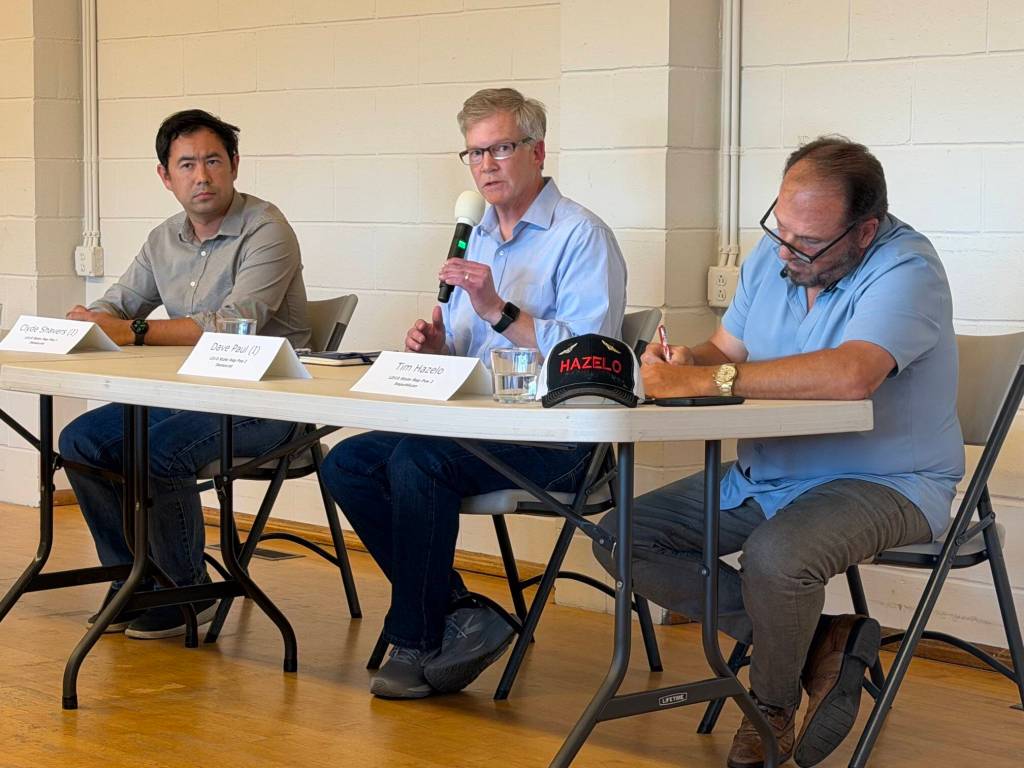
Democratic and Republican candidates for Washington’s 10th Legislative District agreed that affordability is one of the area’s biggest concerns, but offered sharply different explanations — and solutions — for the state’s budget problems during a candidate forum Tuesday on South Whidbey.
The Clinton Community Council organized the event, which featured incumbent Democratic Reps. Clyde Shavers of Clinton and Dave Paul of Oak Harbor, along with Republican challenger Tim Hazelo of North Whidbey. Republican Robert Hicks of Stanwood, who is challenging Shavers, and Republican Carrie Kennedy of Coupeville, who is also challenging Paul, did not attend.
The candidates differed sharply on how to address the state’s budget challenges. Shavers and Paul emphasized maintaining public services and making strategic investments, while Hazelo argued Washington has a spending problem, not a revenue problem.
When the candidates were asked how they would handle what Gov. Bob Ferguson referred to as “the most challenging budget any of us has yet faced” during the 2027 legislative session, Shavers said the state should focus on funding certain programs while making others more cost-effective.
“The way we’re handling this, at least in our office, is to utilize community resources,” Shavers said. “How do we ensure that we have career opportunities that use the surrounding community, like Boeing and Whidbey Telecom? How do we ensure students are prepared for this challenging budget future using what already exists within our community?”
Paul attributed Washington’s budgetary challenges to strong inflationary pressures being felt across the nation.
“Everybody in this room has faced that, and those rising costs due to inflation have really impacted the state and their ability to do everything,” he said.
Hazelo, however, argued the state’s budget problems stem from overspending, not a lack of revenue.
“Washington state does not have a revenue problem,” he said. “We have tons of money. The government takes more money from you guys than you can even count. We have a spending problem. We spend on things that don’t need to be spent on.”
The candidates were also asked about their stances on the so-called “millionaire’s tax,” which imposes a 9.9% tax on household income exceeding $1 million a year and was passed by the Legislature last session.
Shavers explained that, while he believes Washington’s regressive tax system needs to be reformed, he ultimately voted against the tax. He pointed to the lack of a plan to address property and sales taxes, as well as concerns over whether the revenue generated by the tax would actually go towards funding important programs as the major reasons behind his decision.
Paul said he voted in favor of the tax despite his initial hesitation due to the cuts the state would have otherwise had to make to K-12 education and healthcare. He also emphasized that he and the governor do not support lowering the income threshold for the tax.
“In the end, I pick my students over millionaires,” Paul said.
Hazelo expressed skepticism toward the idea that the millionaire’s tax would stay limited to millionaires.
“The reality is you’re all going to be paying on this income tax, it’s not a millionaire’s tax,” he said. “So, let’s get together and find better ways to do this and spend less money.”
Hazelo, when asked how he would balance the needs of rural and urban populations within the district, highlighted being present in the community, meeting people and incorporating their feedback into policy. However, he criticized current state policies for failing farmers and small business owners such as himself.
Both Shavers and Paul stressed the importance of finding common issues that everyone cares about. They mentioned examples such as expanding property tax exemptions for veterans, seniors and people with disabilities, as well as helping veterans take advantage of in-state tuition.
“Affordability persists across every single family,” Shavers said.
A second forum is scheduled for Tuesday, July 14, and will feature candidates running for county assessor, county sheriff and county clerk.