Mule and Horse Clinic sure to be a kick
Published 2:21 pm Tuesday, September 15, 2015
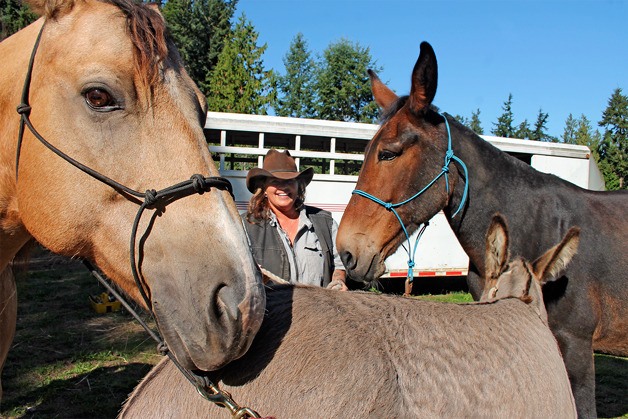
Rose Shoemaker knows she gets plenty of long glances and odd looks when she rides atop her 13-year-old steed Evelyn.
The animal’s ears are a little long, its hind quarters a little big, and its distinct bray-shriek always turns a few heads. Evelyn is a mule, the hybrid of a horse and a donkey, and is Shoemaker’s mount of choice when riding South Whidbey’s trails.
In doing so, she bucked her highly social and reliable horse — an iconic image of the American West — in favor of what she said is a far sturdier, less skittish mount.
“I love mules,” Shoemaker said as she patted Evelyn’s hind while the mule chomped away on straw. “Most people don’t.”
Shoemaker’s love of mules is what led her to put together the Mule and Horse Clinic next weekend.
There are 19 Island County 4-H Clubs. They cover everything from robotics and leadership to cats and dogs, even alpacas and photography. Four of the clubs are devoted to horses.
Not one exists for mules. There were no mule showcases at the Whidbey Island Fair.
Ty Evans, a Utah-based trainer who specializes in mules and horses, is leading the clinic at Shoemaker’s invitation and with her coordination.
Evans, a self-described lifelong cowboy who was riding horses before he could walk, jumped into his father’s business of training horses and mules. Having trained an average of 150 mules each year, Evans has led clinics for four years and will be part of 14 this year.
“I was raised riding horses, mules and donkeys, and I just naturally leaned toward liking mules the best,” he wrote in a press release. “My favorite thing about the mule is that they are so surefooted. I really enjoy rock crawling on my mules and being surefooted seals the deal for me.”
The hybrid animals also have a well-earned reputation for being stubborn and perhaps a bit surly. Jenni Grey, secretary of the Washington Draft Horse and Mule Association, is more a horse person herself. But she said a mule’s reluctance to sometimes immediately obey a command or direction stems from its donkey genetics, which leads to the animal trying to think through a situation before acting. 
“Although they look more like horses, their thinking tends to resemble that of the donkey half of their parentage,” Grey wrote in an email. “They like to think things through, evaluate, and make decisions based on their experiences. If you try to rush or bully a mule into doing things your way, he can become resentful. They have long memories and can be less forgiving than horses.”
Behavior such as that means, said Grey, that mules require more training. That’s precisely why Shoemaker brought in Evans to lead the clinic for an oft-misunderstood or maligned beast.
“There are many benefits to using mules, for those who take the time to learn to communicate with and correctly train these intelligent animals,” Grey said.
Mules are renowned as being the mount of choice for people traversing the Grand Canyon. Famously, mule-caused injuries are few and far between, and they serve as excellent pack animals.
The noises her three mules make have drawn many worried onlookers and even some phone calls. Just outside of city limits, her 10-acre home has plenty of property for her mules and donkeys to trot around, chomping on grass and looking for ways to get out — they’ve escaped for unsupervised adventures more than once.
“Having a mule in Langley is interesting,” Shoemaker said.
Shoemaker, who grew up on Whidbey Island and has since returned for the past two-and-a-half years, laughed as she recalled the time one mule got loose and was walked back by a neighbor at 5 a.m. Or the other time when the donkey got loose and would not be handled. These animals are smart, said Shoemaker, and will find a way to get out if they can.
Mules are sterile, so there’s no need to worry about a surprise pregnancy and suddenly having a colt to care for. They also live up to 50 years and are considered to be heartier animals, whereas horses get injured and require a lot of care.
Even for those not already amorous of mules, Shoemaker said the clinic will be quite the show.
“They’re guaranteed to get a chuckle and they’ll learn something,” she said, with Evelyn the mule still noshing on straw.
“You can’t take yourself too serious when you ride something that looks like a donkey,” she added.
Horse and Mule Clinic
September 18-19 2015.
Island County Fairgrounds, Langley, Wash.
Contact organizer Rose Shoemaker at 360-216-5717 or rosemule@gmail.com