Quenching a school’s thirst for hope — with music
Published 7:00 pm Saturday, November 25, 2006
When Ruzivo Marimba band members play the marimba, the sound travels across continents.
It reverberates far away in the the villages of Zimbabwe, connecting the people there to this musical community on Whidbey Island. That is where the band will travel next month to share the Shona music that is inherent to the Zimbabwe people and to spread a bit of good will.
Luckily, Ruzivo Marimba has the generosity and musical graciousness of 53 marimba students from the Rubatano Center, a Whidbey Island school for marimba music, to assist them in their quest to help Zimbabwe.
These marimba students will be on hand to entertain the island on Sunday with the Third Annual Marimba Student Performance.
The performance, which is a fundraiser for a Zimbabwe well-water project, features a potluck and jam — from 3 to
7 p.m. Sunday, Nov. 26, at Freeland Hall. The public is invited to join in the fun and listen and dance to marimba music played by people of all ages who live in the community. A suggested donation of $10 per family would be greatly appreciated. Bring a potluck dish to share.
Dana Moffett is the director and a marimba teacher at the Rubatano Center. She will be making her second trip to Zimbabwe in December for the performing tour with Ruzivo Marimba. The trip is part of the Pamushana kuZimbabwe Marimba and Mbira Immersion Program set to begin in Harare, Zimbabwe in mid-December and stretch into early January.
Born out of the need to quench an unending thirst for marimba music for North American and European students visiting Zimbabwe, Pamushana kuZimbabwe will assemble a group of talented Zimbabwean teachers and students of marimba from the northwest who wish to explore Shona music in its native land.
The trip will also help Moffett to help establish a water system at the high school in the small village of Dewedzo, three hours east of Harare. Moffett’s husband, Byron Moffett, spearheaded the well project last December.
According to Moffett, the schools in Zimbabwe are not typical. The children may travel more than five miles on foot to attend. There they learn how to read and write, but also how to raise crops and build shelters.
But the school cannot function without a reliable source of water. The well was drilled by government workers, but work stopped before there was a way to draw the water out of the ground.
Byron Moffett has been working with well drillers, Hanson’s Building Supply and friends in Zimbabwe to create a submergible pump. His hope is that the installation of this new pump will get the well at the school functioning.
The Moffetts would also like to introduce solar power when they visit the next time. Although there is electric power in the village, there are often blackouts.
“There is so much that needs to be done there,†said Dana Moffett.
“We would like to teach the villagers how to repair things, about composting and irrigation. Teach them the things that will keep the school functioning,†she explained.
Others hope to help the villagers as well.
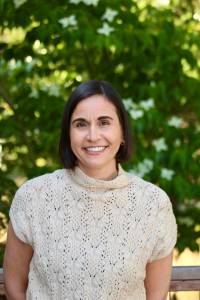
Hannah Wahl was a marimba and mbira student at the Rubatano Center.
Now a band member of Ruzivo Marimba and a student photographer at Seattle’s Photographic Center Northwest, Wahl is looking forward to the journey with the band to, as she says,â€share music, experience Shona culture and bring aid to many villagers with severely limited resources.â€
But Wahl has other artistic endeavors in mind in addition to sharing her music.
“I want to introduce photography to empower the Zimbabwe youth to use a camera for the first time. I want them to share with Seattleites a fresh view of everyday African life,†she said.
Wahl was inspired by the film “Born into Brothels,†a portrait of several unforgettable children who live in the red light district of Calcutta, where their mothers work as prostitutes. Zana Briski, a New York-based photographer, gave each of the children a camera and taught them to look at the world with new eyes.
The photographs taken by the Indian children were remarkable, and became an immensely liberating and empowering force. The sale of the photographs went on to support the children’s education and released them from the destitution of their birthright.
Through donations of cameras and film, Wahl hopes to give the young people she meets in Zimbabwe the ability to experience the process of photography.
She will then document the process and have a show of the photographs in the Spring on Whidbey Island, in Seattle and also in Zimbabwe before she leaves there.
Wahl will also show her own images of the trip alongside those of the children. Viewers will be able to purchase prints from the show and all proceeds will go to a fund benefiting the children and their village.
Wahl has already gathered ten cameras and two bags of film. She needs more cameras and is also accepting donations for the film processing costs that will be needed to complete the project.
Wahl will have a table set up at the Freeland Hall during the student performance where she will be accepting donations for film processing costs, along with film and gently used or new cameras. Donations can also be made by calling 221-5886 or by e-mail at wakingtruth@gmail.com.
Patricia Duff can be reached at 221-5300 or www.pduff@southwhidbeyrecord.com