CELEBRATE AFRICA!
Published 9:00 am Wednesday, November 15, 2006
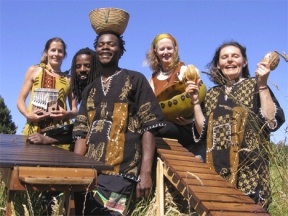
It could be said of Garadziva Chigamba that he is a modern-day African Pied Piper.
Chigamba comes from one of the most respected families of the Shona music tradition, and carries with him the reputation of being among the very best musicians of Zimbabwe. His ability to cut through the boundaries and rules of rhythm has attracted the attention of some of the most knowledgeable lovers of music and dance. And it is with joy and love that he translates ancient Shona Mbira songs – the songs of his homeland – into a new, modern sound for all the world to hear.
Chigamba has attracted his very own band of musicians and dancers from wide and varied backgrounds who, like the children of Hamelin, have followed this master of Shona music. And under his direction, they have created their own unique, musical tradition as Jambanja — a Canadian marimba, mbira, drum and dance troupe that will launch Whidbey Island Center for the Arts’ 2006/07 Family Series. Jambanja plays WICA at 7:30 p.m. Friday, Nov. 17.
With high-spirited African rhythms and fiery dance, Jambanja ignites a passionate joy of expression that evokes the unity of the Shona people. Jambanja’s music also invites the audience to immerse itself in a present day reverie of jubilance.
The group’s spirit stays true to its Shona heritage, and Jambanja fuses the contemporary elements of acoustic drums, electronic bass and electric guitar with the traditional sounds of marimba, hosho (gourd shakers) and mbira (thumb piano).
Spiritual instrument
Shona traditional belief is that mbira singing, as well as mbira playing and dancing, are inspired by the spirits on an individual level.
Traditional musicians remind listeners that mbira is played to encourage the spirits which protect the land and people of Zimbabwe – neither mbira nor the spirits should be neglected if Zimbabweans wish to enjoy health and prosperity.
As for the new phenomenon of foreigners playing mbira, Zimbabweans report that their spirits are more pleased with non-Shona mbira players than with some of their own descendants who have turned away from the tradition.
Traditional Shona songs were used to teach young boys and girls the values and expectations of adulthood. All social relationships were sealed, bonded and regulated through songs.
In this way a daughter-in-law would express her bitterness against a horrible mother-in-law, a bitter wife against a greedy husband, and the whole community would protest against an unjust chief.
Of course, out of that tradition sprang songs of Shona protest. There were songs to praise, urge, ridicule and reprimand.
Modern maestro
Under the direction of Chigamba, Jambanja was formed in 2002 when Garadziva and Melissa Chigamba married and relocated to Canada from Zimbabwe.
The Chigambas, together with the talents of Noella Kruger, Ilana Moon, Hughson Welch and Ted Wright, shaped Jambanja into an ensemble that could deliver the true depth of character of Zimbabwean sound. It’s described as deeply felt in spirit inspired by the voices of those who have gone before.
Jambanja plays Chigamba’s compositions; songs where his emotive lyrics draw the audience into a personal commentary based on timeless themes. The group also performs arrangements of traditional work and prayer. Chigamba weaves these traditional tales into modern messages in contemporary compositions; songs that speak to the human condition. Jambanja’s music reaffirms the appreciation of success, the courage of non-violence, and the celebration of one’s harmony in the world.
Call 221-8268 or visit www.WICAonline.com for tickets and information.
Patricia Duff can be reached at 221-5300 or www.pduff@southwhidbeyrecord.com.