EarthCorps works to free Freeland’s trees
Published 5:00 am Saturday, May 20, 2006
Some welcome visitors from afar descended on Freeland Park last week to evict older, not-so-welcome transplants from foreign shores.
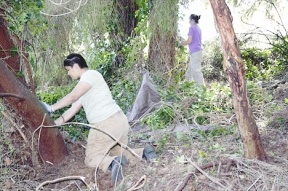
Six EarthCorps workers from Paraguay, Ghana, New Jersey and the Pacific Northwest battled non-native plants such as English ivy, Himalayan blackberry vines and Scottish broom. The EarthCorps members spent hours attacking the thick infestation of tree-choking ivy in the wooded area just east of the Freeland Hall.
EarthCorps is a non-profit organization from Seattle with a mission to teach conservation and restoration skills to young adults from all over the world. The students then take their newly acquired knowledge to their home countries and teach others what they’ve learned.
Here in Washington, EarthCorps restores parks and open spaces while providing leadership and community service experiences for young people ages 18 to 25 from the United States and around the world. Volunteers serve for 10 months.
Jill Politsch, one of the EarthCorp members, is a graduate student in environmental science and international relations. She explained her group’s efforts recently during a water break at Freeland Park.
“We are cutting survival rings around the bases of these trees,†Politsch said, pointing to several nearby madrones.
Dense ivy has grown from the forest floor up the trunks of the trees. The workers cut the ivy away from its roots so the ivy that’s clinging to tree trunks will eventually die.
Native plants at the park have been damaged by the invading vegetation. The ivy holds water, which causes trunks to rot. And in the winter, the weight of the vines can cause tree branches to break.
“It will take about a year for the ivy to die off these madrones,†Politsch said.
The group has spent the better part of two weeks in the park, and camped out in Freeland Hall during their stay.
EarthCorps members cleared non-native invasive plants from the small heavily wooded plot of land adjacent to Freeland Hall.
A trail was also constructed between the picnic shelter and the shoreline, and an old outhouse was torn down. The cost of the project is $12,617.
“They are an amazing group,†said Terri Arnold, superintendent of Island County Parks.
“Learning restoration and conservation through hands-on projects is their number one learning objective because that’s what the program participants take back to their home state or country,†she said.