Langley moves to take property
Published 8:00 am Saturday, September 9, 2006
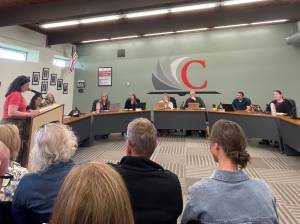
Condemnation ordinance brings fair fans to city hall
The Langley City Council unanimously voted to give city officials the green light to negotiate or file a lawsuit condemning parts of the fairgrounds if that’s what’s needed to get property for a new road, Wednesday.
It was the latest step in an ongoing dispute between the city and the county fair association over Langley’s attempt to get construction moving on a connector road between Al Anderson and Langley roads.
Langley officials say the new road is needed to handle traffic caused by new development at the south end of town. But to build the road, the city needs access to a fringe piece of the fairgrounds property.
Although the council usually takes two votes at separate meetings on ordinances, the council waived the first reading of the condemnation ordinance so it could speed up the process. The city is trying to get access to the fairgrounds property before a Dec. 1 deadline; if Langley doesn’t meet the deadline, the developer of the nearby Highlands subdivision won’t have to finish building the new road across the fairgrounds. Instead, the developer would give the city a bond that would pay for the city to finish the street.
“If possible, we’d like to avoid that,†said city administrator Walt Blackford.
Lawyer says it’s all procedure
The ordinance approved by the council gives the mayor and Langley’s city attorney the power to move forward on a lawsuit, or to reach a settlement or agreement, to get the fairgrounds property needed for the new road.
But it doesn’t mean the city will automatically go to court against Island County, the owner of the fairgrounds property.
An offer to buy the stretch of fairgrounds land could go to the county within 15 days after Langley’s appraiser submits his report on how much the property is worth, Blackford added.
If the county rejects the offer, the city will be able to take legal steps to take possession of the property without going back to the council for permission.
Initiating the condemnation process doesn’t mean the issue can’t be resolved out of court, said city attorney Dale Roundy.
“This is a process specialists engage in. The process starts with letters,†Roundy said.
“Most cases tend to resolve themselves before going to condemnation,†he said.
Condemnation, an ugly word
But not all council members were comfortable with that explanation.
“I’m the new kid on the block here. The condemnation piece is uncomfortable to me,†said newly appointed Councilman Paul Samuelson.
“Condemnation is an ugly word. It gets people fired up. Frankly it has been our last choice,†Mayor Neil Colburn said.
Colburn added that the city doesn’t believe that the street would hurt the fair. But with the deadline looming, the city had to get moving.
“Of course there are people that are unhappy. It’s a lose-lose situation. But I believe it will eventually turn into a win-win situation for all,†Colburn said.
Fair supporters speak out
Fair supporters did not see it that way.
Jon Gabelein, a fair board member, wanted to know why the new road was needed for safety reasons.
City planner Alice Schisel explained that with the construction of the Highlands nearby, fire trucks and emergency vehicles would need more than one way to get into the 53-home development.
By keeping just one road in and out of the development, residents would be trapped if a tree falls down and blocks the road.
Gabelein, however, said other areas such as Scatchet Head have the same problem and do just fine.
“I am just looking for some common sense here,†Gabelein said.
Schisel said county regulations say only 40 homes are allowed on dead-end streets.
And so far, there are more than 80 in the area served by Al Anderson Road, she said.
Police, engineers and fire personnel have all said a new second connector street is needed, Colburn added.
Wednesday’s meeting marked the first time in recent months that fair supporters and city officials have been in the same room to talk about the new connector road, called Fairgrounds Road. The tension between the two sides was obvious.
One of the issues in dispute was the interpretation of county code that dictates how the county can sell the fairgrounds property.
According to the code, the fairgrounds property can’t be declared surplus, sold, or conveyed for private ownership and use without a yes vote from voters in the South Whidbey School District.
Some believe a vote doesn’t have to happen if the fair board approves the sale, while others say the road would not be considered under private ownership because it would be a public thoroughfare owned by the city of Langley.
As the mayor explained to the council about how the city arrived at its position, fair administrator Sandey Brandon interrupted to give her opinion of what the county code requires.
“It says sell or convey,†she said bluntly.
Concerns about cost
The ordinance also states how the city intends to pay for the property.
The city will fund the entire cost of the deal through a newly created account in the city’s budget called the Fairgrounds Road Project Fund.
The ordinance also gives city staff the authority to spend money from the city’s general fund to pay for the project. The general fund is typically used to pay for police, public works and other essential government services.
The construction of the road would be paid for by the developer. The city has to pay for the land purchase and legal fees resulting from the dispute, however.
Don Jewett of Langley was concerned about the fiscal impact of the project.
“Potentially, I see citizens paying taxes on that for a long time,†he said.
“I don’t have a horse in this. But it scares me that – once approved – the decision is in the hands of two people, the mayor and the attorney,†Jewett said.
Paul Schell, the owner of the Inn at Langley, said he was concerned about how far the dispute between fair board and city would go.
“As a taxpayer, I am concerned if this ends up in court,†Schell said.
Developer concerns also addressed
Later in the meeting, Highlands developer Rick Almberg said he was worried about further delays in the construction of Fairgrounds Road.
“Timing is a big issue,†Almberg said.
The developer and the city began work on the project two years ago, he noted
“We took our time to get community input. Two years have gone by and we are still talking. We’ve got to keep going,†Almberg said, adding that construction estimates was based on two years ago.
Due to delays in securing the stretch of land across the fairgrounds, the developer of the Highlands was also worried that the road would have to be built in two phases. That would make the street more expensive to finish.
Almberg offered to build as the road up to the property line of the fairgrounds, and then pay the city $75,000 to complete the work.
“The applicant should not be held hostage because the city and county have an issue about the right-of-way,†Almberg said.
The developer added that he had another good reason to build the road all at once.
If the road is terminated at the Anderson-fairground property line, in the ravine, the paved section could cause water run-off problems on the fairground property, Almberg explained.
Fair supporters noted that they have not seen engineering drawings of the road.
And with seven weeks until the Dec. 1 deadline and the city pressing to proceed, fair supporters wanted to know how the fair board was supposed to make an informed decisions without drawings.
Almberg, however, said the design has not changed since an early meeting with the fair board last year when plans were presented to fair board members. Final drawings may be available as soon as the next city council meeting in two weeks.
Michaela Marx Wheatley can be reached at 221-5300 or mmarxwheatley@southwhidbeyrecord.com