Local petty officer spends 9/11 anniversary in Afghanistan
Published 6:00 am Wednesday, September 13, 2006
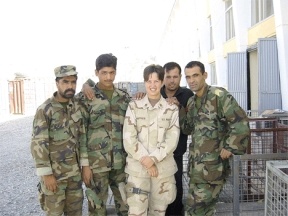
Nearly five years after the U.S. went to war with Afghanistan to retaliate for the terrorist attacks of Sept. 11., local military members are still putting their lives on the line in Afghanistan.
Navy Petty Officer 2nd Class Samantha Haffner left Whidbey Island earlier this year for a one-year tour in Afghanistan.
When Haffner joined the Navy in 2000 she did not expect to end up in the rugged mountains of Afghanistan.
“I am an ‘individual augmentee’ from CNATTU in Whidbey. I came by myself and was put into a group once I got to where we trained. I trained with ETT-L (Embedded Training Team Lima) at Camp Shelby, Miss.,†she recalled.
“Since Sept. 11, the military has taken on untraditional roles across the globe, sending soldiers, sailors, airmen and marines to places we would never have imagined we would end up,†she said.
“We are seeing more of the world and have great experiences along the way,†she said.
Haffner is a storekeeper, and it’s her job to keep troops supplied with the necessities of life ranging from batteries to communication devices.
Work in Afghanistan is risky and insurgent attacks still occur, but for the most part, locals and coalition forces have learned to coexist, she said.
“I have a great relationship with the Afghan nationals that I work closely with. They are great people who have seen so much war and hate,†she said. “We have a mutual respect for our differences and similarities.â€
The Americans even adapted to some of the local customs.
“They always invite us to drink tea with them; it is a hot green tea called chai. Well, I don’t understand how they could be drinking boiling hot tea when it is over 100 degrees outside, but now we are used to it and we all sit and drink hot tea in the sun,†Haffner said.
Coalition forces continue to train Afghan military and law enforcement.
The newly activated Afghan National Army, Afghan National Police and Afghan Border Police are being trained to assume the task of securing their nation after coalition forces leave the country.
The NATO-led coalition is credited with removing the Taliban from power, but insurgents are attempting to discredit the new government of Afghanistan.
The Taliban still wields strong influence in many regions, and the Afghan government is believed to hold little real power outside the capital city of Kabul.
For Haffner, spending the fifth anniversary of the terrorist attacks in Afghanistan allows for some reflection of life after 9/11.
She is glad that most Americans, despite political differences, support the troops.
“I believe we have come together as a nation and there is more support for our troops,†she said.
On Monday, military members in Afghanistan remembered those lost during the terror attack and those who died in the war against terror by flying American flags and observing moments of silence throughout the day, Haffner said.
Operation Enduring Freedom commenced on Oct. 7, 2001 in retaliation for the terror attacks in New York and Washington, D.C.
Since the beginning of the war in Afghanistan, a total of about 476 coalition troops have been killed in the conflict, including 336 American service members, according to icasualties.org.