Young and old gather to honor heroes of past and present
Published 5:00 pm Wednesday, May 31, 2006
Clinton remembered one of its own heroes at the Memorial Day ceremony, when the Daughters of the American Revolution gave a special tribute to Steve Smith, the helicopter pilot who was killed last fall in a tragic accident.
They remembered Smith, who gave the Memorial Day address only one year ago, for his service to the country as a Vietnam veteran and for his dedication to the community.
“He died as he had lived — serving us,†said Norma Metcalf, a DAR member. Metcalf later presented Norma Smith, the pilot’s widow, with a flower bouquet.
The audience that had gathered for the ceremony at the Clinton Cemetery Monday morning spanned generations.
People who had lived through World War II sat next to youngsters who are just beginning to learn about the meaning of war from news of Iraq on TV. All bowed their heads as they remembered those who gave their lives in service to their country.
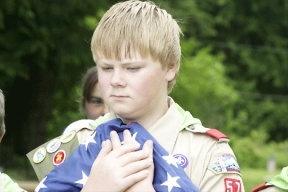
Pastor Mikkel Hustad started the ceremony with a prayer. Boy Scout Troop 57 then began the official proceedings with the raising of the flag, and the audience joined together in the singing of “The Star Spangled Banner.â€
The Daughters of the American Revolution, under the direction of their new regent, Joyce Forbes, followed their tribute to Smith with a presentation entitled “Freedom is never free†that included a performance by the choir of the Langley Christian Missionary Alliance.
Tom Lauderdale, a World War II veteran, gave this year’s memorial address. Lauderdale recalled the history of Taps.
The origin of the 24-note composition dates back to 1862 and the Civil War.
After the Seven Days battle near Richmond, Virginia, the wounded Gen. Daniel Butterfield reworked another bugle call to create Taps with bugler Oliver Wilcox Norton.
However, Lauderdale touched the audience by sharing a myth about the melody that he had found “floating around the Internet.â€
It tells of an Army captain who heard the moan of a soldier who lay in near darkness, mortally wounded on the battlefield. Not knowing if he was a Union or Confederate soldier, the captain decided to risk his life and bring the man back for medical attention.
Crawling on his stomach through the gunfire, the captain reached the soldier and began carrying him toward his camp. When the captain finally reached his own lines, he discovered it was actually a Confederate soldier. The soldier was dead.
But, in the dim light, the officer recognized the face of the soldier. It was his own son. The boy had been studying music in the South when the war broke out and he enlisted in the Confederate Army without telling his dad.
The father asked permission to give his son a full military burial despite his enemy status. His request was only partially granted. Out of respect for the father, they allowed him one musician. The captain chose a bugler and asked him to play a series of musical notes he had found in the pocket of his dead son’s uniform. It was the haunting melody now known as Taps.
“It’s only a story, but a good story,†Lauderdale said.
Roy Simmons of the cemetery board then read the names of the veterans buried at the Clinton Cemetery as the audience listened quietly.
The service concluded with the sounds from a bugle playing Taps in the distance.