New rules may conflict with South Whidbey port projects
Published 5:00 pm Wednesday, July 26, 2006
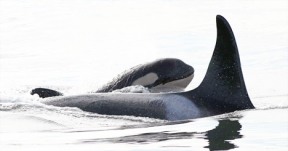
Orcas orcinus — killer whales — are listed as an endangered species and the National Marine Fisheries Service wants to designate a huge swath of Puget Sound as a “critical habitat†to ensure their survival.
Meanwhile, the Port of South Whidbey is paying $11,000 for a mainland consultant to examine the benefits of a fuel dock to gas up transient boaters at Langley’s small boat harbor.
Whether these proposals are mutually exclusive remains to be seen, but clearly, the issue of protecting Puget Sound’s iconic orcas is a trump card.
“Our goal is to protect these animals and preserve their health,†said Brian Gorman, a Fisheries Service spokesman. “Research and data on the killer whale only goes back 30 to 40 years. This is the start of a major push for better understanding.â€
Orcas orcinus
Listed as “endangered†in 2005, the Southern Resident orca population peaked in the 1990s at 97 animals. It then declined to 79 in 2001; currently there are 90 whales in existence with several calves recently born into the population.
The animals, which are actually the largest form of dolphin, spend the majority of their time in the Pacific Ocean. Males, generally larger than females, can reach almost 30 feet at maturity and weigh more than 15,000 pounds.
Though biologists are encouraged by the population increases in recent years, they remain concerned about water quality, availability of food (especially salmon), and the effects of boat traffic and Navy sonar on the marine mammals.
A huge whale-watching business has also developed throughout Puget Sound, especially in Friday Harbor, Anacortes and Victoria, BC. On any given summer day, dozens of boats crammed with tourists jockey for the best viewing spot near Lime Kiln Point on San Juan Island.
Whale-watching operators’ associations have established rules, such as staying at least 100 yards away and shutting the engine down if the orcas come too close, but some researchers still believe the presence of whale watching boats is detrimental to the health of orcas.
Critical habitat
The area proposed for critical habitat designation encompasses parts of Haro Strait and the waters around the San Juan Islands, the Strait of Juan de Fuca and all of Puget Sound — a total of just over 2,500 square miles.
The agency is excluding from the designation 18 military sites covering nearly 112 square miles of habitat, including an area near Naval Air Station Whidbey Island in Oak Harbor.
Once critical habitat is formally designated, possibly by the end of the year, federal agencies will be required to consult with NOAA Fisheries Service to guarantee that their actions will not destroy or adversely modify the killer whales’ designated habitat.
The agency is also producing an orca recovery plan, a requirement under the Endangered Species Act, which will be available for public comment later this month.
The gray whales that visit Saratoga Passage in March are a protected species and are not listed as endangered; the designation of a critical habitat for killer whales will not apply to the Sound’s gray whale population.
The Orca Sighting Network, based in Greenbank, uses a wide chain of residents across to help researchers track the movement of whales. The network encourages people to observe whales from their homes, businesses, ferries and beaches. “This is a unique community of orcas that has evolved in this specific habitat whose culture, diet and travels hinge on the health of their home,†said Susan Berta of the Orca Network. “NOAA’s plan is definitely a step in the right direction.â€
The fuel dock plan
Currently, there are no fueling stations for boaters between Everett and Oak Harbor, and Langley is on the direct route to La Conner, Deception Pass and the San Juan and Canadian archipelagos.
The idea is to attract boaters on their way north or south to South Whidbey. As long as they’re here anyway, officials hope they would take advantage of the town’s shops and restaurants.
The critical habitat would restrict construction to piers or docks extending into shoreline with a depth exceeding 20 feet, which may impact the Port of South Whidbey’s consideration of building a fuel dock that would extend into Saratoga Passage.
Whale experts say the critical habitat designation may have major impacts on new construction projects along the Puget Sound coastline.
“The new habitat rules will have a significant impact throughout Puget Sound,†said Kelley Balcomb-Bartok of the Center for Whale Research.
“For example, if the local port district wanted to build a dock extending into the Sound, they could be in for a long wait,†he added.
Gorman agreed with that assessment.
“If the port wanted to build a dock extending into the Sound, the Corps of Engineers would need to be consulted. Only federal connections are affected by this ruling and any such request would end up in our office,†Gorman explained.
“However, we’ve been writing biological opinions on salmon for years that lays out the do’s and don’ts — we’re good at being flexible, or tough, as the situation requires. No draconian regulations will be enacted, but agencies need to be aware they exist and must be dealt with.â€
Port manager Ed Field said that a whole host of shoreline rules and regulations must be overcome before a fuel dock could be built.
“I’ll face that challenge when the time comes,†he said.
The first step arrives this morning when consultant Reid-Middleton presents its fuel dock feasibility findings to commissioners at their office in Freeland.
Gorman hopes to have the proposal in force no later than next summer.
Comments concerning the habitat proposal may be sent to NOAA Fisheries Service until mid-August via e-mail at: orcahabitat.nwr@noaa.gov or by writing to:
Chief – Protected Resources Division, 1201 NE Lloyd Blvd., Suite 100, Portland OR 97322-1274.
Jeff VanDerford can be reached at 221–5300 or e-mail jvanderford@southwhidbeyrecord.com.