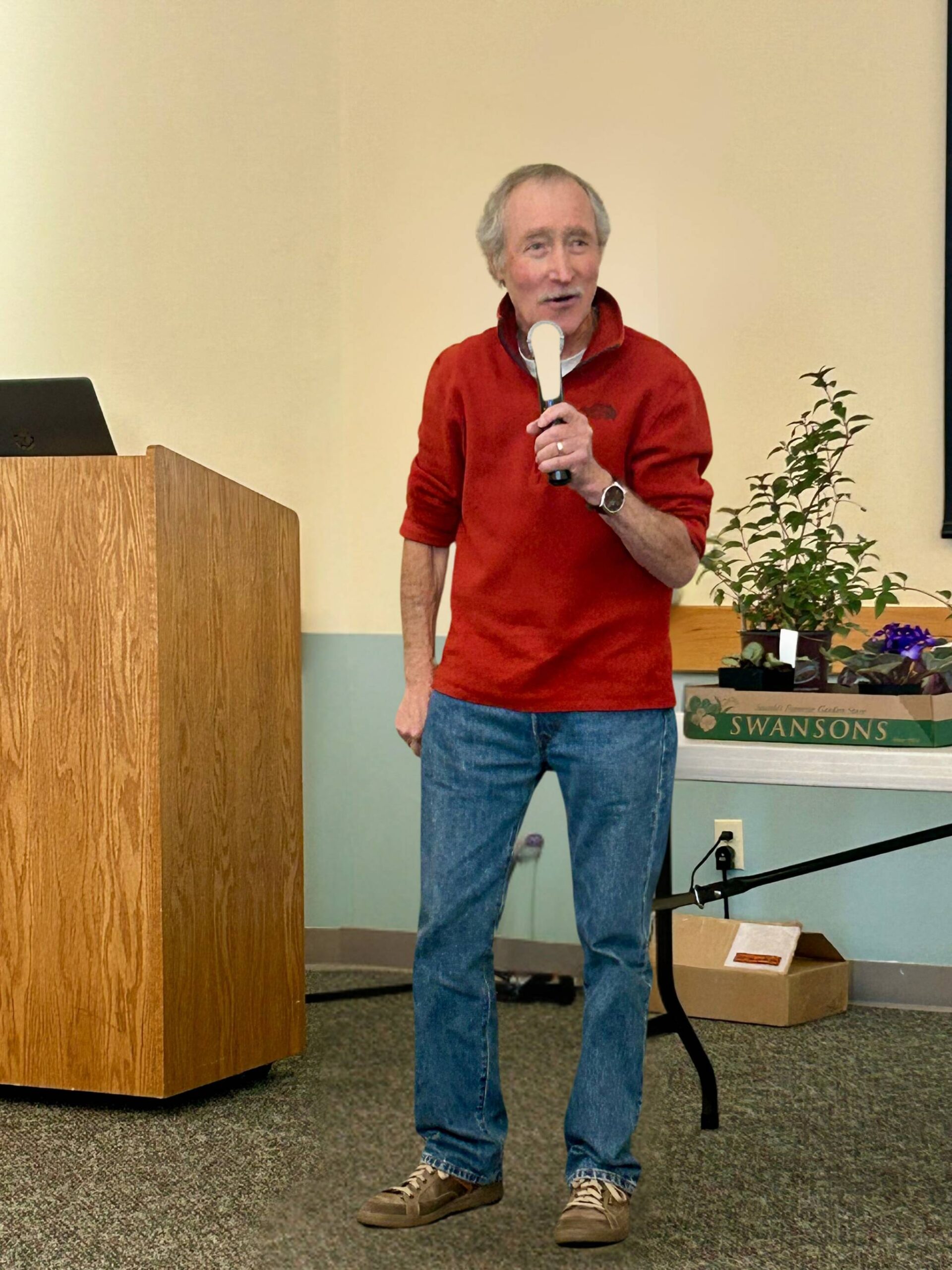
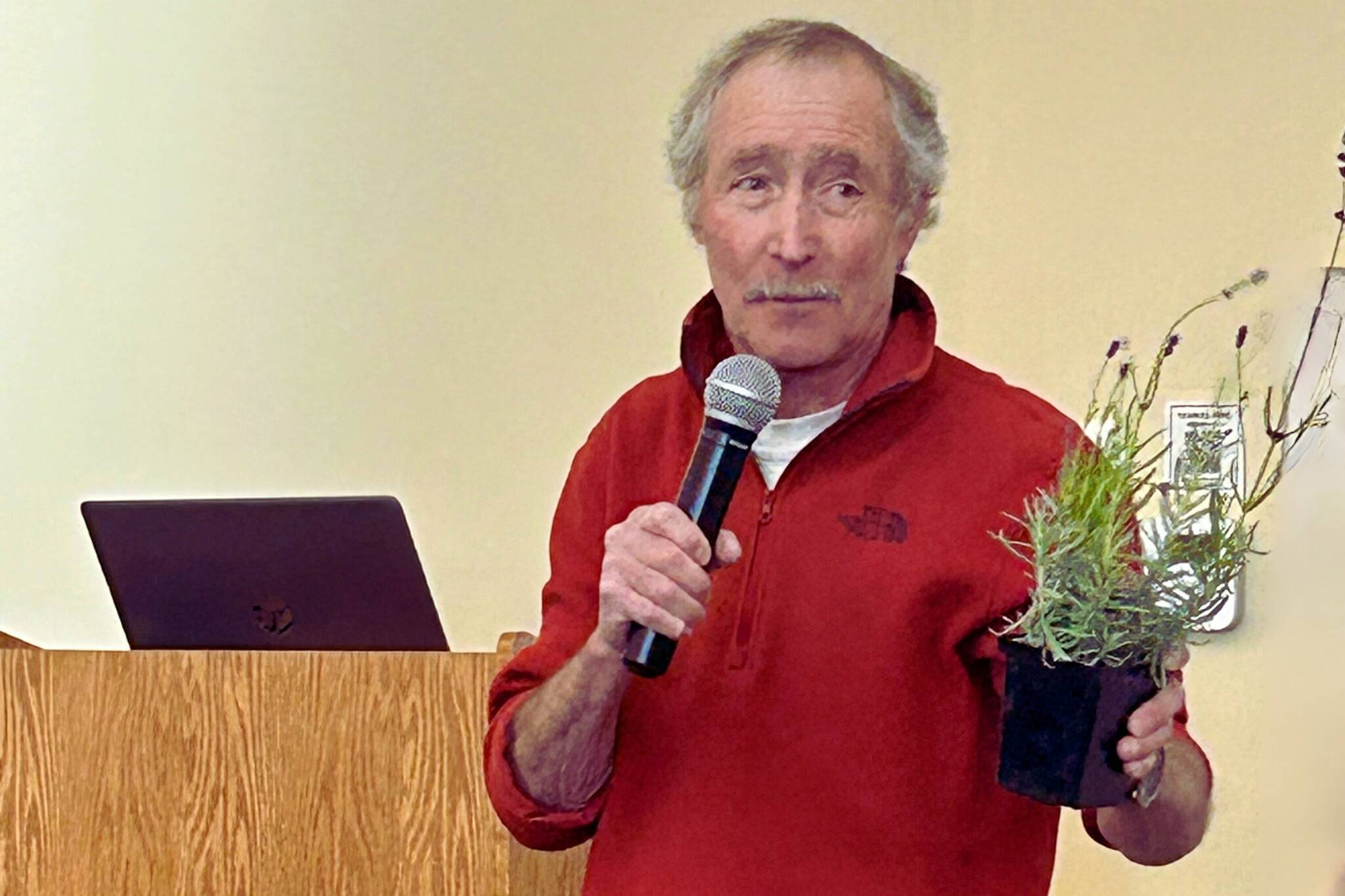
A bonafide gardening celebrity gathered with local horticultural enthusiasts recently.
Ciscoe Morris, a gardener and Pacific Northwest radio and television personality, bestowed horticultural advice upon more than 50 members of the Oak Harbor Gardening Club during a monthly meeting on Tuesday at the Oak Harbor First United Methodist Church.
Beautification is the garden club’s mission, accomplished through the stewardship of eight city parks, plant sales and regular educational programs featuring esteemed guest speakers.
Morris, a Wisconsin native, spent time as a Seattle University groundskeeper, hosted the show “Gardening with Ciscoe” for about a decade and continues to make regular appearances on King 5 programming to impart his wisdom to this day. He does it all with the unfettered gusto which has made him something of a celebrity west of the Cascades.
“He’s entertaining, he’s a little walking encyclopedia and he’s so much fun,” Anne Louise Petersen, a longtime garden club member, said of Morris. “It was probably one of our best programs, but we’ve had a lot of really great programs.”
Speaking for nearly two hours, Morris introduced several of his botanical favorites to his attentive audience before giving plants and seeds away to a handful of lucky listeners.
Hoisting a bag of bulbs, Morris spoke to the challenge of keeping tulips safe from the pesky paws of hungry squirrels. Albeit a popular trick, sprinkling enough cayenne pepper on the soil around bulbs to repel the critters can be tedious. As tulips are native to cold, mountainous environments with dry summers, Morris suggested planting the bulbs at least a foot deep in order to protect them from wet weather.
“If we plant our tulips where we’re going to water our other plants all summer long,” he explained, “we’re probably murdering them.”
English lavender is “the hardiest of all the lavenders,” Morris declared, preferable to him over other varieties for that reason. But maintaining lavender can be challenging as the stems can become bare. Timely pruning — shearing the stalks “one half inch above the top of the plumes” each March, he elaborated — can slow the onset.
Morris answered several audience questions as well, including one from Petersen.
Her Matilija poppies, which bear large white blossoms, spread rhizomes underground that make them notoriously difficult to transplant. Morris cautioned transplanting the behemoths is doable but difficult, saying the gardener’s focus should be on preserving as much of the roots as possible. Ready a new hole of the same depth, “dig way more than you think you need to” and cleanly cut off any roots damaged in the process before replanting, he advised.
“The question I asked him was really hard,” Petersen explained. “This is a plant that, honest to God, if you try to dig it up or transplant it, or even get it out of the dirt — I’ve not had any success whatsoever.”
Petersen brought her question to the right place.
“(Transplanting is) not really easy to do, but I’m going to try. He made a few suggestions and I’m going to give them a shot,” she said, determined.
And, fittingly, Morris could not have been more enthusiastic about sharing his passion with other gardeners, particularly those on Whidbey.
“The people are great, and it’s an absolutely beautiful place, so who could ask for more?” Morris said. “Life is good. Oh, la la!”