
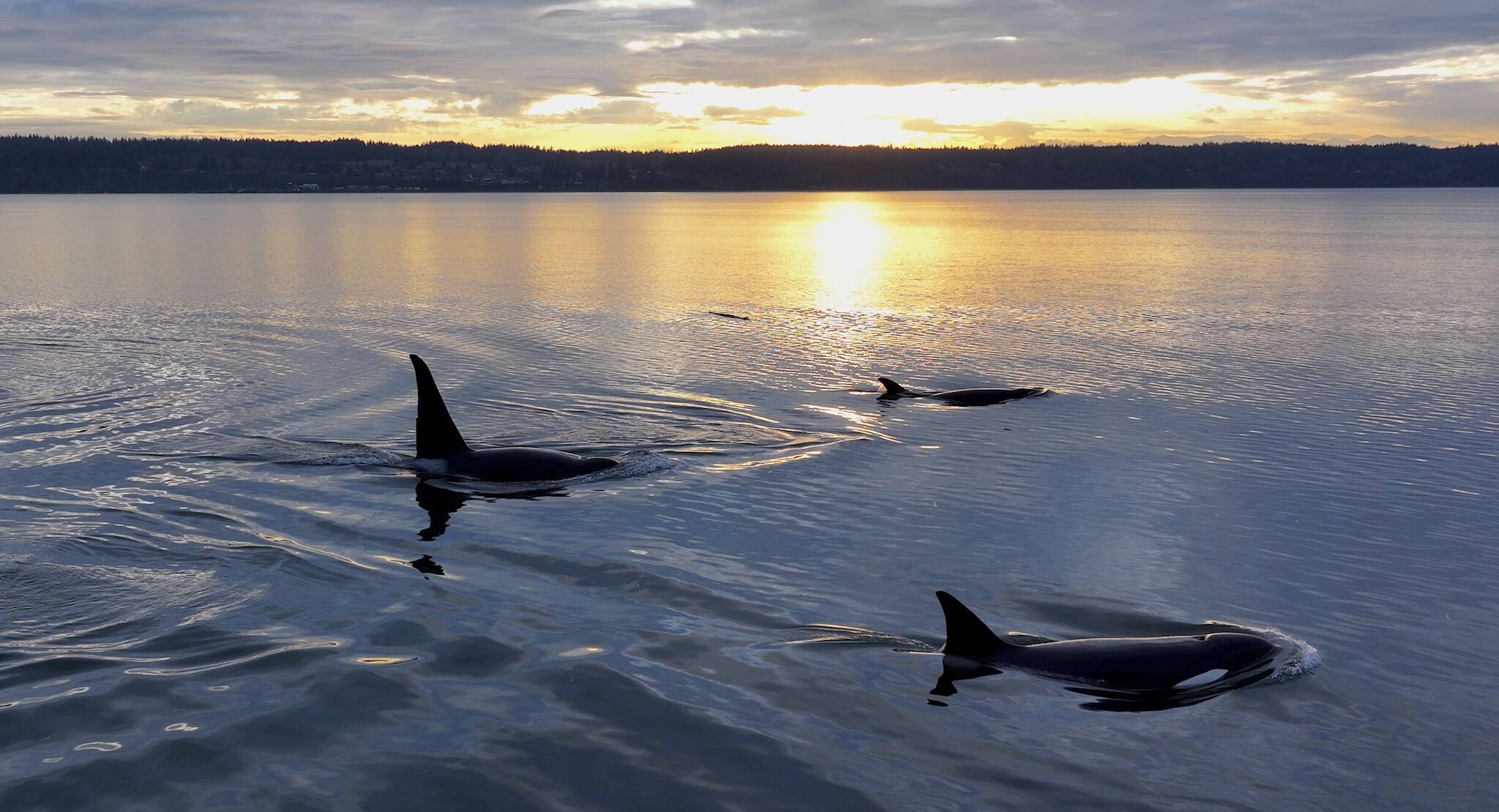
Tickets are selling fast to an annual one-day conference diving into the depths of the Salish Sea.
Sound Waters University will soon be in session from 8 a.m. to 4 p.m. on Saturday, Feb. 7 at the Coupeville High School, where it has convened for the past few years. Presented by the Sound Water Stewards, the hallmark event is in its 32nd year and has just as many enticing classes to attend as ever.
This year’s theme, “Tracing Life through the Salish Sea,” explores food webs in the marine ecosystem. It’s something Florian Graner, the organization’s new executive director and the event’s keynote speaker, can relate to with his recent award-winning documentary, “Orcas – Life in Black and White.” Though it may be difficult for the layperson to differentiate between the transient and southern resident orcas that swim past Whidbey shores, their diets are vastly different.
“They tell us two very different stories,” Graner said. “One is an amazing success story with these animals coming back for over a decade now, being the true residents, ironically, in our waters.”
Transient orcas, also known as Bigg’s killer whales, feast on marine mammals such as sea lions, seals and other whales. They range from California to Alaska, and are often spotted around Whidbey. Their numbers in this area are suspected to be in the hundreds.
Southern resident orcas, on the other hand, only eat fish – most of which is salmon. Their population has been dwindling over the past several decades, with the current count numbering in the mid-70s.
“The story there is one of salmon, and how the food web doesn’t support salmon well enough,” Graner said, pointing to not just the Salish Sea, but also rivers and pollutants.
Graner previously gave the keynote presentation at Sound Waters University in 2018, and has taught many classes at the conference since then.
A bookend to his opening remarks is the closing keynote presentation given by Elin Kelsey, an award-winning author offering a positive message about choosing hope as a way to combat the climate crisis.
“We don’t always have to focus on the negative,” Graner said. “That’s the essence of it.”
Elective classes cover a breadth of topics, from invasive European green crabs to ocean acidification to seabirds to river otters. Though people will have a tough time narrowing down their choices to just two classes, all who purchase a ticket will have access to recordings of all classes later.
And this year, there will be no virtual attendance via Zoom.
“We’re trying to get away from the COVID era,” Graner said.
An optional additional purchase, attendees can go on a field trip the following day, Feb. 8, for $30. Five of the locations are on Whidbey and some of them involve birdwatching.
Three-quarters of the tickets for Sound Waters University have already been sold, so interested parties will need to act faster than a southern resident orca snapping up a salmon. General admission is $70. Teachers, students, active duty military, veterans and AmeriCorps members get a 50% discount. Contact registerswu@soundwaterstewards.org to learn more about partial or full scholarships.
To register and to see the full list of classes, visit soundwaterstewards.org/education-center/sound-waters-university.
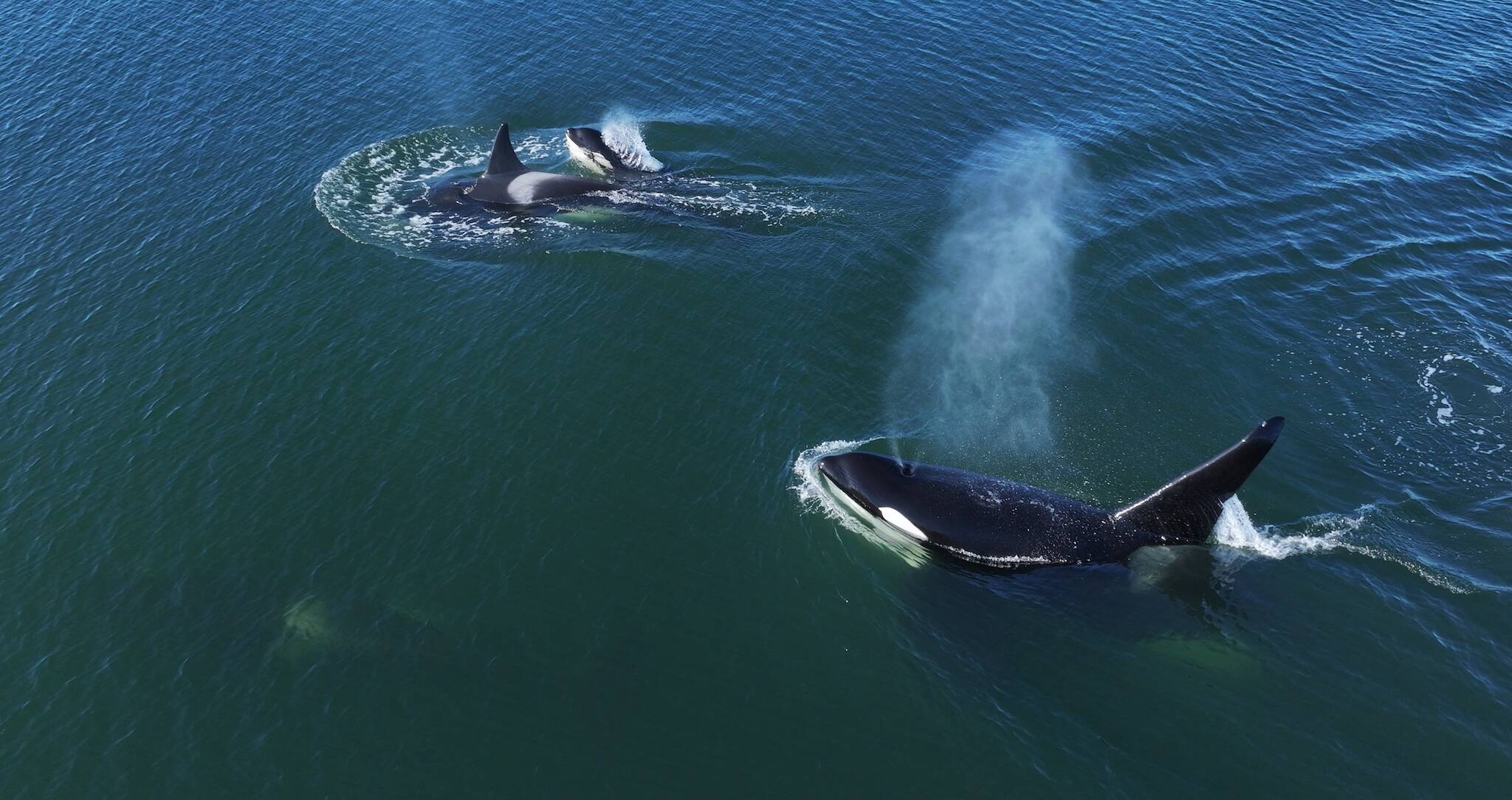
(Photos by Florian Graner – NMFS Permit #26599) Transient orcas hunt along the shores of Whidbey earlier this month.
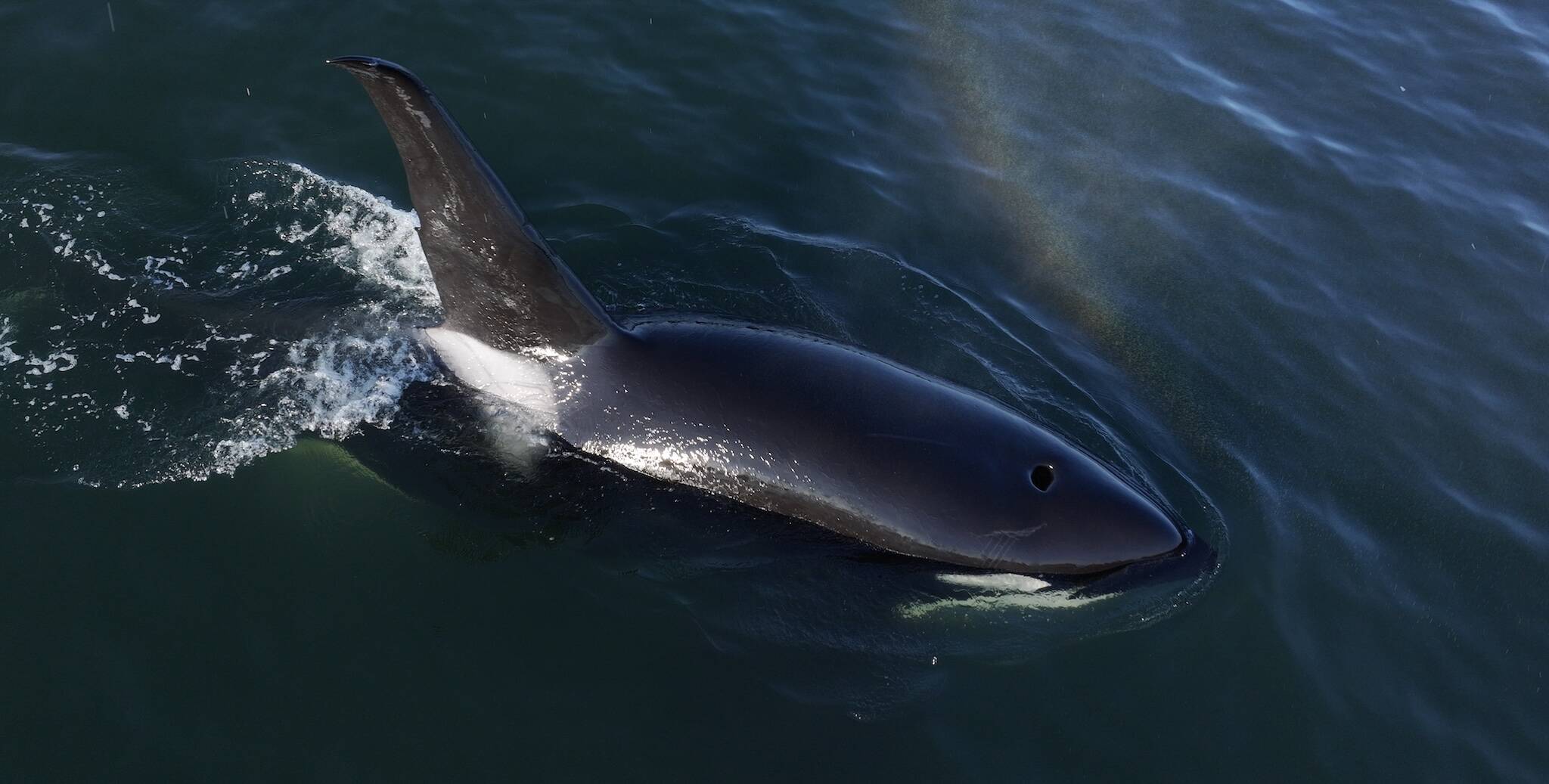
(Photos by Florian Graner – NMFS Permit #26599) Transient orcas hunt along the shores of Whidbey earlier this month.

