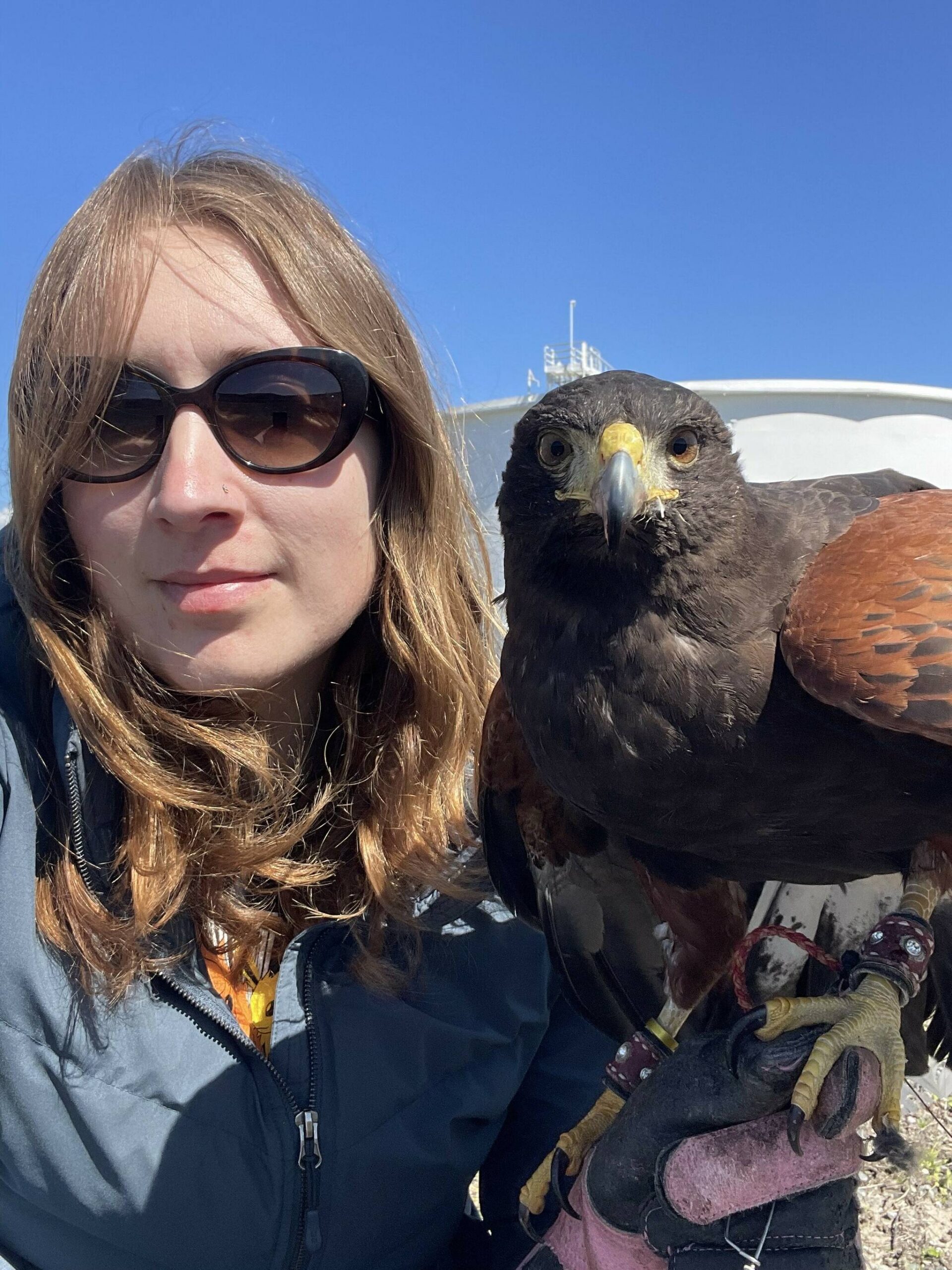
Say goodbye to stolen french fries and bird dropping on cars — some new faces, or rather, beaks, are joining the city of Oak Harbor’s ranks over the next few months.
At a city council meeting Tuesday, council members approved a contract with Sky Bird Patrol Services LLC, a local registered falconry, to help deter seagulls from being nuisances. The pilot program will run from March through July. The motion passed unanimously, with one abstention by Councilmember Bryan Stucky.
Certain areas of the city experience recurring issues related to nuisance birds, Public Works Director Steve Schuller explained to city council members. Oak Harbor’s infrastructure, such as light, flat roofs, covered walkways, increased food sources and more, have created an unnatural and inviting habitat for these avian nuisances, he explained. Bird feces not only impact the cleanliness of public spaces and businesses, Schuller said, but can also lead to potential water quality concerns associated with stormwater runoff.
As a master falconer and owner of Sky Bird Services LLC, Caitlyn O’Neill, told the News-Times that her contractor will be flying various Harris’s hawks for the gig. She has used her falcons as a natural bird deterrent in other cities in Washington previously, including Oak Harbor’s close neighbor, Anacortes.
“Often when we start a job, gulls are defecating excessively on cars, getting into garbage, damaging HVAC equipment, nesting in areas that put the health and safety of humans and young gulls at risk, and generally making it difficult for the birds and humans to exist in the same space,” O’Neill told the News-Times.
Falconry-based bird deterrence is an ancient practice that is a humane, non-deadly and environmentally friendly method to prevent birds from congregating in pedestrian-heavy areas, Schuller said. The employed hawks will stay predominantly in the commercial area of the city. This encompasses Windjammer Park to the south, Southeast Barrington Drive to the north, Southwest Erie to the west and Midway Boulevard to the east, Schuller said. The falcons will also be on top of the roofs of larger private businesses, in accordance with the owners, he added.
Councilmember Bryan Stucky, who noted he has made several comments and inquiries about seagull mitigation options and therefore would abstain from the vote, said he was optimistic about the plan.
“I have a business down there,” he said referring to the Oak Harbor Cinemas. “I did not realize when I purchased that business in April how bad it was when it got to the nesting period, and the amount of complaints, the feces, the trash and the smell.”
Echoing Stucky, Councilmember Sandi Peterson said she loves the idea, but wondered where the gulls will go in the aftermath. When a new predatory bird like the Harris’s hawks are established in the area, the gulls won’t leave completely, but they will behave more naturally, O’Neill explained to the News-Times. They will opt for eating shellfish instead of pizza, and babies will start learning to fly onto the beach instead of into the road.
“Instead of hundreds of gulls on a rooftop or raiding a dumpster every day, there might be one or two there while the rest are foraging on the beach, roosting on rocks, and building nests on ledges on the water,” O’Neill said.
This is not a one-step solution. At the same time, city staff will work directly with affected businesses to encourage the use of signs to dissuade people from feeding birds, and to improve solid waste handling and garbage cleanliness, including better waste storage practices and collection timing. This combination approach is intended to function as a bird deterrent and to eliminate the attractants.
As a pilot program, city staff will track and measure outcomes, including changes in bird activity and observed stormwater and environmental conditions. They will also monitor cleanliness of public spaces and local properties. Staff will evaluate feedback from businesses, residents and maintenance staff as well as cost effectiveness, to determine whether the changes have been beneficial.
The program will cost $640 per day. The falcons will be deployed two to three days a week, tailored to observed bird activity and trends. Costs for the program will be split evenly between solid waste, stormwater and streets funding. After the pilot program is over, staff will provide a summary report to city council before considering long-term implementation.