A Christmas party at a judge’s house last month sparked another unusual argument in a mask-related election disruption case, according to court documents.
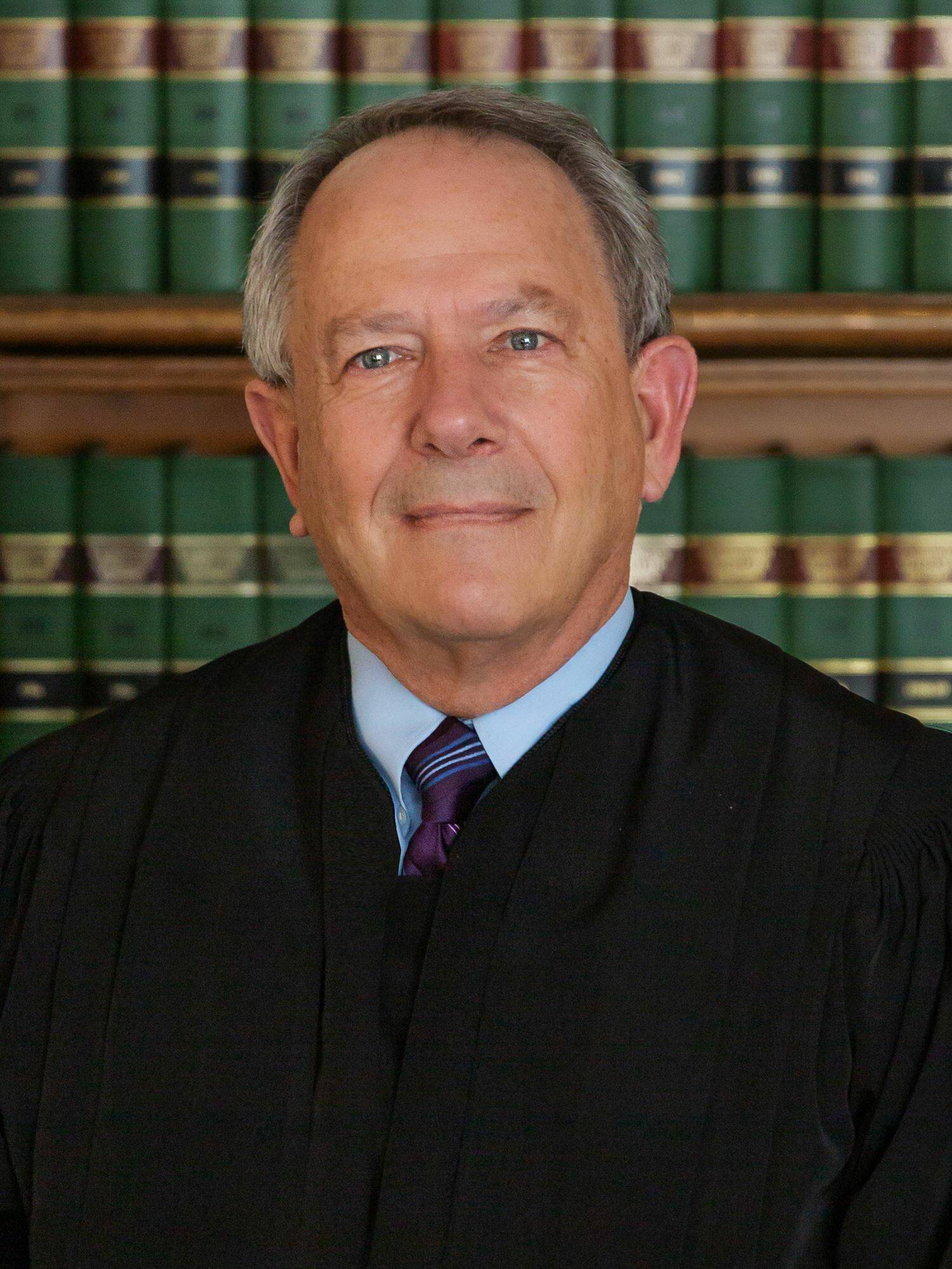
Island County Prosecutor Greg Banks filed a motion last week asking Island County Superior Court Judge Christon Skinner to recuse himself from a criminal case against Tracy Abuhl, a former vice chairperson of the Island County Republican Party who’s facing a felony charge of unauthorized access to a voting center as well as two gross misdemeanors.
This came after Abuhl’s attorneys asked the judge to remove Banks from the case and appoint a special prosecutor because of an alleged conflict of interest as he was also defending the county in a related civil case.
Skinner denied both motions on the larger issues, though he did agree with the defense that Banks hadn’t handled discovery properly and ordered an in-camera review of documents. In denying Banks’ motion, he wrote that the prosecutor knew about the relationship between the two criminal cases for months but only asked for the recusal after an unfavorable ruling.
The case goes back to 2024, when Island County Auditor Sheilah Crider mandated masks in the ballot counting room after COVID spread through the group of elderly volunteers during the counting of the primary election ballots. According to a report by Coupeville Marshal Bo Miller, he responded to a report on Oct. 28, 2024 of an election observer, later identified as Abuhl, who repeatedly refused to wear a mask. The marshal explained to Abuhl that she would be removed from the office if she wouldn’t wear a mask. Abuhl said she couldn’t wear a mask but then started walking towards the door on her own and was escorted out, the report states
In his recent motion, Banks wrote that Tim Hazelo, Abuhl’s co-plaintiff in two related lawsuits with “the same operative facts,” was at a party for court personnel at Skinner’s home. Hazelo, who is married to a court staff member, was former chairperson of the Island County Republican Party and faced the same charges that Abuhl does.
Banks pointed out that both Skinner and Judge Carolyn Cliff recused themselves in the criminal case against Hazelo, which Banks wrote he inferred was because of Hazelo’s relationship with the superior court staff member. Skinner later affirmed the inference.
A Snohomish County judge heard the case against Hazelo; the judge threw out the disorderly charge but the jury found Hazelo guilty of unauthorized access to a voting center and criminal trespass in the first degree.
Banks wrote that Hazelo was the only person besides attorneys and Abuhl in attendance at a hearing on her case.
“Mr. Hazelo’s presence at Ms. Abuhl’s hearing is offered as additional circumstantial evidence of the many ways in which these cases are one and the same, beyond just the underlying facts and the criminal charges,” Banks wrote. “They share the same legal team. They were co-plaintiffs in two civil lawsuits. The two defendants are practically alter-egos.”
Banks argued that the discovery materials — “witness preparation, anticipated testimony or litigation strategy” — which Skinner ordered him to produce for his inspection are protected by attorney-client privilege and are the same documents for the Hazelo case; that means Skinner will view materials in a case which he disqualified himself from hearing, Banks wrote.
Banks pointed out that the judge in the Hazelo case made a different ruling, which he argues Skinner’s ruling effectively overrules and undermines. Hazelo’s criminal conviction is under appeal, as is the lawsuit against the county auditor and the county.
As a result, Banks argued that Skinner should recuse himself from hearing the case and that his most recent decision should be stricken.
Abuhl’s attorney, Joel Ard of Kingston, argued against Banks’ motion in his response brief, writing the Banks’ request is solely an expression of dissatisfaction with the judge’s adverse ruling regarding the production of documents. He questioned the timing, writing that Banks knew all along that the judges could make different decisions but didn’t ask for a recusal until he got one he didn’t like. He wrote that a recusal would mean all of Skinner’s decisions should be stricken, not just the one the prosecution doesn’t agree with.
“It is dressed up in innuendo and misdirection,” he wrote, “but at its core, the motion makes plain that if the December 31, 2025 Letter Ruling had denied the defendant any relief, the state would never have brought its current motion.”
Ard wrote that conflicting decisions on the law are resolved through the appellate process, not by disqualifying a judge.
“In Hazelo, the ruling favored the state; in Abuhl, it granted partial relief to defendant,” the attorney wrote. “Whether the different rulings result from the slightly different factual predicate or the independent judicial officers’ different analysis of governing law, the result follows the normal course of operations of a court system staffed with multiple different, independent judicial officers who exercise their discretion and intellect to faithfully apply the law to the facts.”
During oral arguments on the motion, Skinner explained that both he and Judge Carolyn Cliff sponsored the Christmas party at his house. He said he doesn’t know Hazelo “from Adam.”
In his ruling, Skinner wrote that the recusal in Hazelo does not mandate recusal in Abuhl, even if he “reviews documents that may have been generated in connection with the Hazelo prosecution or civil suit.” He wrote that the prosecutor presented no evidence of personal bias, personal knowledge of evidentiary facts, financial interest or any other basis for disqualification under court rules.
The case will be set for a jury trial.