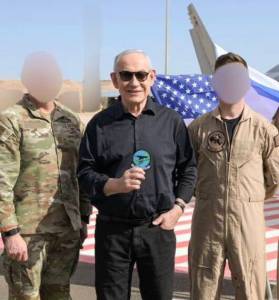
Larsen back from Iraq and Afghanistan
Published 8:00 am Saturday, September 29, 2007
As the cost of the Iraq war rises — in lives lost and overall cost to the taxpayer — Congressman Rick Larsen joined a six-member, bipartisan fact-finding mission last week to find out if anything has changed.
The verdict: Not much.
In a conference call with reporters after his return this week, Rep. Larsen said he hasn’t seen anything that changes his mind about the course of the war.
“The key to ending violence in Iraq remains political reconciliation,” Larsen said.
“In January, I called for a partial troop recall and increased training of Iraqi police forces. Progress has been made, but not enough. Nothing I saw on this trip changes my perception,” said Larsen, a 2nd District Democrat who sits on the House Armed Services Committee.
As of Sept. 28, the death toll for US military in Iraq is 3,801; 59 U.S. troops were killed in September, according to the Website www.icasualties.org.
Larsen arrived in Baghdad for a two-day visit Sept. 21 as a member of the House Armed Services Committee. His last visit to Iraq was in July 2006.
Due to security concerns he was not permitted to announce his trip in advance.
Traveling through Baghdad in a heavily armored Humvee, wearing a helmet and flak jacket, Larsen visited small fortified joint security stations being erected in both cities and the countryside.
During his first tour in 2003, Larsen recalled being stuck in traffic but otherwise there was freedom of movement. One year later as security worsened, there was a total lockdown. And in July 2006, things had improved somewhat.
Today, Baghdad isn’t totally shut down, but traveling freely through the streets isn’t advisable, he said.
He also had briefings on special operations, talked to pilots of an F-16 squadron and learned about a new anti-mortar weapon system that shows promise.
Larsen said he purposely avoided the country’s leaders. “They talk of progress, but I haven’t seen any,” he said.
Larsen said he wants to see a stepped-up program of re-assigning U.S. troops to training Iraqis, guarding the borders or brought home.
There are three indigenous forces that guard the country. First is the national police, virtually useless due to corruption and religious influence, Larsen said.
There are also military and local police forces and that’s where Larsen said the most emphasis should be placed.
Embedding trainers in those units will produce positive results, he said. “But currently logistics and combat support are almost non-existent.”
Asked if he felt more chaos and less security would result if troops were pulled out or reassigned, Larsen pointed out the voting record of his Democratic colleagues.
“Our votes in Congress have been more change-of-mission, not precipitous withdrawal,” he said.
After Iraq, Larsen made his first trip to Afghanistan. He attended a briefing on drug interdiction before ending the trip with a brief stop at the U.S. military hospital in Ramstein, Germany before returning home.
Larsen’s visit wrapped up as Congress prepares to debate spending more money for the wars in Iraq and Afghanistan. The Bush administration has requested an additional $42.3 billion in war-related spending, which would bring the total cost of the Iraq War to $611 billion, according to the National Priorities Project, a national non-profit research organization.
With this upcoming request, the war spending proposal for fiscal year 2008 totals $193 billion. This amount includes $189 billion for the Department of Defense and $3.7 billion for other agencies.
Of the total amount requested, $154.7 billion would be allocated to the war in Iraq. Of that figure, $3.5 billion would be paid by taxpayers in Washington state.