The city of Langley has been awarded a sizable grant from the state Department of Commerce to study the feasibility of implementing a series of small electrical systems throughout the Village by the Sea.
Known as microgrids, the localized electric power systems using solar panels and back-up batteries help residents stay safe, warm and connected in the event of an emergency, according to a press release.
The city received $250,000 to study these efforts in the form of the Clean Energy Fund Grid Modernization grant. Meredith Penny, Langley’s director of community planning, said the project’s engineering team will analyze a total of 15 sites within the city that could be potential candidates for microgrids. The goal is to narrow this down to just three sites for a more in-depth feasibility study in the future.
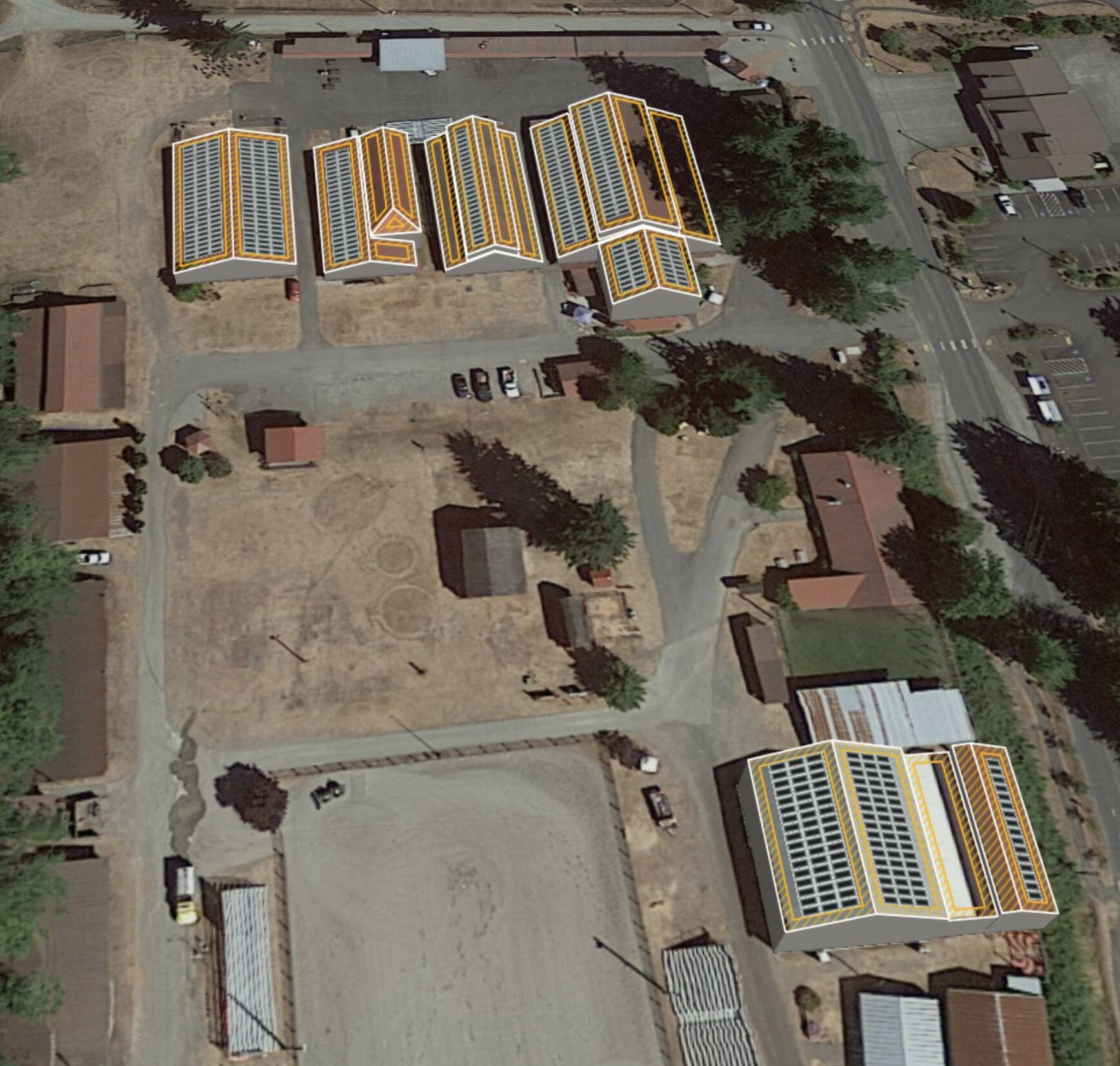
Five microgrid sites have already been identified, including the Whidbey Island Fairgrounds, the South Whidbey Community Center and three multifamily housing communities that include Brookhaven, Fifth Street Commons and Upper Langley.
“They don’t have to be places where the entire city might gather, but maybe where a neighborhood might gather, that way people can shelter in place,” Penny said.
Other than the array of solar panels, a key part of the microgrid is the back-up storage component, a relatively recent innovation, according to Linda Irvine, a longtime advocate in the community for energy efficiency. During a power outage, the stored energy can be utilized.
“We’re looking to supplement or completely supplant the generators,” Irvine said.
The microgrid study project is being managed by environmental leaders from the Whidbey-based organization Kicking Gas, an organization which has helped islanders replace traditional heat sources fueled by natural gas and propane with electric heat pumps. Penny recalled many people were interested in this effort, but nervous about what they would do if their homes lost power.
“If we can provide people with more places to go or more education about what to do during a power outage, that might encourage more people to make the switch,” she said.
Though it’s true that in January, Whidbey residents get about one-sixth the overall amount of solar energy versus in July, Irvine explained, a cold, clear winter day can generate peak production because cooler panels are more efficient.
According to the press release, Site Story is managing the project alongside Kicking Gas and engineering work is being provided by Cascadia Renewables and Maul Foster & Alongi. The microgrid feasibility study is expected to wrap up by spring 2026, according to Penny.
Penny said the city of Langley plans to host three workshops to educate citizens on microgrids and to gather community input. The first is at 6:00-7:30 p.m. on Wednesday, Oct. 1 in room 116 of the South Whidbey Community Center, located at 723 Camano Ave.
“There will be refreshments, hands-on activities and a chance to gather with neighbors to talk about community resiliency,” the press release stated.
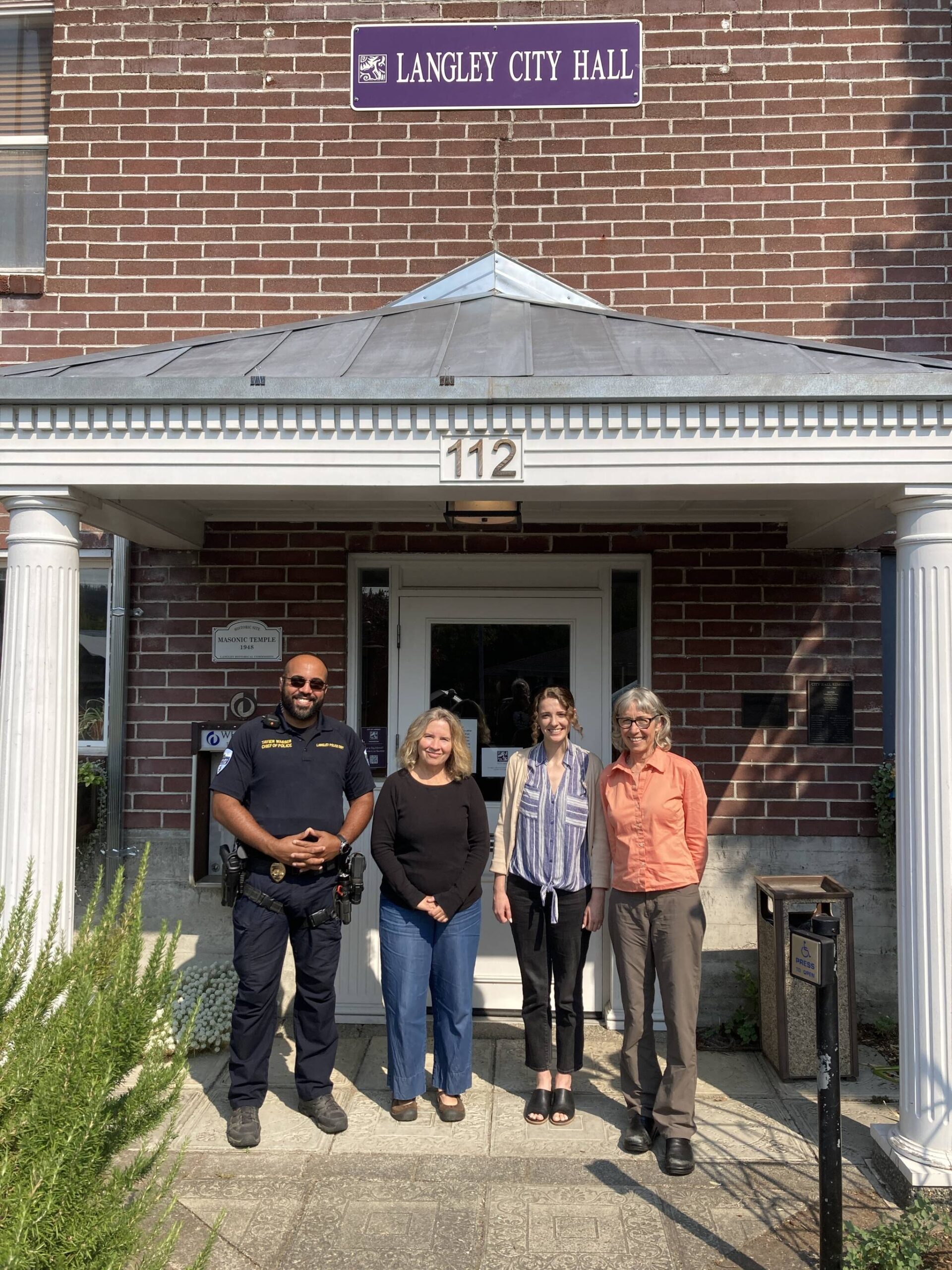
From left, Langley Police Chief Tavier Wasser, Energize Langley Project Manager Joan Green, Langley Director of Community Planning Meredith Penny and Energize Langley Community Energy Volunteer Linda Irvine. (Photo provided)