The funding model for schools in Washington state is broken.
That was the conclusion of a panel made up of school board presidents from all three Whidbey districts and state Rep. Clyde Shavers during a Whidbey Island League of Women Voters discussion on education Saturday in Greenbank.
The panelists spoke before a room of teachers, superintendents, school board members and League of Women Voters members. They each illustrated key challenges with state funding formulas and recognized that adequate funding improves student well-being and long-term success.
While the speakers recognized they had financial achievements this year, they nevertheless emphasized a shared frustration with the state’s current funding model.
“Washington public schools are funded with an outdated mathematical funding formula, which is based solely on our enrollment,” said Morgan White, board president of the Coupeville School Board.
The formula, she explained, creates challenges because schools don’t receive more money if their students need more services in such specific areas as mental health support.
“We are one of four states that has a backward-funded … model for public education,” White said. “We really need a model that’s not resource-funded but student-funded. That’s where the inequities lie.”
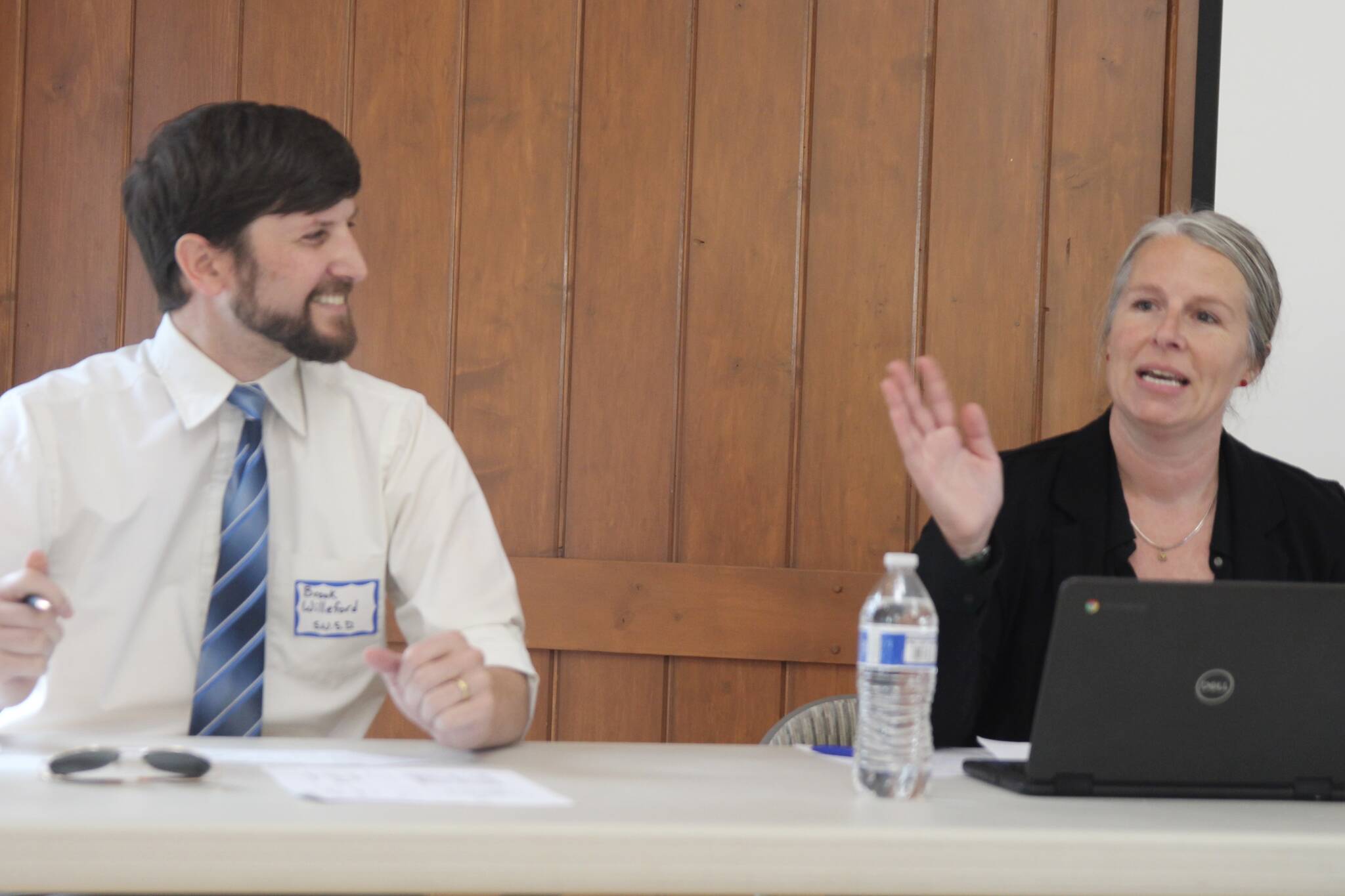
While the state funds cover some aspects of school needs, local levies have to be used to fill in the substantial gaps, South Whidbey School Board President Brook Willeford said.
For example, South Whidbey has somewhere around 26 to 29 paraeducators, he explained, but the state pays for fewer than 10 of those. While some of the funding for the paraeducators comes from federal dollars, the rest is made up by local levies, he said. It’s the same case for nurses; the state only funds 0.4 school nurses in the South Whidbey School District.
“If we were just doing that, we would bring a school nurse to each of the buildings one day a week,” he said. “Your kid gets a scraped knee, or is sick or, heaven forbid, something bigger happens? There would not be a medical professional on staff besides those training.”
Goals like safety, student achievement and teacher support drive how limited funds are allocated, the panelists said. They spoke about their desire to put more money into programs that lead to career-building opportunities, free meals for all students and the schools’ special ed programs.
Though Shavers pointed to recent achievements, such as a special ed cap and an increase in the age of students who can receive special ed services in the state, the school board leaders said the progress was not enough.
“I’m going to say 23% of our students qualify for special education. Even with the cap removed, we’re anticipating a $4 million budget deficit for special ed,” said Lynn Goebel, the president of the Oak Harbor School Board.
While the board presidents were critical of the current funding formula, they noted their statements were not against Shavers, a Democrat from Clinton, who they understood continues to advocate for their needs.
Shavers responded with a promise to continue fighting against these inequities as vice chair of the House of Education Committee alongside the chair, state Rep. Sharon Santos.
“We are in regular meetings to create the new 21st century Washington state K-12 education system,” Shavers said. “This is a very big issue that’s more than just funding, because when you change the funding model, you are also changing how students are going to get the educational resources, right?”
Through monthly meetings with numerous stakeholders, union workers, school board members and representatives from school districts, Shavers said he will continue to work towards creating a new state funding model for schools.
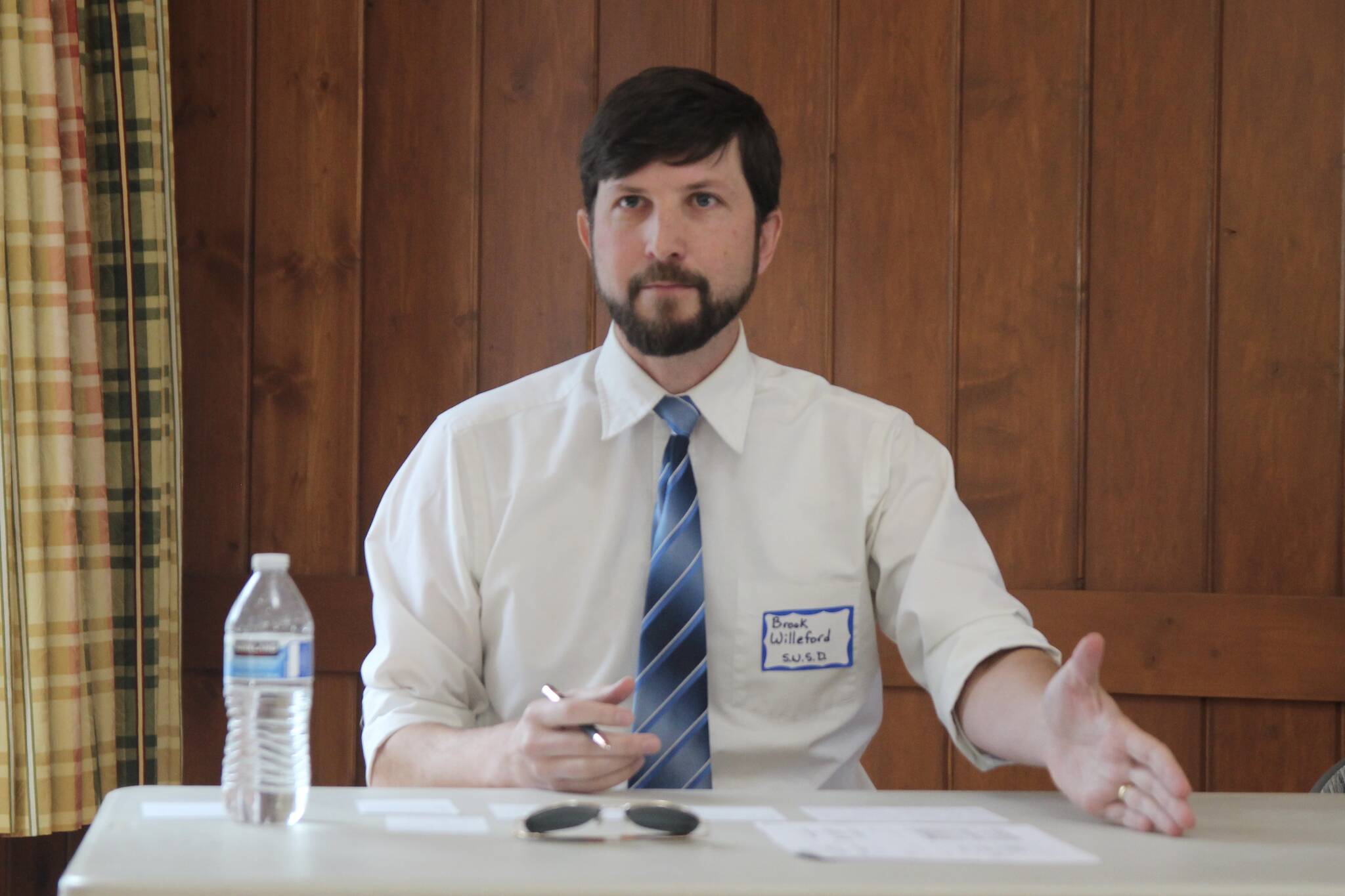
Brooke Willeford discusses his school districts accomplishments and funding desires, one of which is to provide free lunch for all students. (Photo by Marina Blatt.)
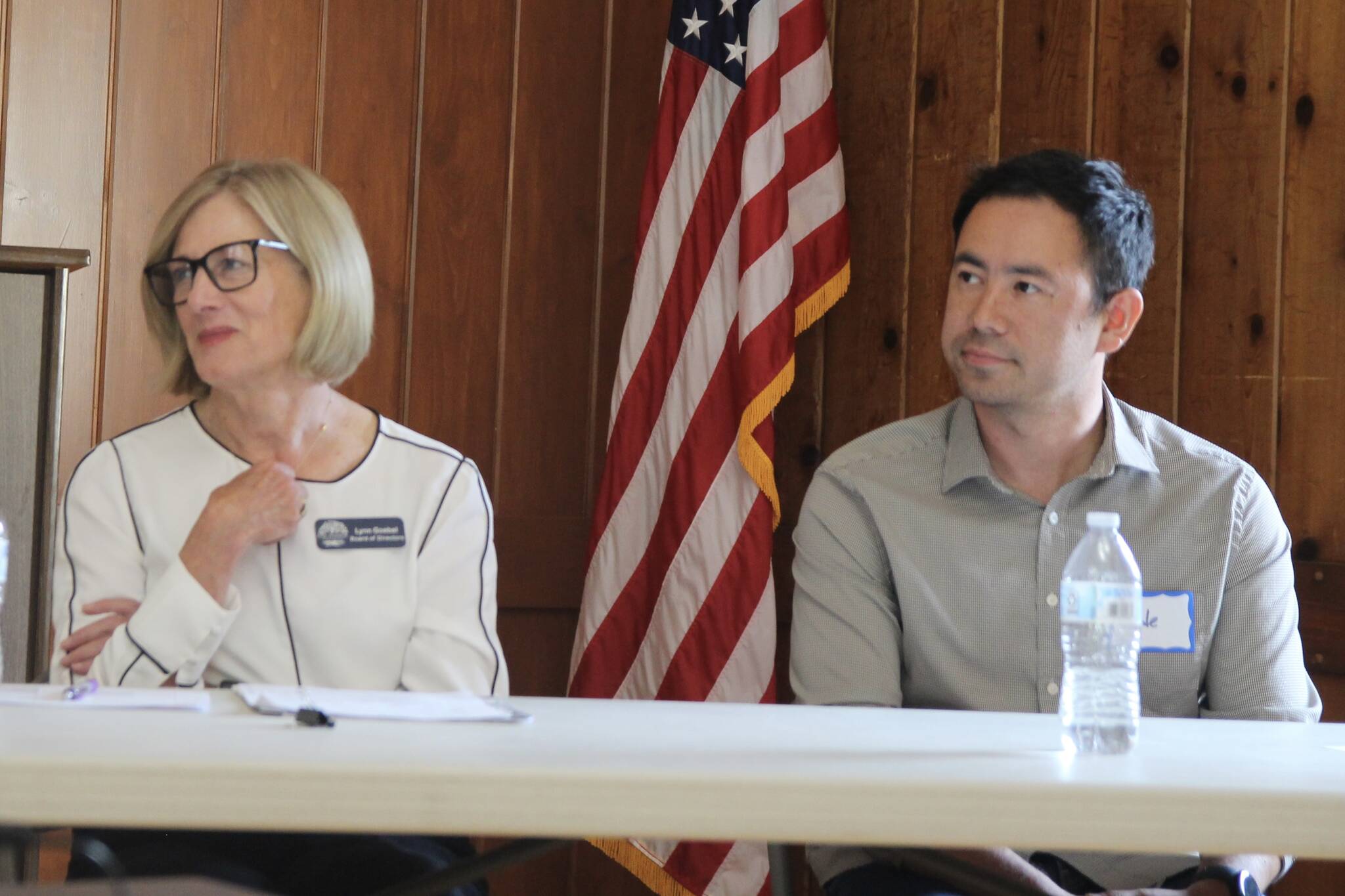
Oak Harbor board President Lynn Goebel state Rep. Clyde Shavers are all ears at the League of Woman Voter panel about school finances. (Photo by Marina Blatt.)