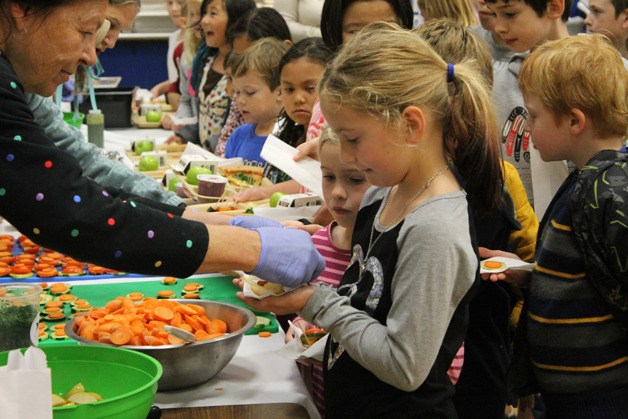
When kids are actually enjoying their vegetables, you know you’re on to something.
Volunteers from the South Whidbey School District Farm and Garden and Whidbey Island Nourishes teamed up to provide nutritional lunches for elementary school students Oct. 7 as part of the statewide celebration, Taste Washington Day.
The annual event highlights locally sourced meals from gardens and provides education and activities to recognize the region’s agricultural prosperity, according to the Washington State Department of Agriculture.
Kids lined up by the dozens in the school cafeteria to enjoy roasted squash, sliced carrots, kale crumbles, tomatoes, sliced cucumber, basil pesto — all of which were exclusively grown at the school gardens on campus. Students also enjoyed fruits such as apples from Wenatchee and pears that were donated by Whidbey’s Gleeful Gleaners in partnership with the Good Cheer Food Bank.
Students had some fun with the selection of food by creating their own palettes, combining the veggies with cafeteria foods such as pizza.
First-grader Chase christened his concoction of sliced carrots and cucumber as a “cookie.”
Chase’s friends, Carson, Levi, and Colten, thoroughly enjoyed their meals too.
“It’s yummy,” Colten said. “I love the carrots.” 
Garden staff began introducing students to the idea of putting veggies on their pizzas the past few weeks to gauge their reactions.
The event was a success, according to School Garden Coordinator Cary Peterson.
“They’re getting used to the fresh carrots, the fresh broccoli, the fresh tomatoes, the fresh cucumbers, and they’re going nuts,” Peterson said. “That’s how we figured out these garden pizzas.”
Peterson said it’s the school’s second year of participation in the event.
Fourth-grade student Leah Boyle enjoyed the wide selection of food, pointing out the difference fresh veggies can make.
“It’s delicious,” Boyle said. “I think food that isn’t fresh isn’t as good sometimes.”
Halley Shriber, a school gardens apprentice, was there helping to serve. She was happy to see how receptive students were to the fresh foods, which she believes are vital to developing children.
“They’re young minds. So if you are really able to tap into that at a young age… they’ll make good health choices later in life,” Shriber added. “They’ll really start thinking about the greater ecosystem and land stewardship and environmental care when you’re exposing them to growing their own food.”
“Every school should have a school garden,” she added.