Dog House plans hit another snag
Published 2:40 pm Tuesday, August 4, 2015
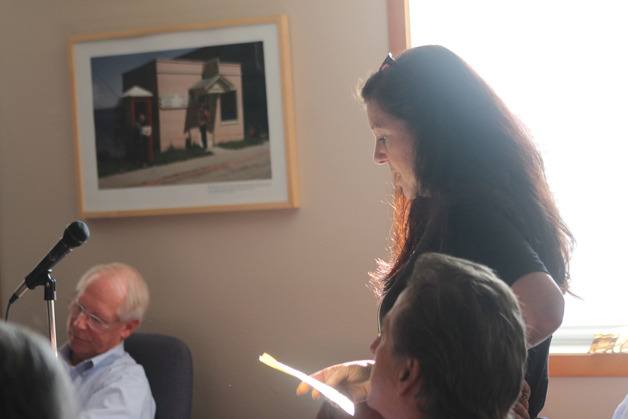
An unexpected hiccup in the Dog House renovation has the building owners calling foul, a city councilman apologizing for an overly difficult approval process and the mayor personally offended.
Building owners Charlie and Janice Kleiner attended Monday’s council meeting and during a public comment period complained that the land swap deal the council unanimously approved in March was rejected by the city’s attorney several weeks ago. For some council members, news that the deal was crippled for legal reasons, and that city administrators have known about the problem since July, came as a big surprise.
“I thought we were already doing that,” Councilwoman Rene Neff said.
But according to city officials, a preliminary solution to the regulatory hurdles was misunderstood and taken out of context by the Kleiners. Mayor Fred McCarthy said the original land swap deal is difficult to pass muster of a state law, and that Director of Community Planning Michael Davolio proposed attaching a public elevator to the building as a means of circumventing the land swap. In that deal, the city would build the elevator up to the planned deck on the north end of the building’s main floor for the restaurant, then have an easement to exit along the side to First Street.
“We were totally surprised and taken by surprise by how they interpreted a concept we were sharing with them,” McCarthy said in a phone interview Tuesday morning.
“They spun it as if we’re trying to get them to do something advantageous for us,” he added.
With the Kleiners obviously upset with the deal, which they said wouldn’t work because they need to own the land they build on for financing reasons, Langley’s mayor and planner said the original land swap that was approved in March is still the working deal in place.
“We think it’s doable, and we’ve been proceeding along those lines,” Davolio said.
Langley’s legal services have been handled by Jeff Taraday of Lighthouse Law Group in Seattle since September 2013. According to Davolio, the city attorney told him the swap was essentially a street vacation, which has different requirements including a public hearing that was already held in October 2014 and at which no comments against the deal were made. 
Councilman Thomas Gill pulled up the state code in question, RCW 35.79.035, which concerns limitations on vacations of streets abutting bodies of water, such as Anthes Avenue. The law lays out several qualifiers that can allow a city to vacate a street that abuts a body of water. Davolio said getting the land swap to qualify was “extremely difficult,” but not impossible.
A new angle was thrown into an already convoluted mess. After reading some of the ways that the city could make the swap and street vacation more applicable to the state code, Davolio addressed the Kleiners’ claims that he looked into using the $500,000 in grant funds — initially issued to the city for waterfront access from Cascade Avenue to Wharf Street by a funicular or elevator. He had asked the Kleiners how they felt about the city taking that money and using it toward an elevator on their property to improve access from First Street to Seawall Park.
News of the elevator proposal caught the city council off guard.
“The elevator’s new to us,” Councilwoman Robin Black said.
In 2014, the city and Kleiners were working toward a partial street vacation. The action would have essentially given up part of Anthes Avenue that was adjacent to the century-old building, but that was later deemed unworkable as the city couldn’t simply give the property as it would be a gift of public funds.
Instead, several months later, the city and Kleiners began working on a land swap that would retain equal or greater value for the city. What was eventually settled on and agreed to by both parties was a deal in which Langley gave up a sliver of land next to the building and a chunk of property on the north end, in exchange for some property to add to Seawall Park.
Charlie Kleiner said he was interested in this recent halt in progress as it related to the city’s request to put an elevator in on their property, implying that the city was forcing a concession.
“We are concerned with what Fred’s actions implicate,” he said.
McCarthy took exception to the characterization of the recent meetings he had with the Kleiners, and said he was shocked and offended. The mayor was the first person to reach out to the Kleiners after they inquired about the demolition permit process in spring 2014, and was largely credited for bringing them back to the negotiating table.
Councilman Bruce Allen issued an apology to the Kleiners for what they have gone through in trying to renovate and restore the historic building, a place he recalls from his childhood.
“This has been a real unfortunate thing to put these people through all this bull[expletive], and I think we should apologize to them as a council,” he said.
The Kleiners, who are Issaquah residents, left after hearing Allen’s statement.
The city council and mayor decided they would request that attorney Jeff Taraday answer questions about what they perceived as a change of heart in his review of the land swap.