
It was a classic good news/bad news scenario for the South Whidbey School District. Fewer students are eating in the district’s cafeterias compared to last year, but revenue generated by the food-service program is higher.
In September, the breakfast and lunch crowd at the district’s three schools took in $10,708, compared to $14,377 in 2008. But total revenues for the period increased to $25,754 — from $19,595 in 2008 — partly due to a large government reimbursement and a slight increase in pricing.
However, fewer students are buying their meals. There were 1,284 fewer meals sold during the same period last year, a 3-percent drop.
“It’s a bit of a disappointment for us,” said District Superintendent Fred McCarthy.
“Our new contract with Chartwells had two goals: increased participation and increased revenue. Clearly, they have work to do,” he said.
Moving to a contracted food-service operation was viewed by district officials as a way to stem the dollars being lost in the food lines.
With a paltry 32 percent of students buying their breakfast or lunch, the school district lost $173,000 during the 2008-09 school year.
But district officials were expecting an even greater loss in the current school year, and the declining revenues in the food service program were a key component in the district’s overall $1.85 million budget shortfall.
Before the school year began, Chartwells was hired to rectify the problem.
“While food service employees are still being paid by us, Chartwells offers economies of scale by its ability to buy in bulk,” said district business manager Dan Poolman. “They have designed menus, updated signage and provided cost-effective practices to stimulate participation.”
In its report issued at the end of October, Chartwells noted several factors that may have contributed to the decrease in numbers.
First, they weren’t able to train staff properly before the start of school, a problem compounded by two employees who were out on disability from the high school. And since the contract wasn’t signed until the first part of September, equipment ordering was delayed.
Another concern was the large amount of negative student accounts from previous years, totaling $6,660. Students can use a special pre-paid card which is swiped at the register when they pick up food, then are supposed to pay it off at end of term.
“The problem is that kids over-extended their account, which is normally set at $20,” Poolman explained.
Participation rates were beginning to increase until notices were sent out to parents informing them of the negative balances.
“No student can graduate until all fees are paid, but we are working to come up with a more prompt resolution so collection isn’t delayed,” McCarthy said. “That being said, we certainly don’t want to penalize kids who may need to eat in our cafeterias.”
McCarthy noted that the board felt hiring an outside contractor had the potential of saving the district money that could potentially be used to hire teachers or support staff in the future.
“Objective evaluation measures used in contracted food services indicate we are currently overstaffed in each of our kitchens,” he said. “We need to be as efficient and cost-effective in each of our support service areas as possible.”
Chartwells intends to be more proactive in its attempts to improve on the numbers. They have begun a series of focus groups for parents and kids to get a better idea of what works, are planning promotions — including “lucky tray day” — and invited Coupeville chef Jeanette Wendel from the Coupeville School District to teach staffers how to make a braided crust for pizza, a dish that’s proven popular with pupils.
Chartwells also started monthly inventory checks to control waste, reduced kitchen staffing hours, and increased daily choices on the menus. The company is also offering “stealthy health” foods such as wheat bread to win over health-conscious parents.
“Our goal is to get at least 50 percent of our students choosing to eat quality, tasty and healthy foods in our cafeterias,” McCarthy said.
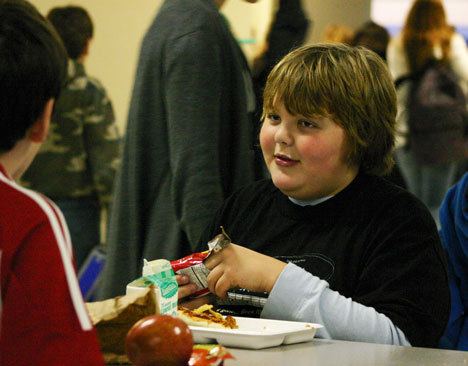
It may work, too. At Langley Middle School Tuesday, the balance of opinion among sixth-graders was that the food has gotten better.
Middle school student Maddie Barker was enjoying a breakfast of waffles, blueberry compote, carrots, sausage and potatoes.
“I like the food here, and there’s lots of choices,” she said.
But across the table, classmates Janae Hughes and Weslee Doucette were brown-bagging.
“I just didn’t have any money for lunch today,” Janae said honestly. “So I brought a sandwich, grapes, a cookie, snack and a drink.”
Weslee, though a long-time pizza fan, has had enough.
“I’ve eaten pizza every day since school started,” she said. “So I made my own lunch, with yogurt, chips and a snack. I’m a little picky about what I eat, but the food here is not bad.”
That was music to the ears of head cook Dee Dee Curtis, a 23-year veteran of the public school cafeterias.
“I don’t know there is that much difference between this year and last,” she said. “The kids like the Asian noodle bowls and buffalo chicken pizza, but I think we were doing OK before Chartwells took over.”
Curtis hopes the district will bring back the nutritionist that helped plan healthy meals last year. But her biggest concern is financial.
“My hours have been cut and that hurts,” she noted. “They cut us and gave [Chartwells] the money. We can do this on our own.
“But we all hope this works, for the kids’ sake.”
Jeff VanDerford can be reached at 221-5300 or jvanderford@southwhidbeyrecord.