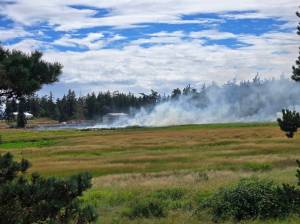
Rare prairie in bloom, future in question
Published 1:30 am Tuesday, June 9, 2026
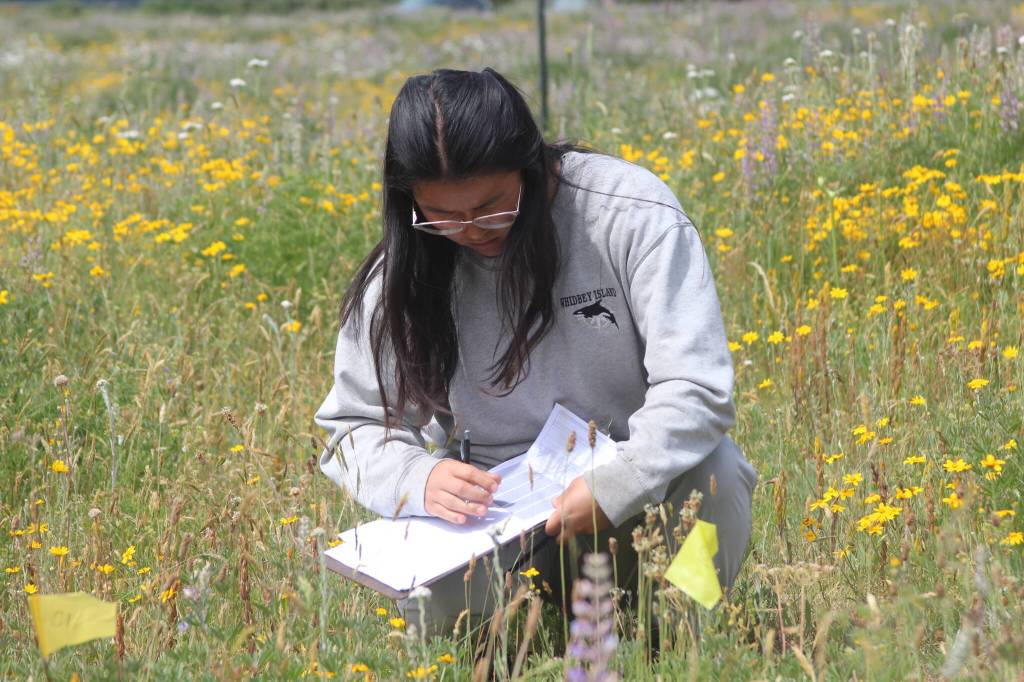
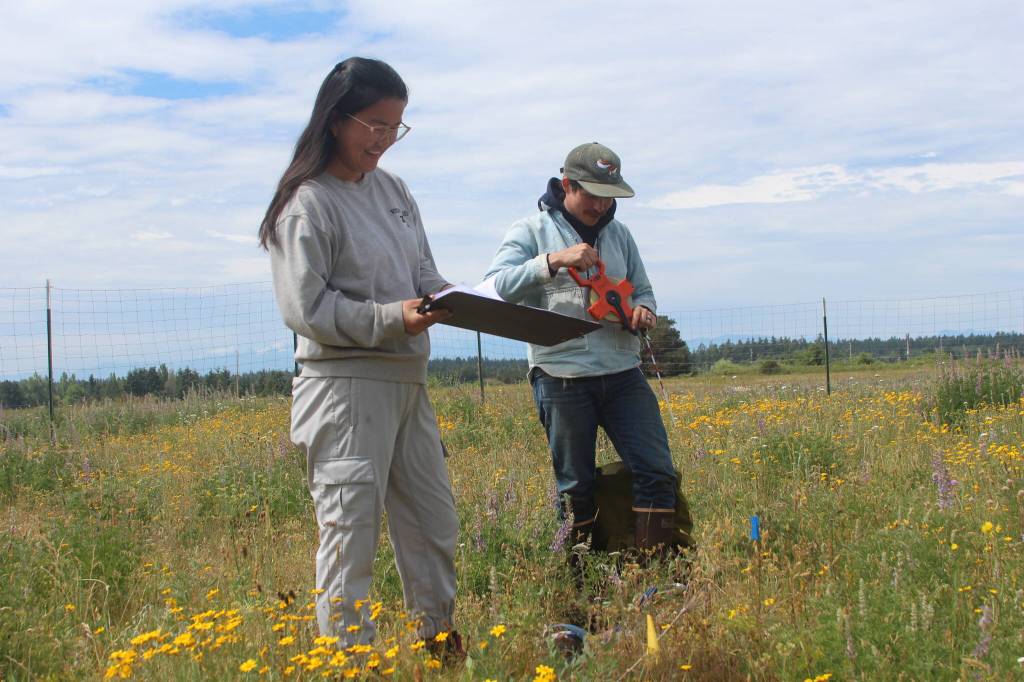
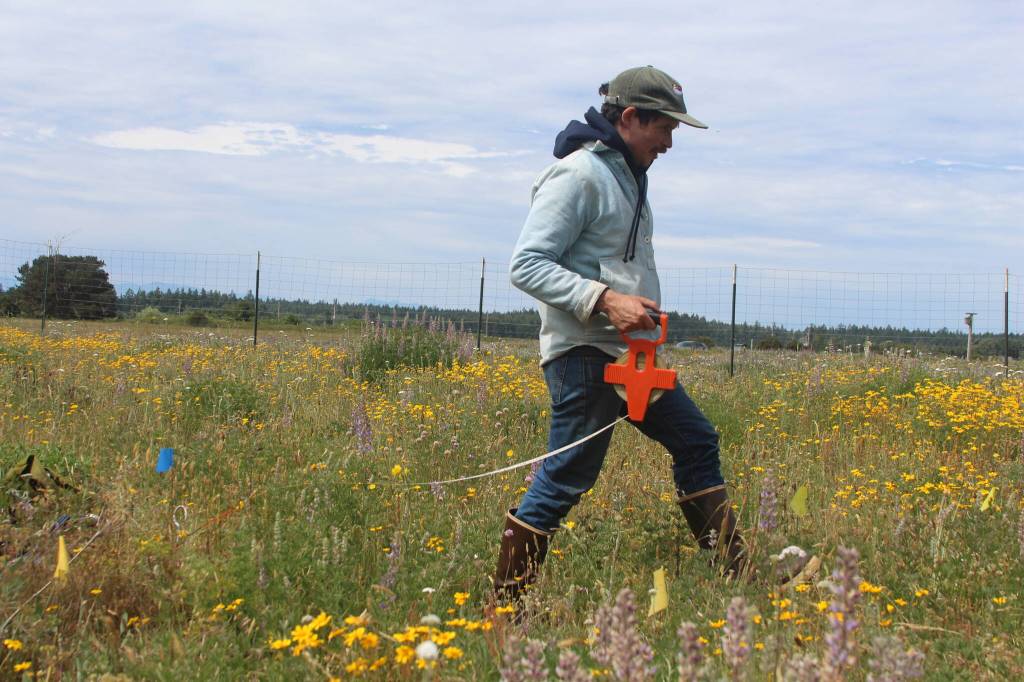
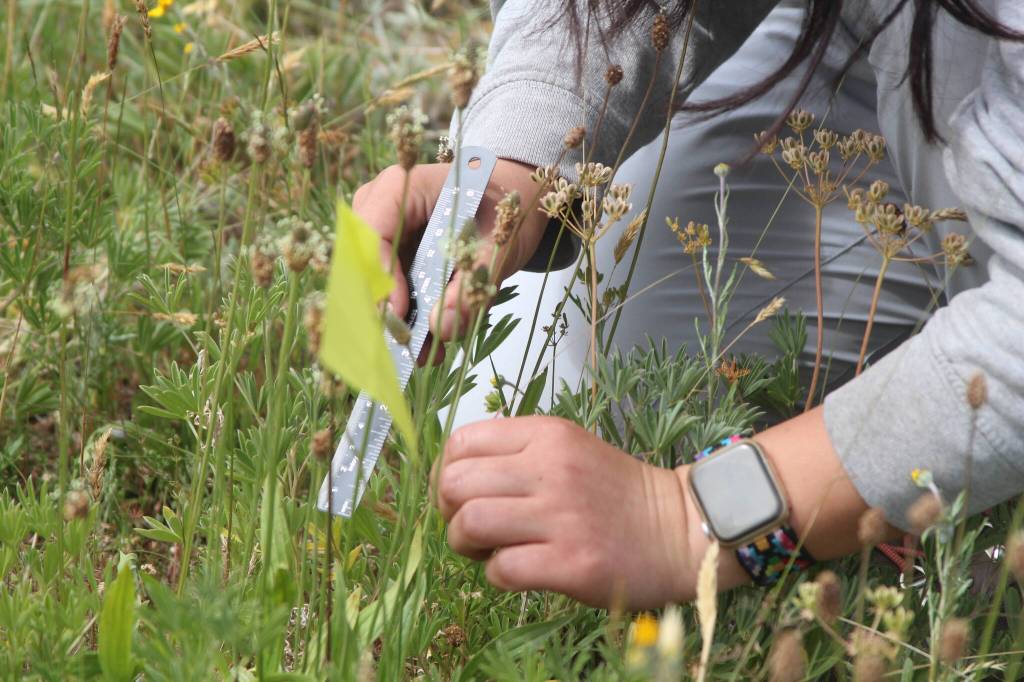
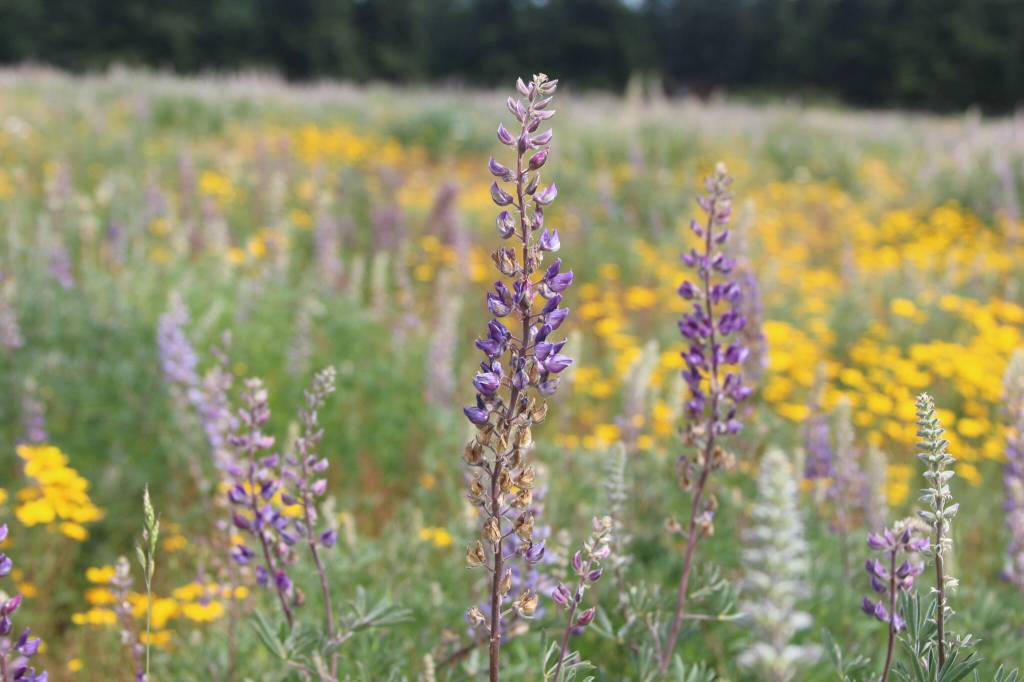


The yellow blooms of golden paintbrush stretch across the prairie at the Pacific Rim Institute in Central Whidbey, but the splash of color signifies both a conservation success story and an uncertain future.
Grants that helped make those ecological achievements possible on the rare prairie are being eliminated or reduced.
For more than a decade, the Whidbey Island nonprofit has worked to restore one of the Pacific Northwest’s rarest prairie ecosystems. Now, as federal funding disappears, the organization is turning to the community for help preserving the landscape and bringing back the endangered Taylor’s checkerspot butterfly.
“Northwest prairies have been reduced to less than 3% of their original range,” Jim Perskuric, board chairman, wrote in an email to the News-Times. “At PRI, our mission is to restore native prairie habitat on our property and throughout the North Puget Sound basin.”
That mission has produced notable results. Perskuric said the nonprofit is on track to protect 146 acres of property through a conservation agreement with the Whidbey Camano Land Trust in the near future. The organization has also played a key role in recovering the endangered golden paintbrush plant. The Pacific Rim Institute is growing more than 90,000 golden paintbrush plants on its property, playing a large role in its removal from the endangered species list.
That success opened the door to another ambitious project: reintroducing the endangered Taylor’s checkerspot butterfly to Whidbey Island.
“This species of butterfly is dependent on the golden paintbrush and could thrive on our property,” Perskuric wrote.
The butterfly’s future on Whidbey Island depends on more than just the presence of the golden paintbrush — the institute is cultivating native plantains, another host plant for the butterfly. Through their efforts, staff members hope to create a landscape on the island that can support the insect throughout its entire life cycle.
Adam Martin, an applied ecologist with the EcoStudies Institute, is working with Pacific Rim Institute on the project. He said changing environmental conditions have created new challenges for the prairie.
“We’re concerned that, for the host plants of Taylor’s checkerspot, there’s gonna be a phenological mismatch,” he said, which causes a difference in timing between the life cycle of the butterfly and the flowering of the plant.
Martin said climate change has altered prairie ecosystems during his career. One of the biggest changes he’s noticed is it has caused more non-native grasses to encroach on prairie land.
“When I first started this, we didn’t really worry about annual grasses at all,” he said. “Now they’re a dominant part of the prairie landscape.”
Still, he pointed to the golden paintbrush as a conservation success.
“There were maybe a couple thousand plants total in the whole state,” Martin said of his early career observations. He noted that the Pacific Rim Institute has become incredibly valuable.
“This site makes more seed than the rest of the state combined,” Martin said. “So it’s one of the most important sites, I would say, in the state.”
Yet even as ecological progress continues, the Pacific Rim Institute faces mounting financial challenges.
“The federal government grants that sustained our work for more than a decade have been drastically cut or have been canceled,” Perskuric wrote in an email to the News-Times. “The grants to reintroduce Taylor’s checkerspot butterfly have been paused and possibly canceled.”
During an interview, Perskuric said the loss of federal funding has rippled through organizations involved in restoration work. Not only did the government cut funding that affects the institute’s restoration efforts, but the grants that would have helped reintroduce Taylor’s checkerspot butterfly have been paused and are at risk of being canceled.
“The people we were working with to save the golden paintbrush and the Taylor’s checkerspot, they had to go out of business because they lost their funding,” he added.
At the same time, demand for private grants has intensified.
“Any non-government grants that are out there are wildly competitive,” Perskuric wrote. “In the past, we would compete with three to five other non-profits for the same grant. Today, hundreds of nonprofits are all applying for the same grants.”
To offset those losses, Pacific Rim Institute is seeking volunteers, donors and new ways to generate revenue.
“We need another greenhouse,” he said. “We don’t have the money for it.”
Volunteers are needed for seed collection and cleaning, but Perskuric said the nonprofit could also benefit from people with professional expertise in fundraising or running nonprofits.
Lana Rasmussen, a restoration ecologist at Pacific Rim Institute, said volunteers can play a meaningful role in restoring native habitat.
“I find it very fulfilling, and I think that it’s a lot of fun work and you can do a lot of different things within this kind of organization by helping us collect seeds or helping us plant plants,” Rasmussen said.
She added that restoring native species is about more than conservation; it’s an appreciation of what the natural world has given the community.
The Pacific Rim Institute staff hope more community members will discover what Perskuric calls a “hidden gem” on Whidbey Island.
“To continue restoring native habitat and native species, we are asking the Whidbey community to learn more about us and to lend a hand to continue our mission,” Perskuric wrote.
The institute will be hosting a cider festival from noon to 6 p.m. on Sept 19. Tickets may be purchased at www.pacificriminstitute.org/ciderfestival.
It also offers private tours on its property. Book a tour by emailing info@pacificriminstitute.org or calling 360-678-5586.
To learn more about volunteer opportunities or donate to its cause, visit the Pacific Rim Institute’s website.